 NFL2026-07-05
2026 Fantasy Football WR Tiers: Ja'Marr Chase, Puka Nacua, and Jaxon Smith-Njigba Lead as Justin Jefferson Slides
By Verdexed Fantasy Desk
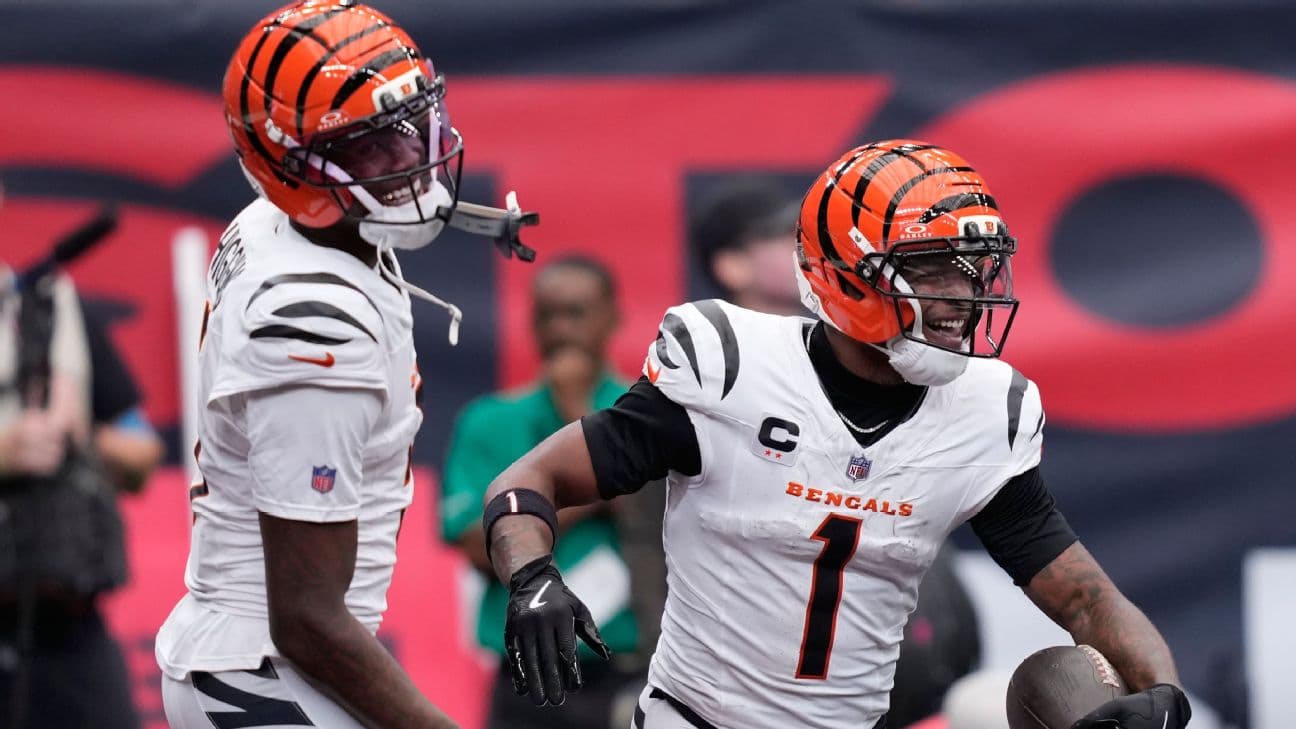
With training camps about to open, the 2026 fantasy football wide receiver board has settled into a clear shape at the top, and it comes with a surprise. Ja'Marr Chase, Puka Nacua, and Jaxon Smith-Njigba form a distinct top tier, while Justin Jefferson, long a fixture in the first two picks of any draft, has slid down consensus boards toward WR5 after a down year in a broken Minnesota passing game.
For fantasy managers, wide receiver is where drafts are won in PPR formats, and getting the tiers right is more valuable than quibbling over a single ranking slot. Here is the Verdexed tiered look at the position and where the actionable value sits.
Tier 1: the league-winners
Three receivers separate themselves. Chase led the NFL in targets last season, turning that volume into roughly 125 catches, more than 1,400 yards, and a WR3 finish in points per game even though Joe Burrow missed significant time. Nacua and Smith-Njigba both averaged at least 22 fantasy points per game in the seasons that vaulted them into this tier, a full three points clear of the next receiver.
The case for Chase as the overall WR1 rests on his proven immunity to target competition and a floor that held up even with backup quarterbacks throwing to him. The case for Nacua and Smith-Njigba is efficiency plus volume in offenses built to feed them. Any of the three is a defensible 1.01 in a receiver-first build, and all three carry genuine league-winning upside.
Tier 2: the high-floor anchors
Below the top three sits a group of every-week WR1 producers whose range of outcomes is a notch tighter. These are the receivers who anchor a roster without the ceiling that defines the top tier. Justin Jefferson lands here in most 2026 rankings, a striking demotion for a player who spent years as a consensus top-two overall pick.
The fall is about context, not talent. Jefferson still commanded a target share above 30 percent, fourth-highest in the league, but his fantasy output cratered to under 12 points per game as Minnesota's passing attack collapsed. The Vikings ranked near the bottom of the league in passing yards per game, a stunning drop from a top-six unit two seasons ago. The addition of Kyler Murray in free agency is the best-case fix, but until the quarterback picture and offensive identity stabilize in camp, Jefferson is a talent bet on an offense with real questions.
The Jefferson decision
Jefferson is the most important call on the board because his price and his production have diverged. If the Vikings' offense rebounds even partway toward its prior form, his target share makes him a value at a WR5-ish cost. If the passing game stays broken, he becomes a frustrating hold whose volume does not convert.
The Verdexed approach is to treat Jefferson as a high-variance buy rather than a safe anchor. His talent and usage give him one of the highest ceilings at the position, but the offense caps his floor until proven otherwise. Draft him expecting a bounce-back, but do not pay the elite-tier price of years past.
Tier 3: the upside swings
The next group is where drafts are actually won and lost, because it blends proven producers coming off down years with ascending talents entering bigger roles. This is the tier to target aggressively in the middle rounds, pairing a stable anchor from Tier 2 with two or three of these swings to build a receiver room with multiple paths to a weekly WR1 finish.
The key is process: prioritize target share and offensive environment over name recognition. A receiver stepping into a vacated target hog role in a good offense is worth more than a bigger name stuck in a crowded or run-heavy scheme.
The Verdexed model take
Verdexed's model builds its receiver rankings from projected targets, expected efficiency, and offensive pace and pass rate rather than from prior-year fantasy points, which is why it flags Jefferson as a mispriced asset in both directions. The model sees the elite target share and the poor scoring environment, and it outputs a wide band: a top-five ceiling if Minnesota's offense recovers, a middling WR2 floor if it does not.
At the top, the model is comfortable with Chase, Nacua, and Smith-Njigba in a tier of their own, with the order a matter of taste rather than a meaningful gap. Its sharpest edges live in Tier 3, where it favors receivers whose projected target volume outpaces their draft cost.
The quarterback overlay that separates the tiers
One factor cuts across every tier: quarterback play. A receiver's ceiling is capped by the arm throwing him the ball, which is exactly why Jefferson's stock cratered despite an elite target share. The model bakes a quarterback and offensive-environment adjustment into every projection, and it is the reason two receivers with similar talent can sit two tiers apart.
That overlay is where drafters can find edges the raw name-brand rankings miss. A talented receiver attached to an improving quarterback situation is a buy, while a big name stuck in a shaky passing game is a fade even if his target volume looks strong on paper. Jefferson is the poster child for the risk; the flip side is the ascending receiver whose quarterback took a step forward this offseason, a profile the model flags as underpriced. When you are deciding between two receivers in the same tier, let the quarterback and the offensive scheme break the tie, because target volume only pays off when the passer can convert it.
What to do in your draft
Lock a Tier 1 receiver early if the board falls that way, because the gap to Tier 2 is real. Treat Jefferson as a calculated gamble on a Vikings rebound rather than a set-it-and-forget-it anchor. And spend your middle-round capital on the upside swings whose usage projects ahead of their price. Wide receiver is deep in 2026, which means the managers who nail the tiers, not just the names, will build the strongest rooms.