 NFL2026-06-29
2026 Fantasy WR Tiers: Ja'Marr Chase and Justin Jefferson Headline, but the Middle Rounds Are Where Drafts Are Won
By Verdexed Fantasy Desk
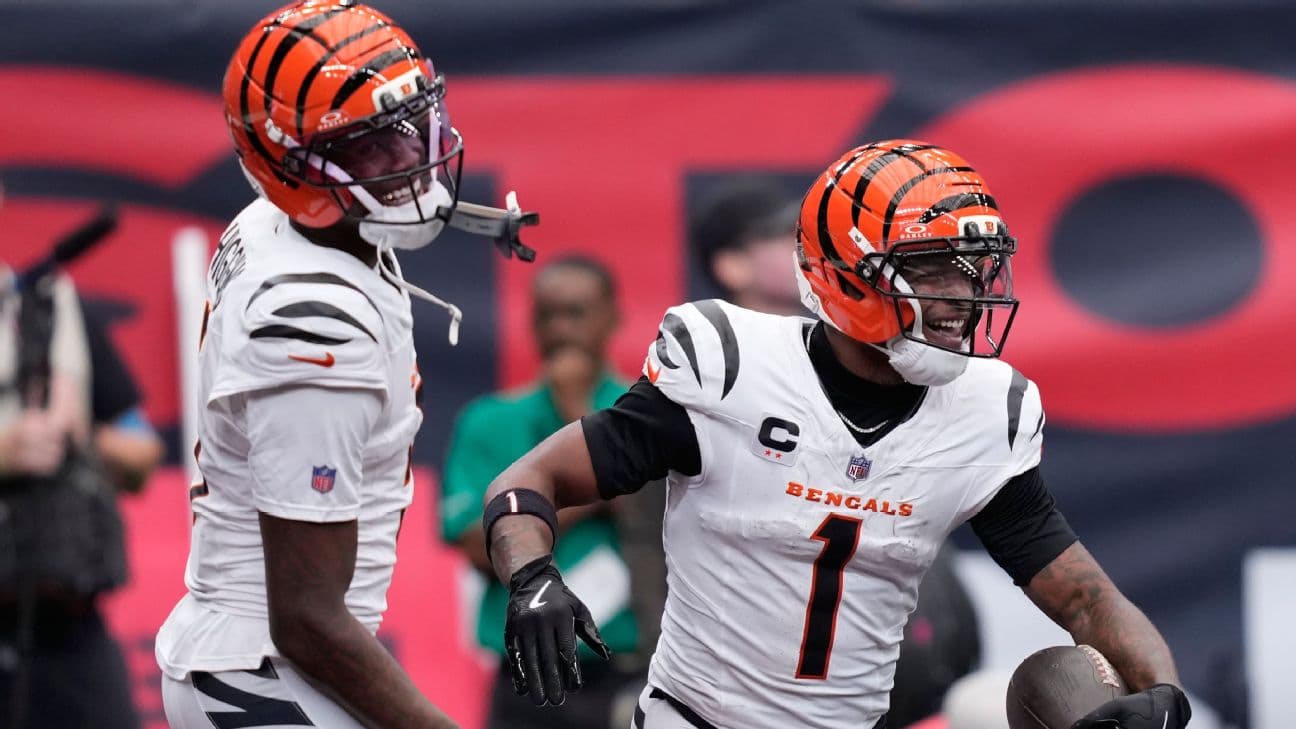
Wide receiver is the position that decides most fantasy drafts, and the 2026 board is both top-heavy and deep, which is a tricky combination. There is a clear elite tier worth first-round capital, a large and blurry middle where managers win or lose, and a late-round group of upside swings reshaped by offseason movement like the A.J. Brown trade to New England. Here is how Verdexed tiers the position heading into draft season, with the logic that should guide where you spend.
Tiers matter more than exact rankings. The goal is to know where each cliff is, so you can attack the position aggressively before a tier empties and pivot when the value moves elsewhere.
Tier 1: the every-week alphas
The top tier is anchored by Ja'Marr Chase and Justin Jefferson, two receivers who combine elite target volume with elite efficiency and have the quarterback play to sustain it. They are worth first-round picks in any format because they offer the rare blend of a high floor and a league-winning ceiling. CeeDee Lamb belongs in this conversation as well, a target hog in a pass-heavy offense whose floor is among the safest at the position.
These are the receivers you draft without overthinking. The cost is steep, but at a position where weekly volatility is the norm, paying up for guaranteed volume and proven production is the surest way to stabilize a roster.
Tier 2: the high-end WR1s with a question
The next group carries WR1 upside with one variable to monitor. Puka Nacua is a target magnet whose value hinges on health and snap count. Malik Nabers is a ascending alpha whose ceiling depends on his quarterback and game script. Amon-Ra St. Brown remains one of the most reliable PPR producers in the league. Nico Collins is a big-bodied No. 1 with the efficiency to finish as a top-five receiver when healthy.
This tier is where you want to land if you miss the top three. Each of these players can return WR1 value, and the small risk attached to each is why they fall behind the anchors rather than a sign of a real ceiling problem.
Tier 3: the deep, blurry middle
This is the most important tier in the draft, because it is the largest and the difference between its top and bottom is mostly opportunity rather than talent. The A.J. Brown trade is the headline mover here. Brown lands in New England as Drake Maye's clear No. 1, which gives him a clean target path but ties his value to a young quarterback and a rebuilding offense. In Philadelphia, DeVonta Smith climbs into this tier's upper half as the Eagles' new alpha, inheriting the targets Brown vacated without changing teams or systems.
Brian Thomas Jr. headlines the upside end of this group, a target hog with genuine WR1 potential if the Jacksonville passing game takes another step. Around them sits a long list of receivers separated by role: ascending second-year players, new-team fits, and established veterans whose volume is secure but whose ceiling is capped. The strategy here is to identify the players whose target share is about to rise, not the ones whose names are biggest.
Tier 4: the late-round swings
The final draftable tier is built on upside rather than floor. This is where rookies like Makai Lemon in Philadelphia, Carnell Tate in Tennessee, and the rest of the 2026 class live, alongside veterans in new situations whose roles are undefined. These are best-ball darts and bench stashes, not weekly starters on draft day. The hit rate is low, but the payoff when one connects is a league-winning return at a near-zero cost.
The key with this tier is volume of shots. Draft several, not one, and let camp and the early season tell you which fliers earned a real role.
The Verdexed model take
Verdexed's receiver model is built on projected target share first and efficiency second, because targets are the most stable and predictive input for fantasy scoring. That framework produces a clear message for 2026: pay up for the Tier 1 and Tier 2 anchors whose volume is locked, then attack the middle rounds for players whose target share is about to climb because of an offseason change.
DeVonta Smith is the model's favorite example this summer. He gained Brown's targets without any of the risk that comes with changing teams, which is exactly the kind of quiet projection bump the market is slow to price. On the flip side, the model is cautious on A.J. Brown at a WR1 price, not because his talent slipped, but because the quarterback and offense around him introduce variance his draft cost does not account for.
How to attack the position
Secure one Tier 1 or Tier 2 anchor early. Do not leave your first three rounds without at least one. Then hammer the middle, targeting players whose roles just expanded rather than the most familiar names. Finally, close your draft with several Tier 4 swings rather than one, because depth at receiver is what survives the position's brutal injury and volatility rate.
The 2026 receiver board rewards managers who understand that the position is won in the middle. The anchors win you weeks; the middle-round target risers win you the season.