 MLB2026-07-16
The White Sox Are in First Place in the AL Central: How Real Is Chicago's Improbable Run?
By Verdexed Analytics
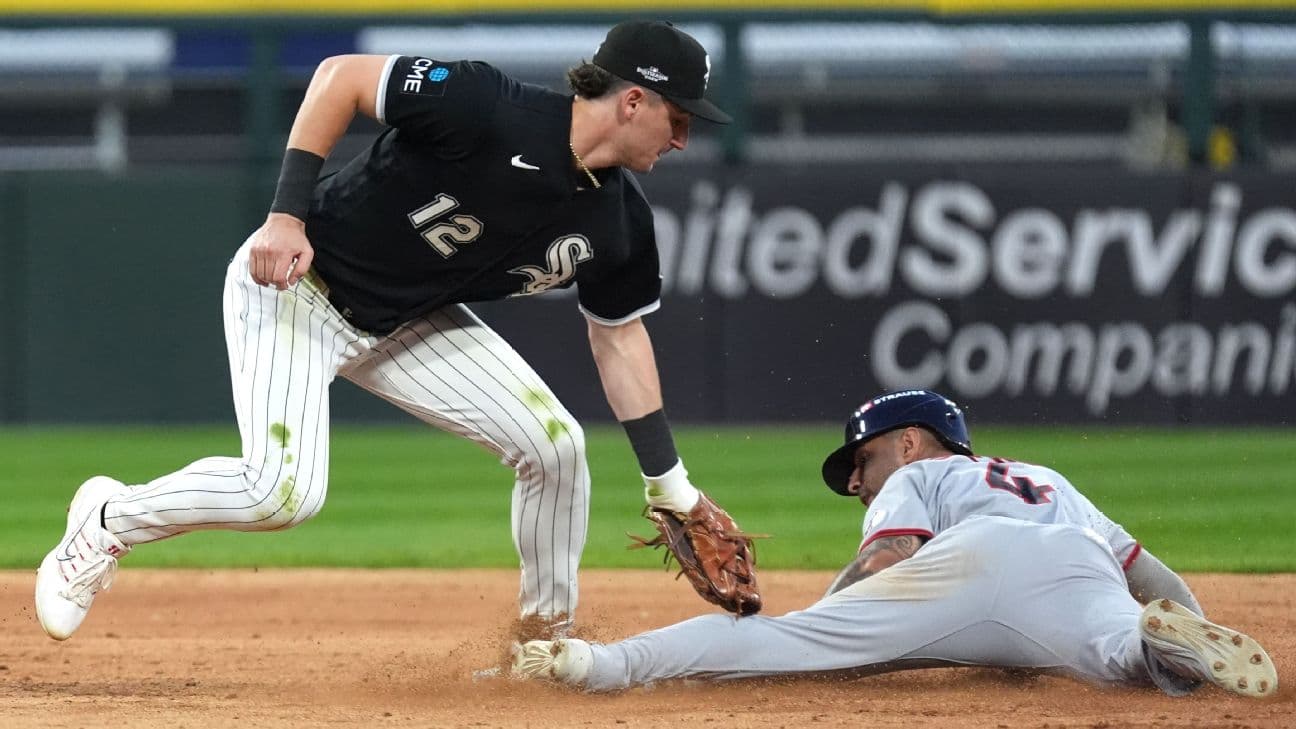
The Chicago White Sox are in first place in the AL Central at the All-Star break, and no sentence in baseball this season is more improbable. A franchise that lost 121 games in 2024, the most in modern major league history, entered the break at 50-45 and a half-game up on the Cleveland Guardians. It is the latest into a season that Chicago has held sole possession of first place since its division-winning campaign in 2021. This is not a fluke start that faded. It is a half-season of contention from a team that was supposed to be years away.
From historic lows to first place
The scale of the turnaround is worth sitting with. The White Sox lost more than 100 games in three of the previous seasons, bottoming out at that 121-loss nadir. Rosters do not usually climb out of that hole in a straight line, and certainly not this fast. Chicago's rise has been powered by young talent maturing ahead of schedule and a pitching staff that has outperformed its reputation, and the result is a club that has spent the first half beating the projections handed to it in March.
The honest caveat is that the AL Central, and the American League broadly, has been down. A soft division lowers the bar to lead it, and the White Sox have taken advantage of a race where no team has run away. But leading a weak division still means winning the games in front of you, and Chicago has done that.
How real is it? The model's read
Verdexed's model treats the White Sox as a genuine playoff contender while flagging that "contender" is not the same as "favorite." Some public projection systems give Chicago better than a coin flip to reach October, even while installing them as an underdog to actually win the division outright. That combination captures the situation precisely: the White Sox are legitimately in the mix, buoyed by an expanded playoff field, but the underlying talent still trails the sport's heavyweights.
The model's caution centers on regression. Teams that outperform their run differential and lean on career-best pitching lines tend to give some of that back, and the second half is where those corrections often arrive. The White Sox do not need to keep playing like a first-place team to reach the postseason. They need to hover near .500 in a division where nobody else has seized control. That is a meaningfully easier task.
The betting angle
For bettors, the White Sox present the classic tension between a great story and a fair price. Their division and playoff futures moved sharply as they climbed, and the value that existed in April is long gone. The sharper read now is situational rather than season-long: Chicago is a team the market may still slightly underrate on a game-by-game basis because of its recent history, which can create small edges backing them at home against beatable opponents.
The deadline is the other lever. A team in Chicago's spot faces a real decision. Buy modestly to press a surprise window, stand pat, or sell a veteran or two into a contender's market while the value is high. Whichever direction the front office chooses will inform how to price the White Sox down the stretch, and a club that adds even marginally signals it believes the run is real.
The schedule matters too. A first-place record built partly on the quality of opponents faced can look very different once the calendar turns, and bettors should weigh Chicago's remaining slate against the teams chasing it in the division. A club clinging to a narrow lead in a weak division is highly sensitive to a tough two-week stretch, and the market tends to overreact to short losing streaks from surprise teams, creating buy-low spots on a roster that has proven more resilient than its reputation.
The fantasy trust question
For fantasy managers, the White Sox's rise creates a roster of intriguing but unproven names. The instinct with a surprise team is to chase everyone, and that is a mistake. The right approach is selective trust: buy the young hitters and pitchers whose underlying metrics support the production, and fade the ones riding unsustainable batted-ball or strand-rate luck. A first-place record does not automatically make every contributor a startable fantasy piece.
The clearest fantasy value in a situation like this tends to be playing time and lineup security. Young players on a winning team keep their jobs, hit in stable lineup spots, and accumulate counting stats. Those are the White Sox worth rostering. The speculative fliers are the ones to hold loosely.
There is also a deadline wrinkle for fantasy managers to track. If Chicago decides to buy, a young hitter could see his supporting cast improve and his run-producing opportunities rise. If the front office instead sells a veteran or two, playing time can open for a prospect, turning a bench stash into a startable everyday piece overnight. Either direction creates fantasy opportunity, which is why the White Sox are a roster worth monitoring more closely than their preseason expectations would have suggested.
What it means
The White Sox being in first place at the break is the best story in baseball and a real, if fragile, playoff bid. Verdexed's stance is to respect the run without overpricing it: this is a legitimate contender for a wild-card berth in a down league, not a juggernaut. Bet them selectively, trust their young core carefully, and watch the deadline closely, because how Chicago approaches Aug. 3 will tell everyone how real the front office thinks this is.