 MLB2026-09-06
The White Sox Are Leading the AL Central in September and Nobody Priced It
By Verdexed MLB Desk
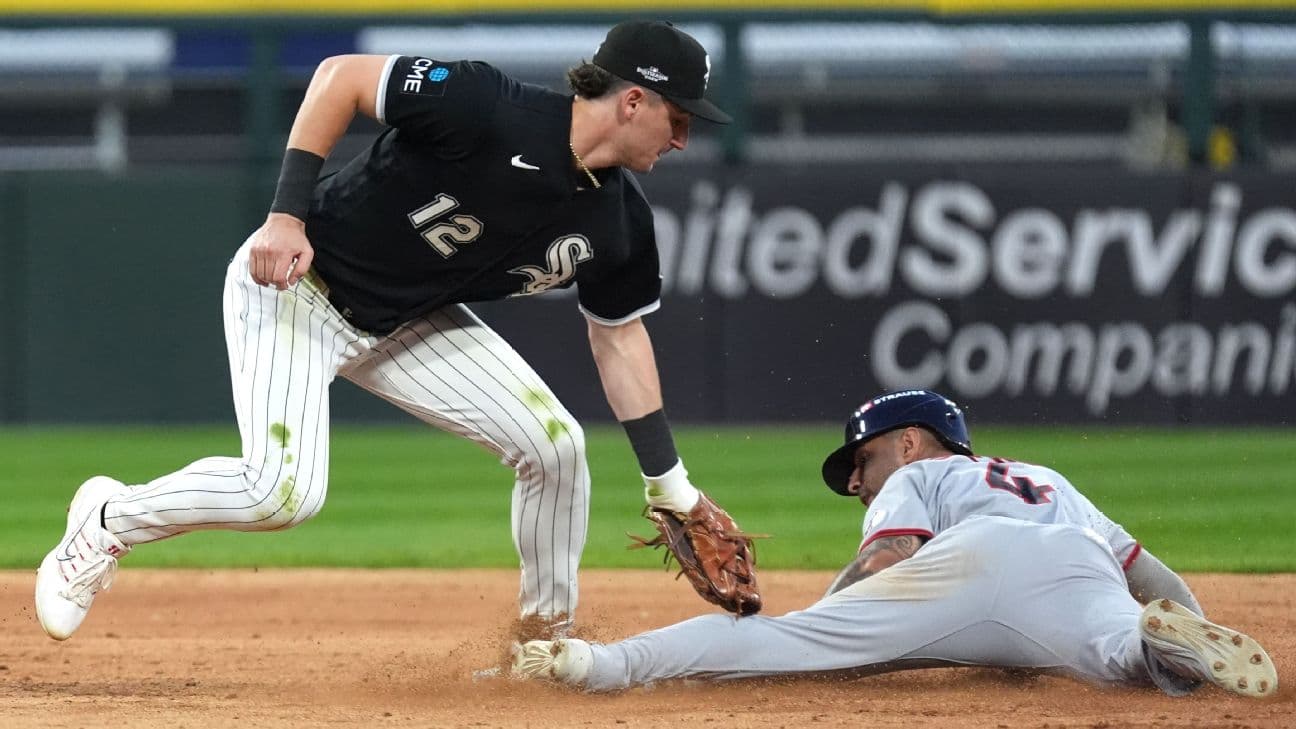
The Chicago White Sox lead the American League Central in September. That sentence would have been treated as a typo in March, when the club opened at roughly 100-to-1 to win the division on major sportsbooks after a season in which it lost 102 games. Entering the weekend Chicago sat at 72-64 with a three-and-a-half game lead over Cleveland, and the projection systems have moved from dismissing them to giving them a strong majority chance of reaching the postseason.
The rest of the division has cooperated. Cleveland is 69-68 and has been playing well recently, but Minnesota, Detroit, and Kansas City are all well under .500 and out of it, which turned what could have been a five-team scramble into a two-team race in a division where the winner does not need to be excellent.
How a 100-to-1 team gets here
The unglamorous answer is that the American League Central is winnable at a win total that would not sniff a playoff spot in most divisions, and Chicago has been good enough for long enough to hold the top of it for most of the season. This is not a hot streak that arrived in August. The White Sox have controlled first place for the majority of the year, which is the distinction between a team that got lucky in a small sample and a team the market simply misjudged.
The market misjudgment is worth understanding because it repeats. Preseason division prices are anchored to the prior season's record more heavily than any other input, and a 60-102 team gets priced as a 60-102 team even when the roster underneath it has turned over substantially. That anchoring is the single most exploitable bias in baseball futures, and it produced a 100-to-1 number on a team that has spent the season in first place.
The caveat is that a division lead in September is not a division title. Three and a half games with a month left is a real cushion but not a safe one, and Cleveland has both the head-to-head opportunities and the recent form to make it uncomfortable.
The betting angle
The division price has collapsed from 100-to-1 to something in the neighborhood of a modest favorite, which means the value is gone from the futures ticket and has moved to two other places.
The first is the seeding market. If Chicago holds the division, it would land in the American League's top group with a chance at a first-round bye, and bye markets are consistently underpriced for teams the public does not respect. A club with a 102-loss season in its immediate past does not attract the handle that its record deserves, and that gap persists into October.
The second is the game-by-game market. Teams that outperform their preseason projection by this margin tend to stay slightly underpriced on a nightly basis for the rest of the season, because the closing line is built partly on power ratings that update slowly. That is a small, grinding edge rather than a headline one, but it is the more reliable of the two.
The counter-position deserves a fair hearing. Chicago's run differential and underlying metrics are the obvious place to look for regression, and a team winning a weak division is not the same as a team that will win a playoff series. Nothing here argues for the White Sox as a World Series price.
Fantasy fallout
A contending White Sox roster changes the calculus for fantasy managers in two specific ways.
Playing time stops being a question. Bad teams shuffle lineups, promote prospects mid-race, and rest veterans in September. Contending teams do the opposite, which means the White Sox regulars who have carried the season will keep playing every day through the final week, and their counting stats will not be interrupted by a rebuild's roster experiments.
The bullpen is where the leverage concentrates. A team playing meaningful September games uses its high-leverage arms in high-leverage spots, which supports save and hold opportunities that a last-place club simply does not generate. In category leagues that come down to a single save, knowing which teams are playing games that matter is worth more than any waiver-wire scouting.
The Verdexed model take
Verdexed's model has treated the American League Central as the division with the widest gap between market perception and standings reality for most of the season, and the White Sox are the reason. The model's core adjustment is to weight current-season performance far more heavily than prior-season record once a club passes the hundred-game mark, which is the point at which the sample stops being noise.
By that standard Chicago is not a fluke leading a division. It is the best team in a weak division, holding a lead it has held for months, with a schedule that no longer requires it to beat anyone impressive. The projection is that the White Sox win the Central more often than not, and that the market continues to underrate them on a nightly basis until the season ends.
What is next
The Cleveland series remaining on the schedule are the whole story. A three-and-a-half game lead with head-to-head games left is a lead that can evaporate in a weekend, and those are the dates to circle for both bettors and anyone rostering White Sox and Guardians players in fantasy playoffs.
Everything else is arithmetic. Chicago has to keep beating the teams that are already eliminated, which it has done all year.