The Falcons and Packers Number Keeps Drifting Toward Atlanta on Thursday Night
By Verdexed Analytics
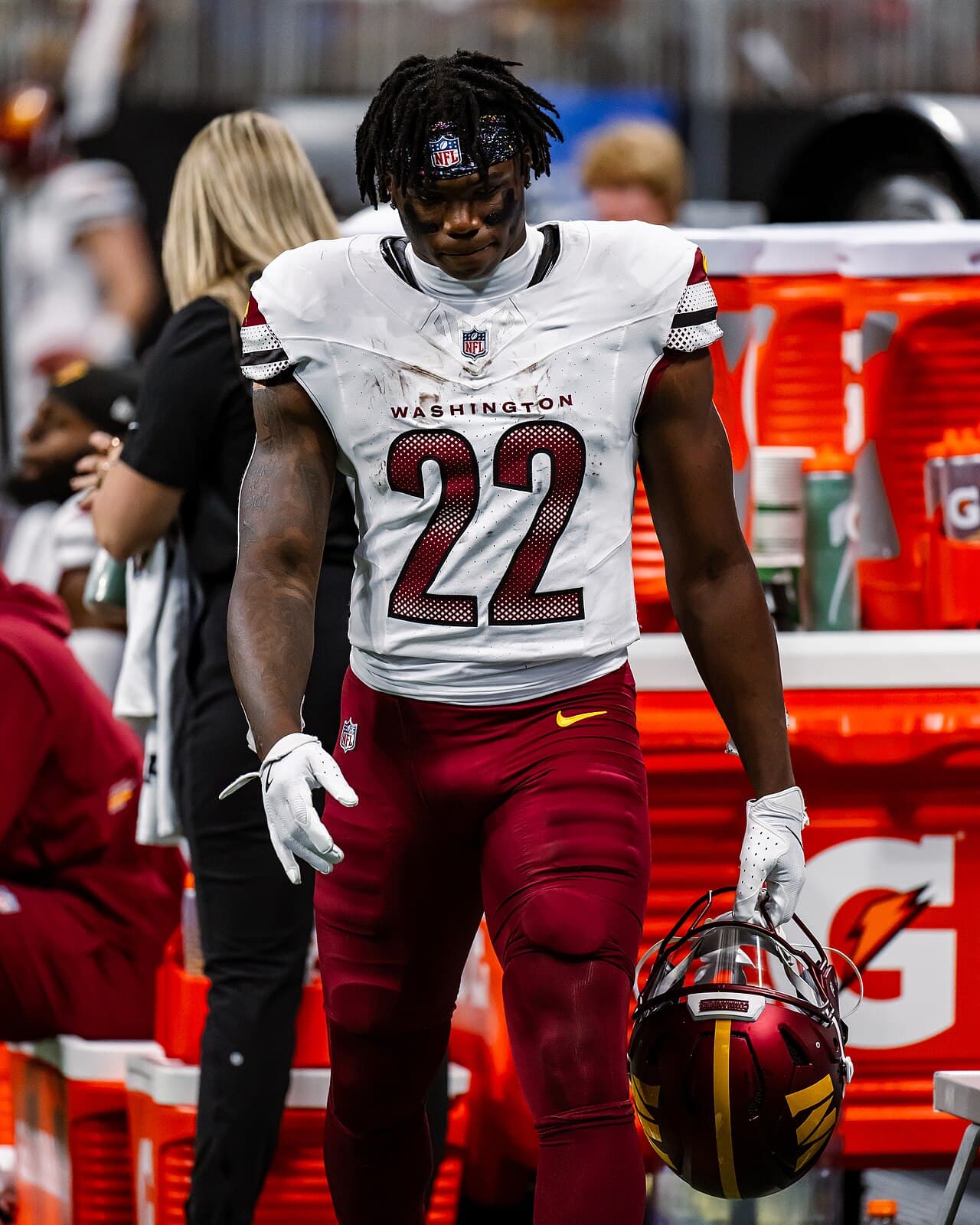
Green Bay hosts Atlanta on Thursday night at Lambeau Field with the Packers laying roughly 5.5 points and a total sitting near 43.5. That spread is notable because it has been moving in one direction all week. Reports of Michael Penix Jr. being named Atlanta's starter pushed the number toward the Falcons, and additional money has continued to come in on the road underdog since. A 1-1 home team with a healthy quarterback getting shorter against a 0-2 team is not the shape of a market that trusts Green Bay.
Penix is back and the Falcons finally have a quarterback
Penix is returning from a torn ACL, and his availability is the single largest input into this line. Atlanta's first two weeks were a disaster at the position. Tua Tagovailoa, signed to start, injured his oblique in practice before Week 1 and has not played. The fill-in quarterbacks combined for a pile of interceptions and turnovers across a 20-13 loss to Pittsburgh and a 34-3 wipeout at the hands of Carolina.
A 34-3 loss is the kind of result that distorts a market. Teams coming off blowouts get overpriced as underdogs by public bettors and then get bought back by anyone who looks at why the blowout happened. In Atlanta's case the answer is straightforward: the quarterback play was unplayable. Swapping that out for a starter, even one working back from a major knee injury, is a meaningful upgrade to the floor.
The caveat is that Penix has not played competitive football in a long stretch, and first games back from ACL reconstruction are rarely clean. Expect Atlanta to lean on structure: play action, quick game, and a heavy dose of the run to keep him out of obvious passing downs.
Why the market is siding with the road team
There are two arguments for Atlanta and they stack. The first is the quarterback upgrade already described. The second is that Green Bay has not been convincing. The Packers opened with a 39-22 loss to Minnesota and needed overtime to get past the Jets 20-17. Giving up 39 points at home and then scraping past a bad team is a 1-1 record that reads worse than it looks on paper.
Green Bay also has a receiver problem. Jayden Reed did not practice this week with a neck injury and there is no timeline on his return, after he was hospitalized overnight following the Jets game. That removes Green Bay's most explosive perimeter target and pushes more of the passing game onto Matthew Golden and the tight ends.
Short-week games favor the team with the simpler plan. Atlanta's plan is simple by necessity: protect Penix, run the ball, stay in the game. Green Bay's is more complicated with its receiver room in flux.
The total is the more interesting number
At 43.5, this game is priced as a low-scoring, slow affair, and the reasoning is obvious. Atlanta has scored 16 points in two games. Green Bay's offense has been inconsistent and is missing a starting receiver. Thursday night games have a long history of sloppy football, especially in September when the short week catches up to offensive timing before defensive timing.
The counterargument is that all three of those things are backward-looking. Atlanta's offensive futility is a function of who was playing quarterback, and that input has changed. The historical head-to-head between these franchises has trended over. And Lambeau in late September is not a weather game; the conditions that push totals down at this stadium arrive in November, not now.
Our lean is toward the over side of 43.5, with the caveat that it is a lean and not a hammer. The strongest version of this position is a first-half over or a live over if the game opens with a quick score, because the market prices Thursday night unders aggressively and often overshoots.
Fantasy angles on a short slate
Thursday night is a one-game slate, and the usable pieces are limited. Bijan Robinson is the obvious anchor: a quarterback upgrade helps a running back more than it hurts him, because defenses can no longer load the box against a team with no downfield threat. Drake London's floor also improves materially with Penix throwing to him rather than a backup.
On the Green Bay side, Josh Jacobs remains the safest play in a game the Packers are favored to control on the ground. Matthew Golden is the beneficiary of the Reed absence and is the leverage play in DFS. The tight end spot is thin for both teams.
If you are building a showdown lineup, the structural bet is a game that stays close. A close game means both offenses stay on script, both running backs stay involved, and the captain slot is a coin flip between Robinson and Jacobs.
The Verdexed model take
Our model reads this as closer to a field goal than to a touchdown, which puts us on the Falcons side of 5.5 with the number where it is. The core of that read is that Atlanta's first two weeks contain almost no usable information about a team with Penix under center, while the market has partially anchored to a 34-3 result that a different quarterback produced.
The risk is obvious and we will name it: a quarterback in his first game back from ACL reconstruction on a short week on the road at Lambeau is a genuinely difficult assignment. If Penix is rusty or the Packers get an early two-score lead, this gets ugly fast. That is why the recommendation is the spread and not the moneyline.
What to watch before kickoff
Watch Atlanta's injury designations for Penix's practice participation level, and watch Green Bay's for anything that changes the receiver picture beyond Reed. Watch the number itself: if it keeps sliding toward 4.5, the value on Atlanta has been squeezed out and the play becomes a middle or a pass. And watch the total, because a move down toward 42 would strengthen the over case rather than weaken it.
The broader lesson applies past Thursday. Teams that lose badly with a backup quarterback and then get their starter back are the most systematically mispriced group in September, because the market has two weeks of terrible results to anchor to and one line of injury-report news to work with.