 NFL2026-07-11
2026 Rookie WR Risers: KC Concepcion, Denzel Boston, and the Camp Battles to Draft
By Verdexed Fantasy Desk
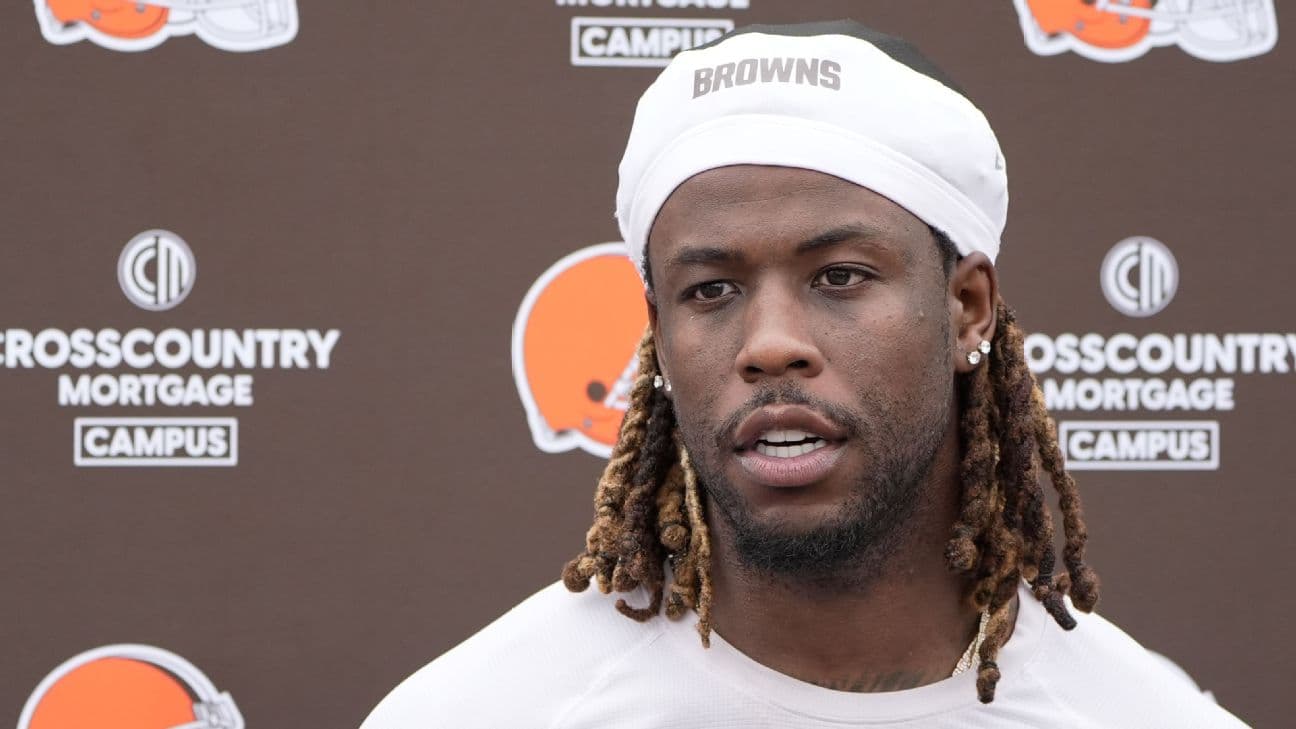
Rookie wide receivers are the lifeblood of fantasy football breakouts, and the 2026 class has a group of first-year pass catchers climbing draft boards as training camps open. From Cleveland to New York to Baltimore, several rookies flashed in spring work and now enter camp with real paths to snaps. The trick, as always, is separating the ones with a clear route to targets from the ones stuck behind entrenched veterans.
Opportunity is the whole game for rookie receivers. Talent gets them drafted, but target share is what produces fantasy points, and target share is a function of depth chart and scheme. The names below are the ones whose situations, not just their draft pedigree, make them worth a late-round pick or a dynasty investment.
KC Concepcion's Cleveland runway
The Browns spent the No. 24 overall pick on KC Concepcion, and he has already drawn comparisons to Ravens receiver Zay Flowers for his separation quickness and yards-after-catch ability. New head coach Todd Monken is overhauling Cleveland's offense, and Concepcion's skill set fits the kind of role that produces early. General manager Andrew Berry has called veteran Jerry Jeudy the bell cow of the passing game, so Concepcion will not command the top target share out of the gate, but a complementary role in a modernized offense can still deliver fantasy value.
The upside case is that Concepcion becomes Cleveland's version of the movable, separation-first weapon that Monken loves to scheme touches for. Fellow rookie Denzel Boston adds intrigue to the room after reportedly being among the most impressive offensive players in Cleveland's spring sessions, per beat coverage. The Browns finally have a receiver room worth drafting from, and camp will decide the pecking order behind Jeudy.
Omar Cooper Jr. and the Jets
In New York, rookie Omar Cooper Jr. was the Jets' most impressive first-year player during spring workouts, per reporting, all but solidifying a spot in the three-receiver package. The note that matters for fantasy is the expectation that he gets even better once the pads come on, given a physical style and run-after-catch profile that translates to a full-contact environment.
A rookie who is already locked into three-receiver sets has cleared the biggest hurdle: he will be on the field. That baseline of snaps gives Cooper a floor most rookies lack, and it makes him a sensible late-round target in redraft and a stronger one in dynasty, where his multi-year runway compounds the value.
Baltimore's WR2 competition
The Ravens created a genuine camp battle by drafting Ja'Kobi Lane in the third round and Elijah Sarratt in the fourth to compete with veteran Rashod Bateman. It is one veteran against two rookies for meaningful snaps in a Baltimore offense that, when it throws, can support fantasy production. This is a wait-and-see room, but the winner of the WR2 reps becomes fantasy-relevant given the offense's ceiling.
The read here is patience. Deferring a draft pick on any single Baltimore receiver until the depth chart clarifies is the disciplined move, but the situation is worth monitoring closely because the payoff for the winner is real.
The Verdexed model take
Verdexed's rookie receiver projections weight landing spot and projected route participation more heavily than draft position, because history shows that snaps and targets, not draft capital, drive first-year fantasy output. By that measure, Cooper's near-certain role in the Jets' three-receiver sets gives him the most stable projection of this group, a defined floor that many higher-drafted rookies lack. Concepcion carries the widest upside range: capped by Jeudy's bell-cow role but boosted by a scheme built to manufacture touches for a separation weapon. Baltimore's rookies score as high-variance until the WR2 reps are settled.
The model's overall guidance is to prioritize the rookies with confirmed snaps over the ones with bigger names but murkier roles, and to treat this as a class where the second-round-of-fantasy-drafts value lies in situation, not pedigree.
What to do in your league
In redraft, Cooper and Concepcion are the two names to target late, with Cooper the safer floor and Concepcion the higher ceiling. In dynasty, all four of these rookies merit rostering, with the Baltimore pair worth stashing until the WR2 battle resolves. Do not reach for any of them in the early rounds, but do not let the ones with clear paths to snaps slide out of your draft entirely.
What history says about rookie receivers
The broader lesson of recent draft classes is that rookie receiver production is bimodal: a handful hit immediately as their team's featured target, while most need a year before the light comes on. The immediate hitters almost always share two traits, an early role in three-receiver sets and a quarterback situation stable enough to feed them, and both are visible by the end of camp. That is why the process matters more than the pedigree. A third-round pick locked into the slot can out-produce a first-rounder buried on the depth chart, and the difference shows up in snaps, not scouting reports.
Applied to this class, the framework favors the rookies whose paths to the field are clearest. Cooper's spot in the Jets' three-receiver package and Concepcion's fit in a scheme built to manufacture touches give them the early-role trait that history rewards. The Baltimore rookies have the talent but not yet the confirmed role, which places them in the wait-a-year bucket until camp says otherwise. For dynasty managers, all of these names carry multi-season value regardless of Year 1 output, but for redraft, the ones with defined roles now are the only ones worth a real pick, because a rookie without snaps is a bench clog no matter how promising the film.
What's next
Padded practices and the preseason will settle these rooms in a hurry. Watch for which rookies run with the starters, who earns slot-versus-outside roles, and, above all, who draws targets in the red zone. The 2026 rookie receiver class is deep in situations that can produce, and the managers who track camp closely will land the risers before their ADP catches up.