 NFL2026-07-02
2026 NFC West Win Totals: The Rams and Seahawks Set the Pace While the Cardinals Sit at the League's Floor
By Verdexed NFL Desk
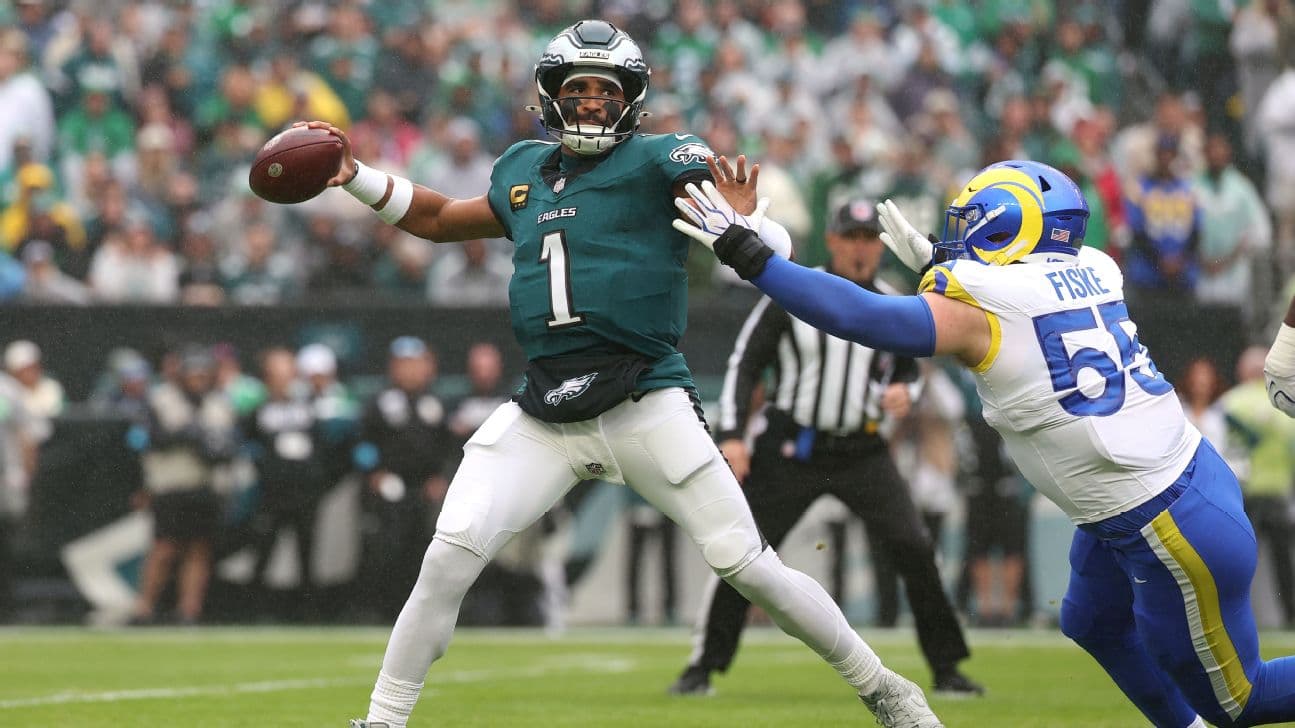
The NFC West enters 2026 as one of the most top-heavy divisions in football, with the Los Angeles Rams and the reigning Super Bowl champion Seattle Seahawks both carrying win totals in the double digits, the San Francisco 49ers priced as a bounce-back question, and the Arizona Cardinals sitting near the very bottom of the league's board. For bettors weighing win-total overs and unders, and for fantasy managers gauging which offenses will play with leads, the division's shape is unusually clear at the top and murky in the middle.
Market numbers vary by book, but the structure is consistent: the Rams and Seahawks both land around the double-digit mark, the 49ers settle in the range of a solid playoff contender, and the Cardinals check in with one of the lowest totals in the NFL. That distribution tells a story of two established contenders, one team trying to reestablish itself, and one club in a difficult spot.
Rams and Seahawks: the double-digit tier
The Rams open with a win total in the double digits, reflecting a roster the market trusts and a division title picture in which Los Angeles is a co-favorite. Seattle, coming off a championship season, carries a similar number, and the two teams have traded position atop the division-winner odds as books fine-tune their views. From a fantasy standpoint, both offenses profile as units likely to play meaningful, competitive football deep into the season, which supports the fantasy value of their skill players in the categories that reward volume and scoring.
The key betting question is whether reigning success is fully priced in. Championship teams often carry inflated numbers the following season as the market accounts for their pedigree, and regression to the mean is a real force in the NFL. The Seahawks' title raises the bar for a repeat-caliber campaign, while the Rams' number reflects a team the market believes is built to contend without the burden of defending a championship. Both are legitimate double-digit-win contenders, but the value on their overs depends on how much of last season's success the number already assumes.
The 49ers: a bounce-back priced in the middle
San Francisco's win total lands in the range of a solid playoff hopeful, below the two division favorites but comfortably above a rebuilding line. The 49ers' number is a referendum on health and continuity as much as talent; when their core is on the field, they profile as a contender, and when it is not, the floor drops quickly. That variance is the crux of the betting decision, and it also shapes the fantasy outlook for their skill players, whose ceilings are high but whose availability carries risk.
For fantasy managers, the 49ers remain a source of high-upside pieces in a division where two rivals are also strong. The betting read is more nuanced: the win-total number sits in a spot where the over requires the roster to stay healthy and the under bets on the injury history repeating. It is a classic health-variance play, and bettors should weight games-played risk accordingly.
The Cardinals: the league's floor
Arizona carries one of the lowest win totals in the NFL, a number that places the Cardinals among the league's most pessimistically projected teams alongside a small group at the bottom of the board. That total reflects a roster and quarterback situation the market views skeptically, and it caps the fantasy appeal of Arizona's skill players, who project to spend much of the season trailing and throwing in negative game scripts. Negative game scripts can inflate passing volume, which is a narrow fantasy silver lining, but a low team total generally suppresses the value of a skill group.
The Verdexed model take
Verdexed's model favors Seattle at the top of the division, projecting the Seahawks fractionally ahead of the Rams, with the two separated by a razor-thin margin that makes the division race one of the closest in football. The model views San Francisco as a clear third with meaningful upside if healthy, and it aligns with the market in placing Arizona at the bottom.
On the win totals, the model's read is that the two double-digit numbers at the top are fair rather than exploitable, given how strong both the Rams and Seahawks project. Its most interesting lean is on the 49ers, where the health-variance profile creates a wider range of outcomes than the number suggests, and on the Cardinals, where a low floor is appropriate but the exact placement relative to the league's other bottom teams is where any edge would live.
What it means for bettors and fantasy managers
For bettors, the NFC West is a division to attack at the margins rather than the top: the Rams and Seahawks are fairly priced contenders, the 49ers are a health-dependent variance play, and the Cardinals are a low floor whose exact number is the question. For fantasy managers, prioritize the skill players on the two division favorites, treat the 49ers as high-ceiling-with-risk, and fade Arizona's pieces outside of deep-league passing volume. The division's top is settled and strong; the value, as always, lives in the middle and at the margins.
The bottom line
The NFC West is a division where the market has the top mostly right, which is precisely why the sharp money looks elsewhere within it. Backing the Rams or Seahawks on the over means paying up for teams the public already loves, and reigning-champion regression is a real risk on Seattle's number. The 49ers are the classic health-variance bet, a roster whose over hinges on availability more than talent. And Arizona's low floor, while appropriate, invites a closer look at exactly where its number sits relative to the league's other bottom teams. For fantasy managers, the takeaway mirrors the betting one: load up on the skill players attached to the two contenders, treat San Francisco's pieces as high-ceiling gambles, and avoid Arizona's outside of deep-league passing volume. Attack the edges, not the obvious, and the NFC West offers more value than its top-heavy shape first suggests.