 NFL2026-07-07
Kenneth Walker III Lands a Chiefs Bell-Cow Role: Top-Five Fantasy RB Upside With an ADP Catch
By Verdexed Fantasy Desk
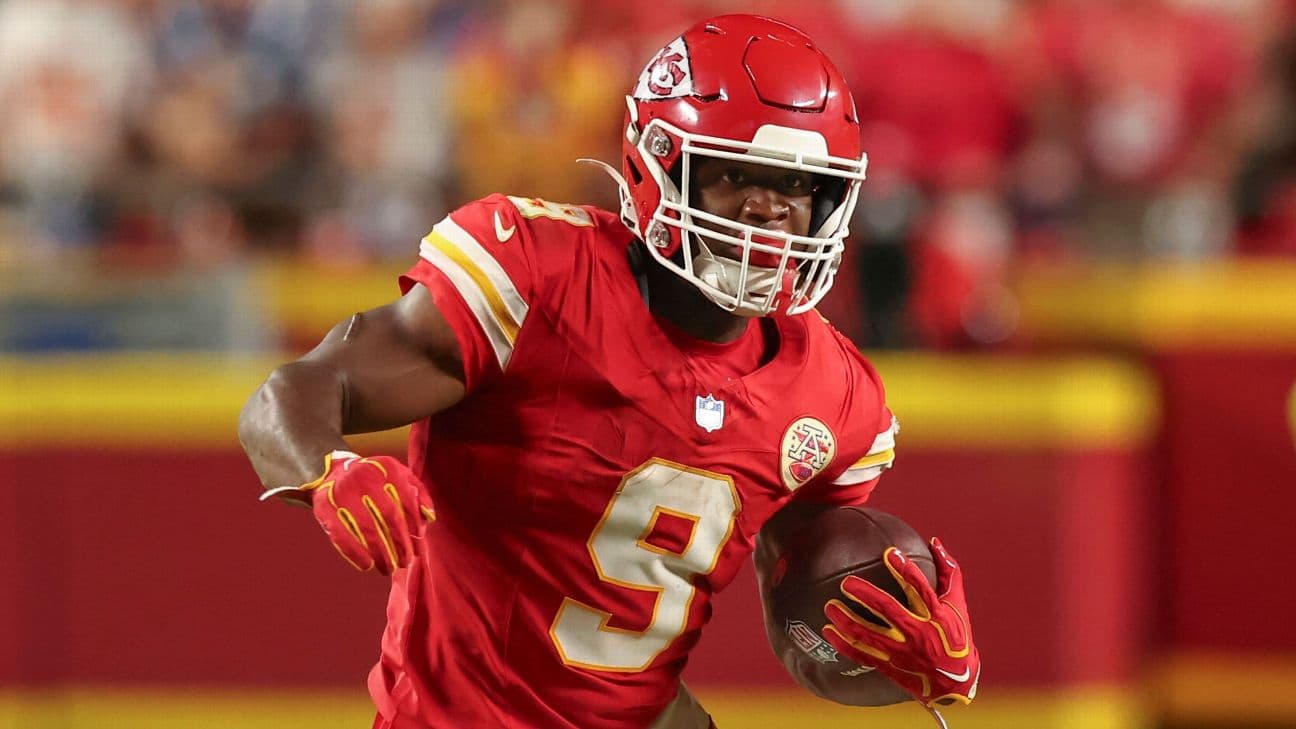
Kenneth Walker III has the clearest path to a workhorse role of his career after signing a three-year deal reported around $43 million with the Kansas City Chiefs, and that landing spot has vaulted him up early fantasy football boards. With Isiah Pacheco gone, Walker steps into a Kansas City backfield that projects to lean more heavily on the run, giving him the every-down opportunity he never fully had in Seattle. The talent has never been in question; the workload finally matches it.
That combination has pushed Walker into the early second round of drafts, and it is fair to ask whether the price has already outrun the profit. The role is a genuine upgrade, but the ADP is doing a lot of work.
The role that changes everything
In Seattle, Walker was a dynamic, explosive back who spent his career splitting carries and ceding passing-down and goal-line work. In Kansas City, the runway is clear. He projects for a heavy early-down workload with goal-line responsibility, the two ingredients that turn a talented back into a fantasy every-week starter. A back who touches the ball 15 to 18 times a game with red-zone equity in a productive offense is exactly the kind of asset fantasy managers build around.
The context around him only helps. Kansas City remains one of the league's most reliable scoring environments, which means touchdown opportunities and positive game scripts that keep a lead back on the field. A run-leaning approach around Walker suggests the Chiefs want to control games on the ground, and that game plan funnels volume directly to their new lead back.
Where the caution comes in
The hesitation is not about the role, it is about the price and the fit. Walker's career has carried two persistent flags: durability, since he has dealt with in-season injuries, and pass-game usage, since he has not been a high-volume receiver out of the backfield. A back drafted in the early second round is being valued as a locked-in every-week RB1, and that valuation assumes both a full season of health and a receiving role that expands beyond his career norms.
There is also the reality that Kansas City's offense, even in a run-leaning tilt, still runs through its passing game in the biggest moments. If the Chiefs use a change-of-pace back on obvious passing downs, Walker's PPR ceiling gets trimmed even as his rushing floor stays high. The gap between his rushing-driven floor and his three-down ceiling is the entire fantasy question, and the ADP is pricing the ceiling.
The Verdexed model take
Verdexed's model loves the situation and respects the price with equal conviction. The opportunity is elite: a clear lead back in a high-scoring offense with goal-line work is a top-12 fantasy profile almost by default, and the top-five upside cited around the league is real if Walker holds the passing-down role and stays healthy for 17 games.
The model's caution is that early-second-round backs need to hit their ceiling to return value, and Walker's ceiling depends on two variables he has not consistently delivered: receiving volume and availability. The model's read is that Walker is a strong RB1 target whose realistic outcome sits a tier below the elite bell cows, making him a better value if he slips toward the back half of the second round than a must-draft at the front of it.
Fantasy fallout beyond Walker
Walker's arrival closes the book on the dynasty value of the Chiefs' previous backfield committee, and it also reshapes how managers should view the rest of Kansas City's skill group. A run-leaning approach can quietly cap the target volume for the pass catchers, which is worth factoring into rankings for the receivers and tight end in the offense. The Chiefs' passing game remains fantasy-relevant, but a genuine ground commitment redistributes some of the scoring.
For Walker specifically, the handcuff situation is worth monitoring through camp. Given his injury history, whoever emerges as the primary backup carries real contingency value, and a lead back in a good offense makes his handcuff one of the more valuable late-round stashes for anyone who drafts Walker.
Betting angle
Walker's landing spot creates a live player-props market worth monitoring. A back walking into a lead role with goal-line work in a high-scoring offense is a natural candidate for rushing-touchdown and rushing-yardage numbers, and where the market sets his season-long totals will reveal how much of the bell-cow role it is pricing in. If his rushing-yards number is set on his committee-era production in Seattle, the expanded workload argues for the over; if it already reflects a full workhorse projection, the health risk makes it fairer.
His anytime-touchdown market is the cleaner angle. Goal-line equity in Kansas City's offense is valuable, and a back with that role tends to find the end zone often enough to make touchdown-based props and same-game-parlay legs appealing, provided he stays healthy for a full slate.
What to do in your league
Rank Walker as a firm RB1 and target him at the back of the second round rather than reaching at the top of it. If he falls to you at a slight discount, he is one of the better value RB1s on the board because the role is so clean. If the price climbs into elite-back territory, let someone else pay for a ceiling that depends on health and receiving work.
If you do draft Walker, spend a late pick on his backup as insurance, and adjust your expectations for the Chiefs' pass catchers slightly downward to reflect the run-leaning game plan. The bottom line: Walker finally has the job his talent always deserved, and that makes him a confident fantasy starter. Just do not let the excitement of the landing spot talk you into paying for the absolute ceiling when the floor is what makes him valuable.