 NFL2026-07-27
KC Concepcion and Denzel Boston Reshape the Browns Receiver Room: The Fantasy Order of Operations
By Verdexed Fantasy Desk
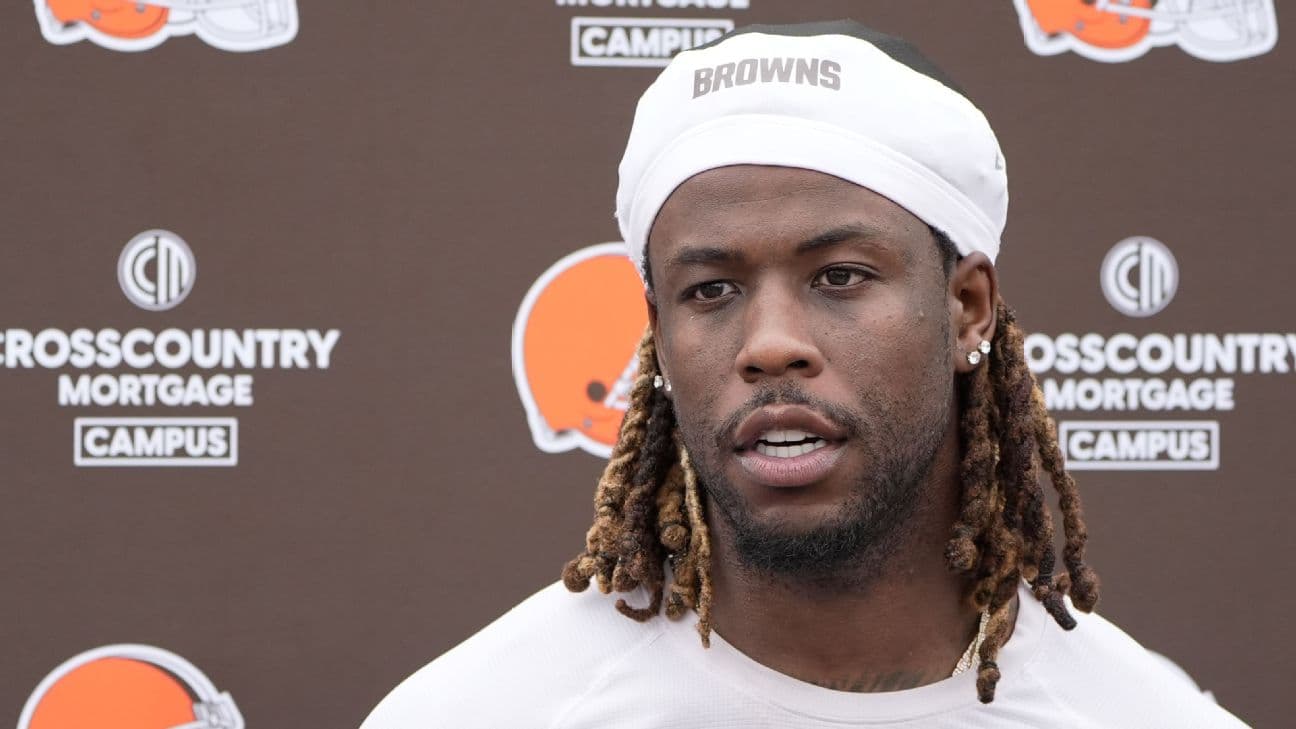
The Cleveland Browns used the 24th overall pick on Texas A&M receiver KC Concepcion and came back at No. 39 for Washington's Denzel Boston, and the result is a wide receiver room that went from thin to crowded in the span of two draft rounds. With camp underway, the question fantasy managers need answered is not whether Cleveland has talent at the position. It is which of five or six plausible contributors will actually see enough targets to matter.
The room now includes Concepcion, Boston, Jerry Jeudy, Cedric Tillman, second-year speedster Isaiah Bond, free-agent addition Tylan Wallace, and depth pieces including Luke Floriea and Gage Larvadain. Jamari Thrash was tendered in March. That is a lot of bodies competing for what is realistically three meaningful roles.
What Cleveland bought
Concepcion is the more explosive of the two rookies, a speed and elusiveness profile who projects most naturally into the slot. Reports out of the offseason program have been consistently positive, describing a player who separates quickly underneath and creates after the catch. Cleveland's coaching staff has indicated it expects both rookies to contribute regardless of where they land in the pecking order.
Boston is the bigger-bodied outside receiver, and the value of getting him at 39 is that multiple evaluators had assigned him a first-round grade. Two receivers with first-round grades in the same class is an aggressive resource allocation for a team that already had Jeudy under contract, and it says something about how the organization viewed the position.
The complication is that Concepcion's most natural role, the slot, is not uncontested. Bond flashed genuine deep speed as a rookie in 2025, finishing with 18 catches for 338 yards, an average of 18.8 yards per reception that reflects how he was used. He is not a volume player yet, but a young receiver who wins vertically is exactly the type a new coaching staff talks itself into keeping on the field.
The fantasy order of operations
Start with the constraint that matters most: Cleveland's quarterback situation remains unsettled, with the job open between Deshaun Watson and Shedeur Sanders under new offensive play-calling. A receiver room's aggregate fantasy value is capped by the passing offense it belongs to, and no honest projection for Cleveland puts it in the upper half of the league in passing volume or efficiency.
That reality compresses the range of outcomes. In a middling passing offense with six receivers competing, the realistic best case for any individual is WR3 production with weekly variance, not a WR1 season.
Jerry Jeudy is the incumbent with the most established target history and the highest floor in the room. He is also the player whose share is most directly threatened by two rookies. Treat him as a bench flex with name-value pricing that may not survive camp.
KC Concepcion is the rookie to prioritize in redraft, because slot receivers who win underneath convert opportunity into targets faster than outside receivers do, and because first-round draft capital buys patience from a coaching staff. He belongs in the last few rounds of a redraft board and higher in best-ball, where his week-to-week volatility is a feature rather than a bug.
Denzel Boston is the better dynasty asset if you believe the first-round grades, but the redraft path is harder. Outside receivers in crowded rooms tend to earn their volume in year two.
Cedric Tillman and Isaiah Bond are the roster-crunch casualties in most scenarios, though Bond's specific skill is one that survives a target squeeze better than Tillman's does.
The Verdexed model take
Our projection framework allocates team target volume before it distributes individual shares, and Cleveland's team-level number is the binding constraint. When we run the room, the total projected fantasy points available across all Browns receivers is meaningfully below what a similarly talented group in a top-ten passing offense would generate. That is not a knock on the players. It is arithmetic.
Where the model does see an edge is in the shape of the distribution. Our system reads first-round rookie receivers with slot alignment as the highest-probability path to a concentrated target share in an unsettled room, because slot usage correlates strongly with quick-game concepts that quarterbacks under pressure lean on. That points at Concepcion.
The model is more skeptical of the veteran tier than the market is. Jeudy's ADP prices in continuity that a two-receiver draft class actively contradicts.
Betting angle
Receiving-yardage season props for this room are unusually well-suited to unders across the board, not because any individual player is bad, but because six credible receivers dividing a below-average target pool produces a lot of disappointment. Books tend to set individual props off talent and draft capital, and draft capital is a poor predictor when it is duplicated within the same room.
The cleaner market expression is Cleveland's team passing total, where our model sits below consensus for the same structural reasons.
What to do in your league
Do not draft a Browns receiver in the first eight rounds of a redraft league. Do take Concepcion as a late-round upside swing, particularly in best-ball formats where his boom weeks carry full value. In dynasty, Boston is the name worth acquiring at a discount from managers frustrated by a crowded depth chart, since the room will look different in eighteen months.
Most importantly, wait. Camp will resolve this faster than any preseason ranking can. The single most valuable data point over the next three weeks is which receiver takes first-team slot reps when the offense is in eleven personnel. That player is the one worth rostering, and everyone else in this room is a dart throw until Cleveland shows its hand.