 NFL2026-08-25
Josh Allen Is the NFL MVP Favorite Again and the Market Rarely Gets This Right
By Verdexed Analytics
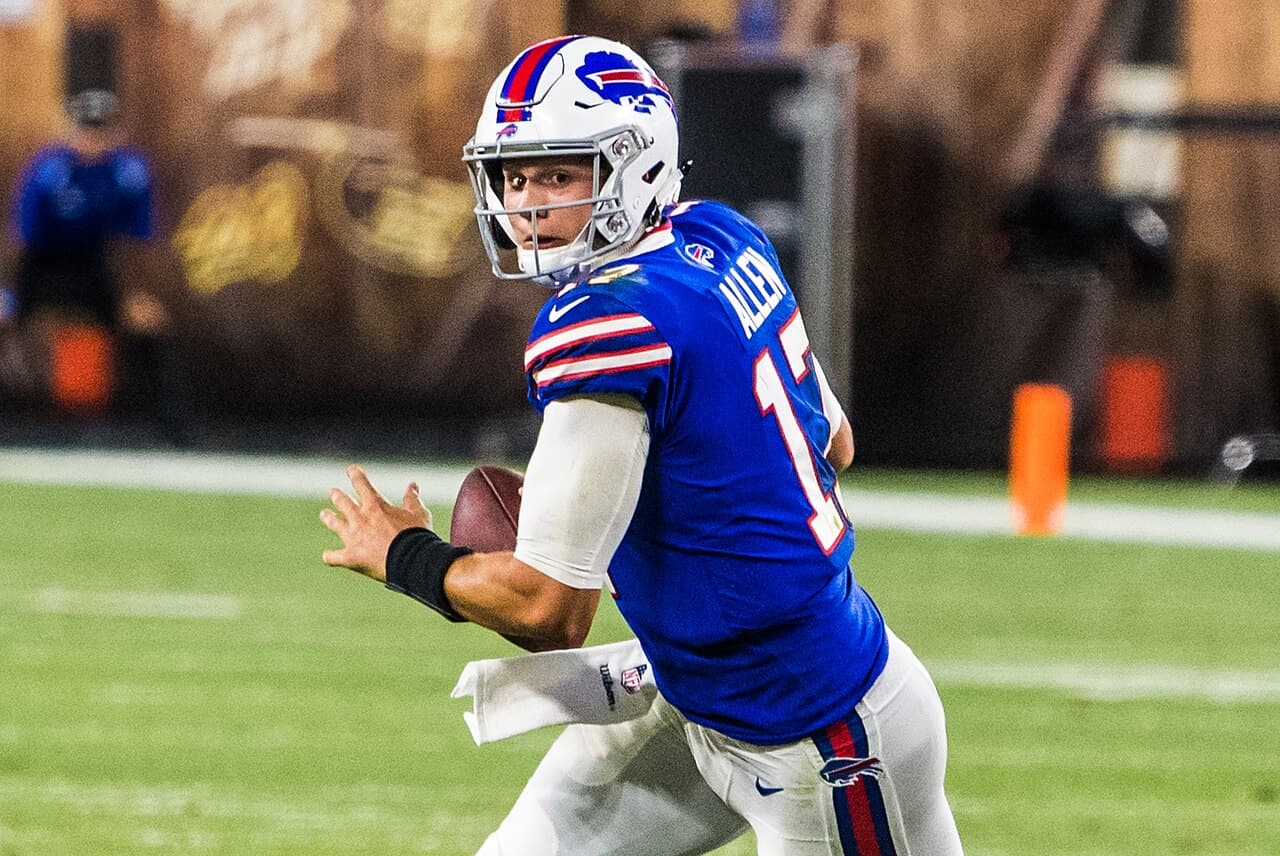
Josh Allen enters the 2026 season as the consensus NFL MVP favorite, priced in the +600 range across major sportsbooks with modest variation between them. Lamar Jackson sits next at roughly +700 to +850 depending on the book, followed by a cluster that includes Drake Maye, Joe Burrow, Justin Herbert, Patrick Mahomes and Matthew Stafford in the +900 to +1200 band.
That is a familiar board. It is also a board that has a poor recent record of predicting the actual winner, and understanding why is the difference between betting this market well and donating to it.
The structural problem with preseason MVP favorites
Thirteen consecutive MVP awards have gone to quarterbacks, so the market's decision to price only quarterbacks near the top is correct. The error is in which quarterback.
MVP is not a talent award. It is a narrative award that correlates most strongly with two things: team win total and a statistical season that stands out from the quarterback's own baseline. The second condition is where the favorites lose. A quarterback who is already understood to be elite has to post a career year to win, because voters have already priced his normal season into their expectations. A quarterback who was not in the conversation in August only has to have a very good year on a team that wins 13 games.
Allen has already won the award. Jackson has won it twice. Mahomes has won it twice. Voters have seen their ceilings. The value in this market has historically lived at +1500 and longer, in the quarterback whose team improves by three or four wins and whose numbers jump from good to excellent.
Where the model disagrees with the board
Verdexed's projections have Buffalo among the strongest teams in the AFC, which supports Allen's position at the top of the board on merit. The disagreement is about price, not about the player. At +600, the implied probability sits near 14 percent, and the model's simulated MVP share for Allen sits below that once you account for the number of quarterbacks who can plausibly clear the statistical bar in any given season.
Drake Maye is the name where the model and the market are closest to agreeing, and he is the more interesting ticket. New England added A.J. Brown this offseason, which gives Maye the first true number one receiver of his career and materially raises the projected passing output. A young quarterback with a new alpha target on a team the model expects to improve is the exact profile that wins this award from a double-digit price. His number in the +900 to +1100 range is the best combination of realistic path and acceptable payout on the board.
Lamar Jackson is the model's other flag, in the opposite direction. Baltimore's roster has been reshaped and the projection is strong, but Jackson's price has compressed toward the favorite without a corresponding improvement in his path. He needs Buffalo to slip and needs his own numbers to top a very high personal baseline.
The bets the model prefers
The first is Maye at any price of +900 or longer, sized as a small futures position. The second is a category rather than a name: the model's simulations produce a meaningful probability that the winner is a quarterback currently priced at +2000 or longer, which argues for spreading two or three small tickets across that range rather than adding to a favorite.
Candidates in that band worth examining include quarterbacks on teams whose win totals the model projects above market. That is the screen that matters. Do not bet a quarterback you like on a team the model expects to win eight games, because the award has essentially never gone there.
The third position is a hedge rather than a bet: if you already hold Allen tickets from earlier in the offseason, the current price is a reasonable place to trade out of some exposure rather than to add.
The fantasy read is different from the betting read
None of this should change how you draft. MVP odds and fantasy quarterback value diverge because fantasy scoring rewards rushing production far more than voters do, and because fantasy managers can stream the position while bettors cannot.
Allen remains the top fantasy quarterback on Verdexed's board because of the rushing floor, and that has been true regardless of where his MVP price sits. Jackson is right behind him for the same reason. Maye's MVP case is stronger than his fantasy case, because a quarterback whose value comes from a new receiver and improved efficiency does not necessarily out-score quarterbacks who run for 500 yards.
The one place the two markets overlap is in draft-day tiebreakers. If you are choosing between two quarterbacks with similar projections, take the one on the team the model expects to win more games. Team quality drives touchdown volume, and touchdown volume drives both fantasy points and MVP votes.
What is next
MVP prices move faster than any other NFL futures market once games begin, and the first four weeks do most of the damage. A quarterback who starts 4-0 with big numbers will see his price cut in half by early October, which is why the pre-Week 1 window is the only time long shots are available at long-shot prices.
Two dates matter before then. Roster cuts on Sunday will clarify which offenses have functional supporting casts, and the final injury reports in the week before the opener will settle a handful of receiver situations that directly feed quarterback projections. Wait for both before placing anything, then take the long prices while they still exist.