 NFL2026-07-22
Jeremiyah Love Sits Atop the Cardinals Backfield: The Rookie RB1 Fantasy Managers Are Reaching For
By Verdexed Fantasy Desk
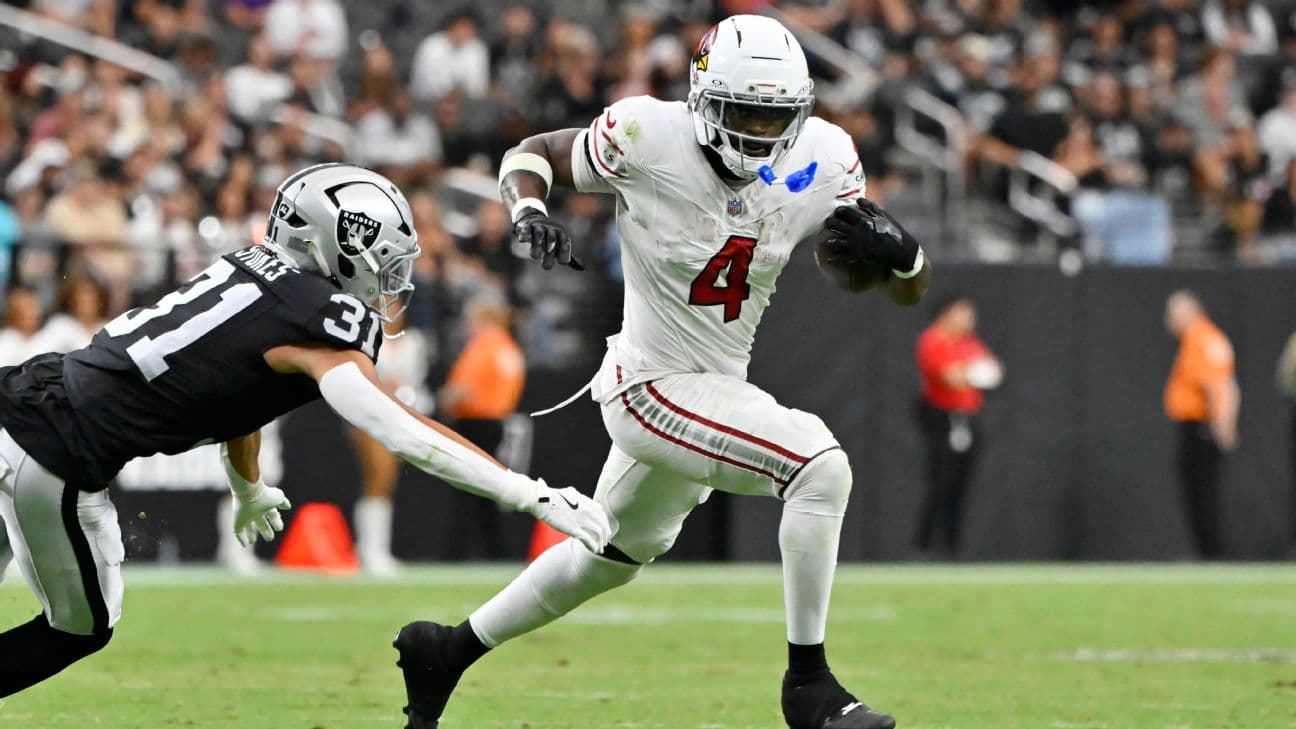
The Arizona Cardinals made Jeremiyah Love the third overall pick of the 2026 NFL Draft, the highest a running back has come off the board since the New York Giants took Saquon Barkley second in 2018, and they did it to install an immediate lead back. Love opens training camp atop the depth chart, and for fantasy managers that combination of draft capital and opportunity makes him one of the most valuable rookie running backs to enter the league in years.
Elite draft capital plus a clear path to volume is the exact profile that produces first-year fantasy stars, and Love checks both boxes. A team does not spend a top-three pick on a running back to split carries, and Arizona's coaching staff has signaled that Love projects as an immediate starter and a long-term centerpiece of the offense.
The opportunity is the whole story
Rookie running back value in fantasy is driven far more by projected touches than by college production, and Love is set up to command the backfield from Week 1. He is a three-down profile with the receiving chops to stay on the field in passing situations, which is the trait that separates a fantasy RB1 from a two-down grinder. In a Cardinals offense that is in transition and likely to lean on its most talented young player, Love has a realistic path to 250-plus touches if he stays healthy.
That is the number that matters. A rookie with a locked-in workload and pass-game usage is a set-and-forget fantasy starter, and the market has responded by pushing Love up draft boards into the back of the first round or early second in redraft leagues. That is an aggressive price for a rookie, but it is defensible given the volume runway.
What it means for Trey Benson and the handcuffs
The flip side of a rookie taking over is that the incumbents lose value fast. Trey Benson, Arizona's 2024 third-round pick, entered the offseason with breakout hopes but now projects as a change-of-pace and handcuff option behind Love. Benson retains standalone appeal only in the deepest leagues and holds real value primarily as a contingency stash: if Love were to miss time, Benson would inherit a featured role in a good offensive situation, which makes him one of the more valuable handcuffs in the league. But as a weekly starter, his path to touches is now blocked.
For dynasty managers, the calculus is stark. Love is a franchise cornerstone asset, and Benson's dynasty value has cratered from potential lead back to insurance policy. If you are holding Benson in a dynasty league, understand that his primary value now is either as a Love handcuff or as a trade chip to a manager who still believes in the speed and the situation.
The Verdexed model take
Verdexed's rookie projection model weights three inputs most heavily: draft capital, projected snap share, and receiving role. Love scores near the top of the class on all three, and our framework treats him as a legitimate top-15 running back projection rather than a speculative rookie flier. The key distinction is that Love is not a boom-or-bust dart throw; he is a volume-backed producer whose floor is elevated by the near-certainty of a featured workload.
The risk factors are the ones that apply to every rookie back: offensive line quality, game script in what may be a rebuilding season, and the natural learning curve in pass protection that can cost a young back third-down snaps early. A Cardinals team that trails often will still funnel receptions to its back, which actually supports Love's PPR floor even in negative game scripts. The bigger swing is touchdown volume, which depends on how often this offense reaches the red zone.
The dynasty and rookie-draft angle
In dynasty formats, Love is the clear headliner of the rookie class and belongs at or near the top of every rookie draft board. A running back taken third overall with an immediate featured role is the rare rookie back who carries both the draft pedigree and the opportunity that dynasty managers prize, and his long-term value is anchored by the volume runway rather than dependent on a breakout that may never come. Managers picking at the top of a rookie draft should not overthink it.
The one dynasty caution is positional: running backs carry more injury and workload risk than receivers, and a heavy early-career touch count can shorten a back's prime. That is a reason to value Love appropriately rather than to fade him, and it is why some managers prefer to draft the position and flip it near peak value. But for a contending dynasty roster that needs production now, Love is close to an ideal target: a plug-and-play RB1 with years of runway and a role that is already locked in. The touches are real, and in fantasy, touches are the currency that matters.
What to do in your league
In redraft, Love is worth a late-first or early-second-round pick, and the price is justified by the workload projection even with rookie variance baked in. Draft him as a weekly starter, not a lottery ticket. If you land Love, spend a late pick to pair him with Trey Benson and lock up one of the sport's more valuable handcuff situations. In dynasty, Love is a top-of-the-class asset worth a premium rookie pick or a significant trade package, and Benson is a sell-if-you-can piece unless you need the insurance. The Cardinals handed their offense to a rookie, and fantasy managers should follow the touches.