 NFL2026-07-12
2026 Fantasy Football Second-Year RB Breakouts: Omarion Hampton, Cam Skattebo Lead the Leap
By Verdexed Fantasy Desk
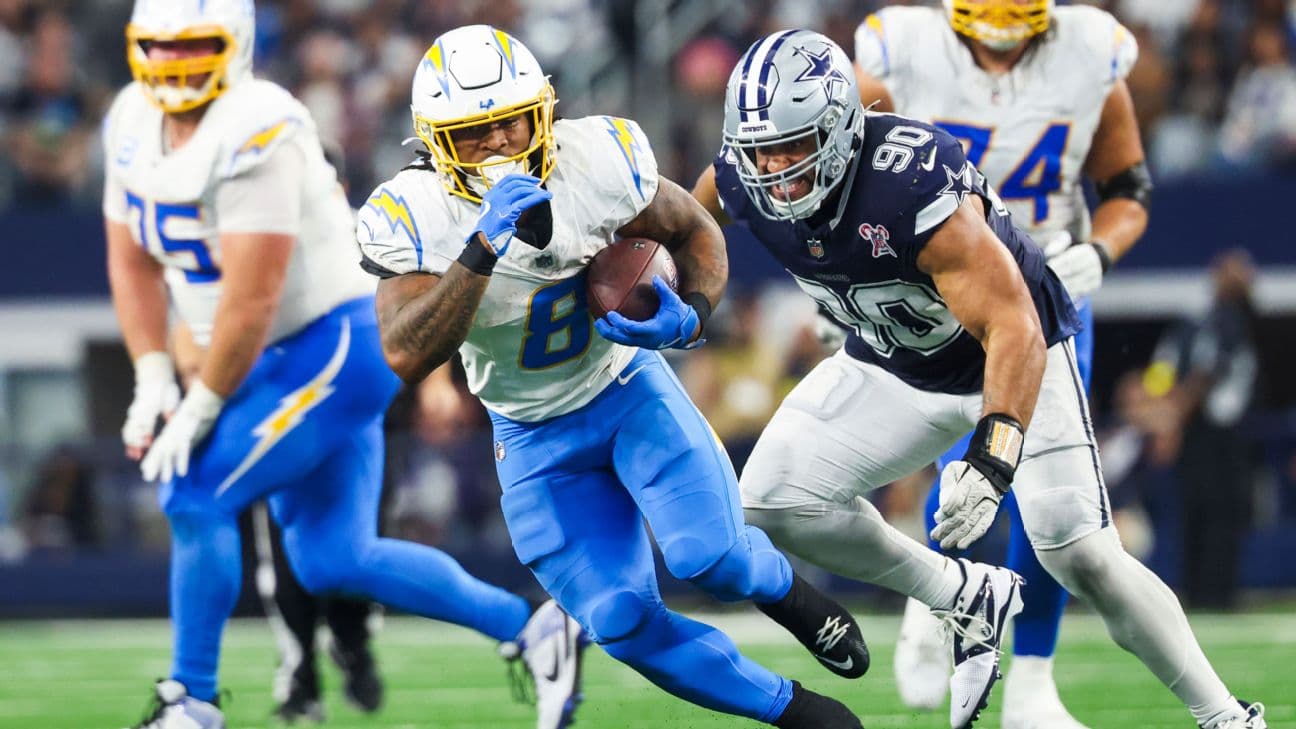
The Year 2 running back leap is one of the most reliable trends in fantasy football, and the 2026 class of sophomores is stacked with candidates. As training camps open across the league this month, a group of 2025 rookie backs enters the summer healthier, more entrenched, and in better situations than they were a year ago. For drafters trying to find value before ADP catches up, these are the second-year runners most likely to outperform their draft cost.
Omarion Hampton is the headliner
Hampton is the cleanest breakout bet on the board. The Chargers back is already being drafted on the back end of the RB1 tier, and the underlying usage from his rookie year points up. He averaged double-digit carries and roughly four targets per game while producing north of 15 fantasy points per contest, an impressive rate for a first-year player whose season was shortened by injury. That combination of volume and receiving involvement is the exact profile that scales into a top-12 fantasy back when the workload expands.
The Year 2 case for Hampton is about opportunity as much as talent. A full offseason as the established lead back, better health, and a passing game that can keep defenses honest all point toward more touches and more scoring chances. He is the rare second-year runner who could climb into the top five at the position if the volume lands where his rookie rate stats suggest it should. Draft him as a high-floor RB1 with real ceiling, and do not be surprised if his ADP keeps rising through camp.
Cam Skattebo is the value swing
Skattebo is the boom bet of the group. Before an ankle fracture ended his rookie season after limited action, he was the most productive rookie back in fantasy on a per-game basis, averaging nearly 16 PPR points per game and leading all first-year runners in that stretch. The injury tanked his counting stats and, with them, his offseason perception, which is exactly why he offers value now.
Assuming the ankle heals as expected and he is ready for the regular season, Skattebo profiles as an RB2 with clear upside for more. His pre-injury usage suggested a workhorse role in the Giants backfield, and workhorse roles are the foundation of fantasy production. The risk is the ankle and the depth chart clarity, but the reward is a back who was producing at an RB1 rate before he got hurt. In a draft market that fades players coming off injury, Skattebo is the kind of discounted talent that wins leagues for managers willing to bet on the return to form.
TreVeyon Henderson is the bounce-back
Henderson enters Year 2 as a redemption target. His rookie season was defined by inflated preseason expectations he never met, as he could not unseat Rhamondre Stevenson in the New England backfield. But the tape was better than the box score: he averaged better than five yards per carry, found the end zone 10 times, and flashed the explosiveness that made him a coveted prospect.
The Year 2 question for Henderson is entirely about the touch split. If he carves out a larger share of the New England backfield, his efficiency suggests the fantasy production will follow. He is a value pick precisely because his disappointing rookie counting stats have suppressed his ADP below his talent. Draft him as an upside RB3 and a handcuff-plus, with the understanding that a shift in the committee could unlock a much bigger role. He is the classic buy-low on a talented back whose situation, not his ability, held him back.
The Verdexed model take
Our rest-of-season projections favor the second-year backs whose rookie rate stats outpaced their volume, because usage is the input most likely to expand in Year 2. Hampton grades out as the highest-floor member of the group, an RB1 in nearly every projected outcome. Skattebo carries the widest range, with an RB1 ceiling gated by his ankle and an RB3 floor if the workload is managed early. Henderson is the most touch-dependent, a high-efficiency back whose fantasy value swings almost entirely on how New England divides the backfield.
Why the Year 2 leap is real
The sophomore running back jump is not folklore; it is grounded in how NFL backfields work. Rookie runners often enter timeshares, learn pass protection on the job, and cede goal-line work to veterans. By Year 2, the trust from the coaching staff expands, the passing-down role frequently grows, and the touches consolidate. For fantasy, touches are everything at the position, so any back whose usage is trending up carries built-in appeal regardless of a modest rookie stat line.
The common thread among this trio is that each flashed efficiency or per-game production as a rookie that outpaced his raw volume. Hampton produced at an RB1 rate on a partial workload, Skattebo led all rookies in per-game scoring before his injury, and Henderson posted strong efficiency behind a veteran. Efficiency in a limited role is the leading indicator of a breakout when the role expands, because it signals the player can handle more. That is the analytical case beneath the narrative, and it is why these three profile as values rather than hopeful dart throws.
What to do in your draft
Treat Hampton as a set-it-and-forget-it RB1 and pay the rising price. Target Skattebo in the RB2 range as your upside swing, betting that the injury discount is larger than the risk warrants. And draft Henderson a round or two later than his talent as a bounce-back candidate whose ceiling depends on the committee breaking his way. The second-year leap does not hit for every sophomore, but this trio offers the ideal blend of proven rookie flashes and expandable roles, which is the recipe for the backs who outrun their ADP.