 NFL2026-07-23
2026 Fantasy Football RB Camp Battles: The Backfield Competitions That Will Make or Break Your Draft
By Verdexed Fantasy Desk
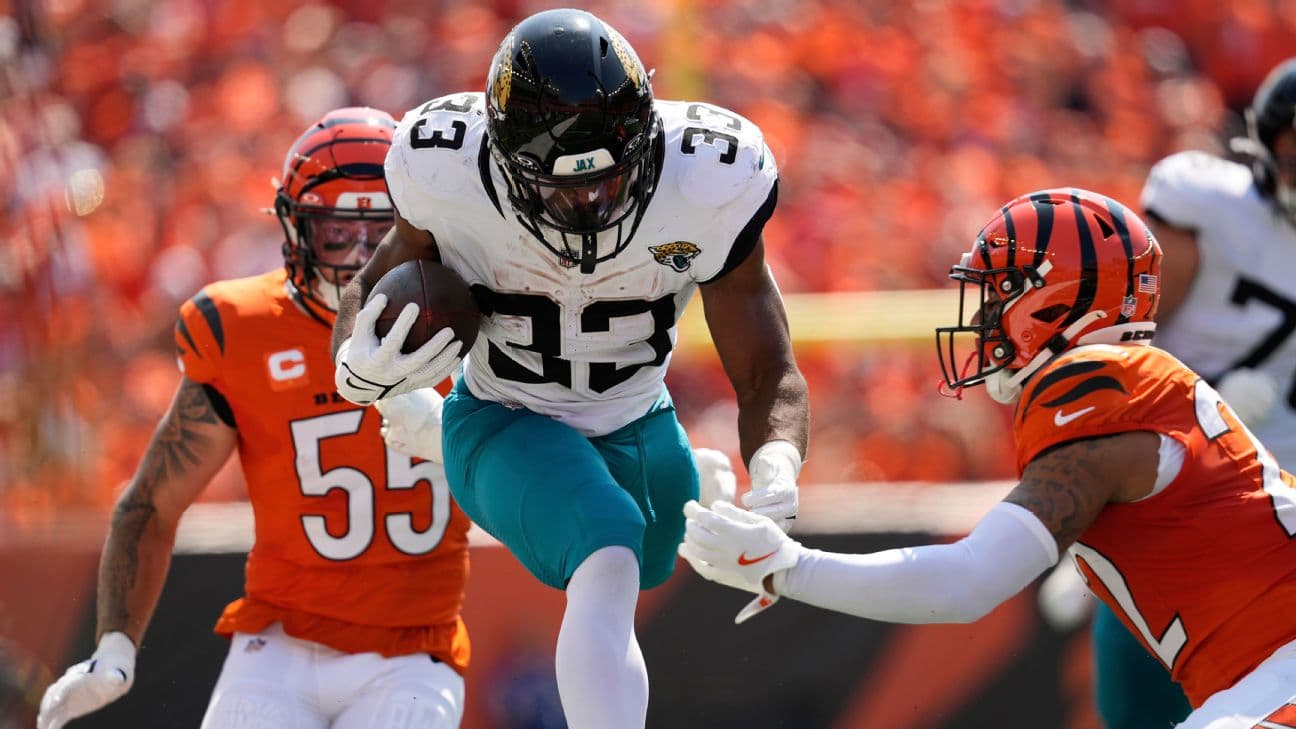
Training camps are open, and no position is more sensitive to camp news than running back, where a single depth-chart shift can swing a player's fantasy value by rounds. The backfield battles that resolve over the next month will decide which running backs return draft-day value and which become committee traps. Here are the competitions Verdexed is tracking most closely, and how to draft around them before the picture clears.
The throughline is volume. Fantasy running back scoring is driven by touches and goal-line work more than raw talent, which is why an ambiguous backfield can sink an otherwise talented back's weekly output. The managers who win their leagues are the ones who correctly call which back emerges from these camp battles with a clear lead role.
Jacksonville: Bhayshul Tuten steps into the lead
The Jaguars let Travis Etienne walk to New Orleans and are handing the keys to second-year back Bhayshul Tuten, who sits atop the depth chart over Chris Rodriguez Jr. entering camp. Tuten showed flashes as a rookie in a rotational role, and the organization's confidence in him is real enough that they moved on from a productive veteran. The question is whether a back with limited rookie-year volume can handle a full workload.
For fantasy, Tuten is one of the more intriguing ascending values on the board, a back with an apparent path to lead-back touches at a cost below the established names. The risk is that he has not yet proven he can carry a starter's workload, and any camp stumble could invite a committee. Draft him as an upside RB2 with the understanding that his ceiling depends on locking down the early-down and goal-line work.
Denver: Dobbins, Harvey, and a crowded room
The Broncos backfield is a genuine three-way question, with veteran J.K. Dobbins, second-year back RJ Harvey, and additional depth all vying for touches. Harvey flashed as a rookie but saw much of his production come when Dobbins was unavailable, which muddies the projection when both are healthy. This is the kind of committee that can frustrate managers all season if no clear leader emerges.
The fantasy approach here is caution. Neither back should be drafted as a locked-in starter until the split clarifies, and the situation is best attacked late, targeting whichever back the camp reports suggest is pulling ahead. Denver's backfield is a monitor-and-pounce situation rather than a draft-with-confidence one.
San Francisco: the RB2 lottery behind McCaffrey
With Christian McCaffrey anchoring the San Francisco backfield, the competition to watch is for the No. 2 role, where the winner becomes one of the most valuable handcuffs in fantasy given McCaffrey's injury history. The backup job in this offense carries standalone flex appeal and league-winning upside if McCaffrey misses time, which makes the camp battle worth tracking even for managers who do not roster McCaffrey.
The play is to identify the back trending toward the RB2 role and draft him as a high-value handcuff. In an offense this productive, the primary backup is not a throwaway pick, it is an insurance policy with real weekly upside. This is one of the quieter camp battles with an outsized fantasy payoff.
Minnesota: the veteran-versus-youth split
The Vikings backfield is another to monitor, with an established veteran facing a push from a younger, more efficient option on a per-touch basis. Camp will likely offer the first real signal of how the staff intends to divide the work, and the outcome could swing the value of both backs meaningfully. A clear lead for either would create a draftable starter; a true split would leave both as matchup-dependent flex options. This is a situation where the beat reports out of camp will carry more weight than offseason speculation.
The broader lesson across these Minnesota, Denver, and San Francisco situations is that efficiency numbers from a limited sample can be misleading, and volume is what pays in fantasy. A back who was more efficient in a small role does not automatically translate that efficiency to a starter's workload, which is why managers should trust projected touches over per-touch highlights when ranking these committee backs.
Carolina: Hubbard leads, but watch the ACL return
Chuba Hubbard is the presumed lead back in Carolina, but the backfield picture includes Jonathon Brooks, who is working back from a second ACL tear in two years. A healthy Brooks would complicate Hubbard's workload, though the recovery timeline and durability questions make that a longer-term concern than an immediate one. For now, Hubbard profiles as the clearer bet for early-season volume.
The fantasy read favors Hubbard as the safer option while treating Brooks as a speculative dynasty stash rather than a redraft factor. Managers should monitor Brooks's health, but the immediate value belongs to the back who is available and atop the depth chart.
The Verdexed model take
Verdexed's model projects each of these backfields as a touch-distribution problem first and a talent evaluation second, weighting the probability of a clear lead role heavily in its rankings. The system currently gives Tuten and Hubbard the cleanest projected paths to volume, treats Denver as a true committee with a wide range of outcomes, and flags the 49ers RB2 as the highest-leverage handcuff on the board. Those projections will update as camp reps and beat reports sharpen the picture.
The model's core message is that volume, not name recognition, drives these rankings, and the biggest ADP mistakes come from paying for talent in a committee rather than role in a defined backfield. For managers, the edge is drafting the backs with the clearest path to touches and waiting on the muddled situations until the camp signal arrives.
What to do in your draft
Prioritize the backs with apparent lead-role paths, Tuten and Hubbard among them, and treat the committee backfields like Denver as late-round dart throws until the split clarifies. Do not sleep on the 49ers RB2 competition, because the winner is a handcuff with league-winning upside. Above all, keep monitoring camp reports, because running back is the position where late July and August news moves ADP the most, and the manager who reacts fastest to a depth-chart shift gains the biggest edge.