Week 3 DFS: Jets and Lions Is the Slate and Arizona's Secondary Is Broken
By Verdexed Analytics
The Week 3 main slate lost its best running back before it started. Bijan Robinson's 29-carry, 194-yard, two-touchdown Thursday night came in the Falcons' 35-14 win over Green Bay, which means the highest-floor rushing option in football is unavailable for Sunday lineups and every roster construction decision downstream of that changes.
That absence matters more than it usually would, because Week 3 running back pricing has not yet corrected for two weeks of results and the position is unusually thin on obvious plays.
Game environment first
DFS in September should be built around game environments rather than individual usage, because two weeks of snap data is not enough to identify role changes with confidence, while defensive weaknesses are already measurable.
The environment to attack is the Jets at Lions. Detroit has allowed the most passing yards per game in the NFC at roughly 310, the total sits near 47.5, and the Lions are favored by around 6.5. A favored team with a bad secondary is the ideal DFS setup: the favorite scores enough to force the underdog to throw, and the underdog throws into a defense that cannot stop it.
Build this game as a full stack where roster rules allow. A Lions quarterback with a primary Detroit pass catcher, brought back with a Jets receiver, captures both sides of the shootout without requiring you to predict the winner.
The specific leverage plays
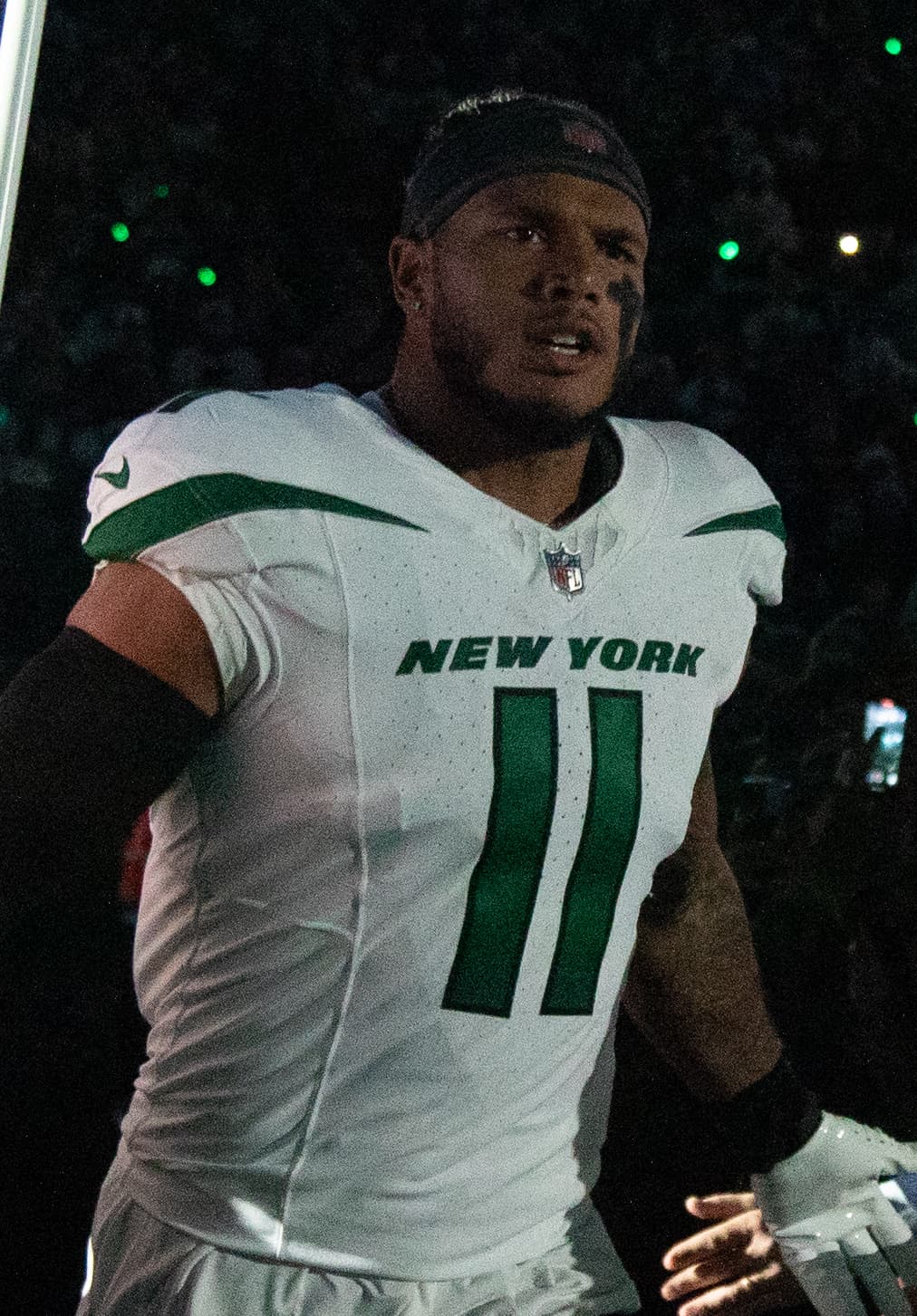
**Kenyon Sadiq at tight end.** The Jets tight end has six targets through two games and is priced accordingly, which is to say near the minimum. Detroit has allowed two touchdown catches to tight ends in each of its first two games, and Mason Taylor is doubtful, which should open snaps. This is the cheapest path to a ceiling outcome on the slate and ownership should stay low because the raw usage numbers look unappealing.
**San Francisco receivers against Arizona.** The Cardinals are without starting cornerbacks Will Johnson, who is on injured reserve with a neck injury, and Max Melton, who is dealing with a toe issue. San Francisco has its own receiver attrition, which concentrates targets among a smaller group. Concentrated targets against a depleted secondary is the most reliable DFS combination available, and the pricing has not caught up because the 49ers' healthy receivers are not household names.
**Bryce Young as the value quarterback.** Young has attempted 37 and 36 passes in his first two games for 361 and 287 yards with three touchdowns in each. High volume plus six touchdowns in two weeks is a profile that DFS pricing systematically lags, because pricing algorithms weight name recognition and season-long projections more heavily than recent usage.
Where the field will be and why to go elsewhere
The chalk this week will concentrate on the Kansas City game. The Chiefs are the largest favorite on the board at roughly 11.5 points in Miami, and large road favorites draw heavy ownership because the narrative is simple.
The problem with heavy chalk on a double-digit favorite is game script. A team winning by 11.5 points stops throwing in the fourth quarter, which caps the ceiling of its passing-game pieces even as they deliver a safe floor. In cash games that is acceptable. In tournaments, paying up for a Chiefs pass catcher at high ownership buys you a median outcome at a premium price.
The leverage play against that field is the Miami side. Underdogs in blowouts throw constantly, and garbage-time volume is real fantasy volume. A cheap Miami pass catcher at low ownership is the kind of position that wins tournaments precisely because it requires the chalk to be only partially right.
Running back construction without Bijan
With Robinson off the slate, the running back pool splits into expensive backs in bad matchups and cheap backs in committees. Neither is appealing, which argues for a construction approach rather than a player-selection approach.
Kyren Williams is the trap. He is priced as a workhorse and faces a Denver front that held Jacksonville under 100 total rushing yards in Week 2. Ownership will be moderate because the name and the volume both suggest a start. The matchup says fade.
Alvin Kamara is the value. New Orleans plays its home opener, Travis Etienne has been limited with a hamstring, and Kamara has been the Saints' primary receiving back with the larger touch share. Pass-catching backs have the highest floor in PPR-scoring DFS formats, and Kamara's price reflects his role from a month ago rather than his role now.
The structural recommendation is to spend down at running back and up at receiver this week. The receiver matchups are better, the pricing inefficiencies are larger, and the running back pool without Robinson does not reward paying up.
The Verdexed model take
The model's largest projection gaps this week are all in passing games rather than rushing games, which is the statistical signature of a slate where defensive pass-coverage weakness is unusually concentrated. Three defenses on this slate are giving up passing production at rates that will not hold over a full season, and two of them are on the same field in Detroit.
The second model note concerns correlation. Early-season slates reward correlated builds more than mid-season slates do, because the variance in individual player usage is higher while team-level scoring environments are more predictable. Stacking a game rather than assembling the highest-projected individual players is the correct structural bias in Week 3.
What to do before lock
Check Friday and Saturday injury designations, particularly Puka Nacua's hip in Los Angeles, Zay Flowers' hamstring in Baltimore and Mason Taylor's doubtful tag in New York. Each of those resolutions moves at least one player's projection substantially, and late news is where DFS edges are largest because ownership cannot adjust as fast as projections can.
The general principle for Week 3 holds regardless of how those break: attack the game environments the market has not priced, avoid the chalk on the biggest favorite, and do not pay up at a position that lost its best option on Thursday night.