Trea Turner Fouled a Ball Off His Own Leg and the Phillies Got Away With It
By Verdexed MLB Desk
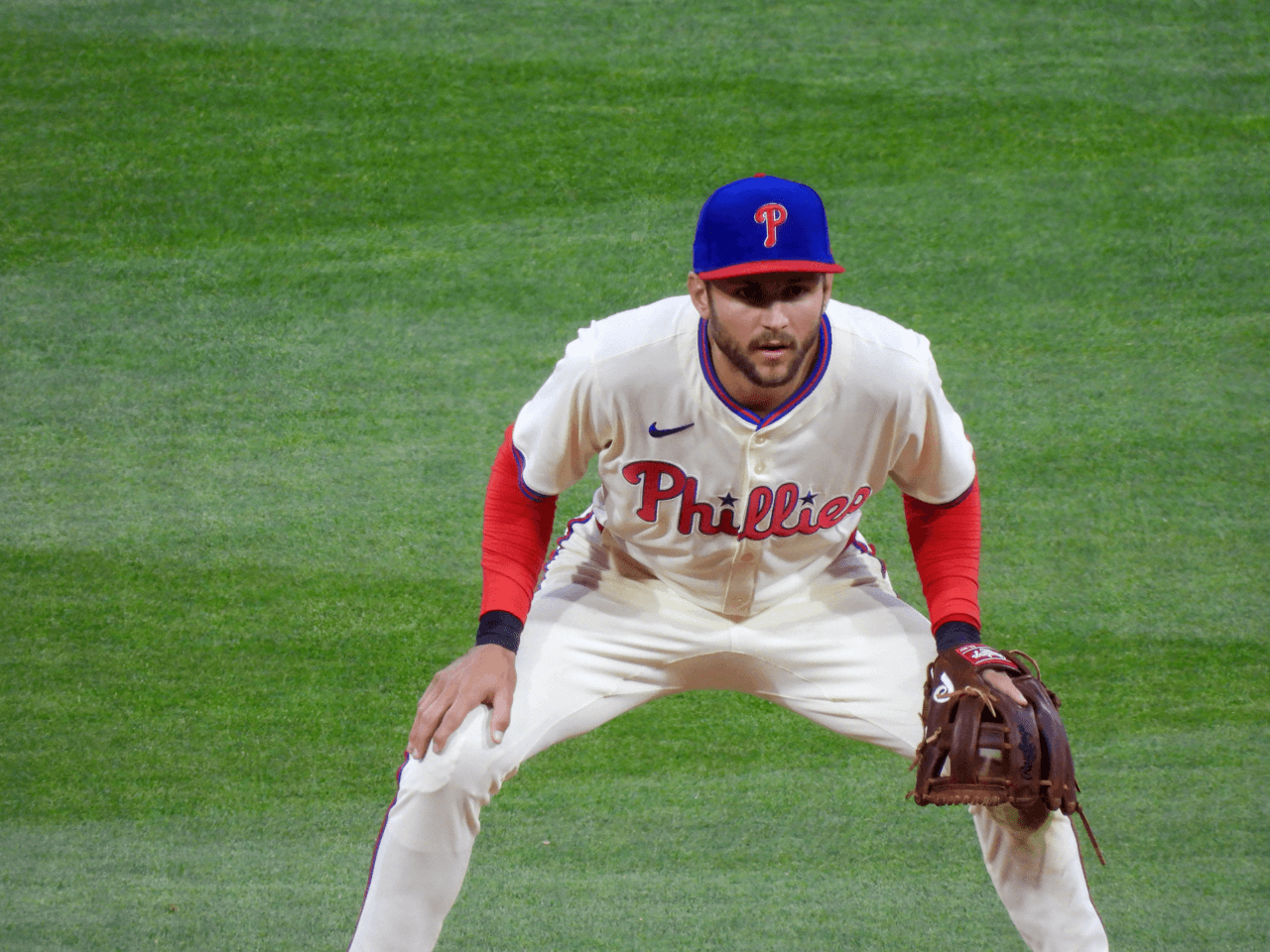
Trea Turner was out of Philadelphia's lineup for Sunday's series finale against Minnesota after fouling a pitch off his own right leg during Saturday's 9-1 win, with Edmundo Sosa starting at shortstop in his place. Reports on the exact diagnosis have varied between a bruised knee and ankle and a quad contusion, but they agree on the operative word: contusion, day to day, with Turner available off the bench Sunday if needed.
Turner told reporters after Saturday's game that the injury felt worse than it looked and that he expected to be fine. For a Phillies team in the middle of a wild card race with roughly six weeks left, that is the answer they needed.
Why this was a genuine scare
Foul balls off the leg are the most misleading injury in baseball. They look catastrophic in the moment, they frequently produce nothing more than a bruise, and occasionally they produce a fracture that ends a season. There is no reliable way to tell from the video which one you are watching, which is why the first 24 hours after one of these is worth more than any live reaction.
The 24 hours have now passed and the signal is favorable. Turner finished Saturday's game, which is itself informative, since players do not stay in games on a fractured lower leg. He was held out Sunday as a precaution rather than placed on the injured list. Imaging concerns were not reported. That is the profile of a bruise.
The specific risk with a contusion on the leg is not the injury itself but what it does to a player whose value is built on speed. Turner's offensive profile depends heavily on his legs, and a hitter running at 85 percent is a materially different fantasy asset than the same hitter running at 100 percent, even though both appear in the box score as available.
Fantasy fallout
Hold and start when he plays. There is no version of this where a fantasy manager benefits from dropping or benching a top-tier shortstop over a bruise the team is treating as day to day.
The nuance is in what to expect from the next week. Contusions on the lower leg tend to suppress stolen base attempts before they suppress anything else, because a player who is not fully confident pushing off will decline the marginal steal opportunity while still swinging normally. If Turner's counting stats over the next seven to ten days show plate appearances without steal attempts, that is not a sign the injury is worse than reported. It is the expected shape of the recovery.
For managers in daily leagues, the practical rule is straightforward: check the lineup card and start him when he is in it. For weekly leagues, roster him and accept that you may lose a game or two of the week to a rest day.
Sosa is the relevant beneficiary in deep NL-only formats. A short-side infielder getting starts at shortstop for a contending offense is a legitimate streaming option for the days Turner sits, and nothing more than that.
The Verdexed model take
Our injury model classifies contusions separately from strains for good reason: the recovery distributions are shaped differently. Strains carry a long right tail, because soft tissue re-injures and setbacks are common. Contusions are tight and short, with the overwhelming majority resolving inside a week and very few progressing to an IL stint once initial imaging is clean.
Applied here, our projection has Turner missing between zero and two additional games, with the modal outcome being that he returns to the lineup as soon as Philadelphia's next series. His projected rest-of-season plate appearances move by a negligible amount. His projected stolen base total moves down slightly, reflecting the expectation of a conservative running week rather than a reduced role.
The Phillies' playoff odds are unchanged in any meaningful sense. A two-game absence for one player in mid-August is noise relative to the six weeks that remain.
Betting angle
The market inefficiency in situations like this is on the lineup card, not on the season. Books set Phillies team totals off a projected lineup, and a Turner absence lowers that projection. If Turner is scratched again and the number moves accordingly, that is a fair adjustment. If he returns to the lineup and the number has not moved back, that is the spot.
The narrower play is on Turner's own props once he returns. Stolen base and total base props for a player coming back from a leg contusion are frequently priced as if he is fully healthy, when the realistic near-term expectation is reduced aggression on the bases. The under on a steal-related prop in the first few games back is the cleanest expression of this specific injury profile.
What's next
Philadelphia's next series is the test. If Turner is in the lineup and running normally, this is closed and the Phillies avoided the single worst outcome available to them in mid-August. If he sits again, the diagnosis has changed and the injured list becomes a live possibility.
Either way, the broader context is worth keeping in view. Philadelphia is fighting for a wild card position in a National League race where the margin between the second and third spots has been about a game, and the difference between a healthy Turner and an absent one over the final six weeks is worth more to that race than any single roster move the team could make. Sunday's outcome, a rest day rather than a roster move, is the version they wanted.