Aaron Judge Is on the Injured List and the Yankees Are Planning Without Him for the Wild Card Round
By Verdexed MLB Desk
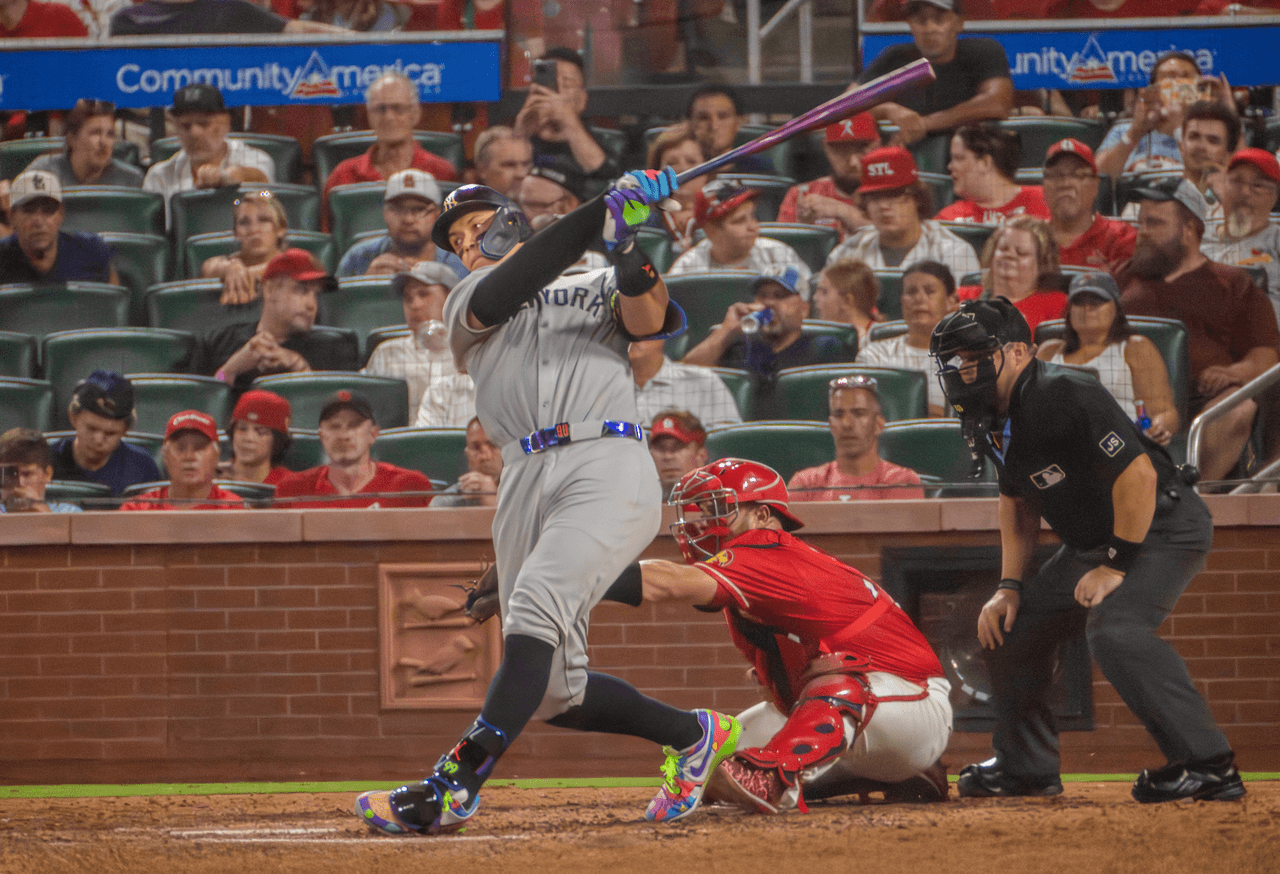
The Yankees are preparing to open the postseason without Aaron Judge. Judge went on the 10-day injured list with a right calf strain, and manager Aaron Boone indicated this week that the team is planning on him not being part of a potential American League Wild Card Series. Boone did not rule Judge out entirely, but the framing was clear. With the Wild Card round beginning September 29 and Judge's earliest possible return coming in the regular season finale on September 27, the math is unforgiving. New York is lined up as the No. 4 seed and will host Boston in a best-of-three, and the best hitter in baseball is unlikely to be in the lineup.
The injury and the timeline
The strain is in the soleus, the lower portion of the calf. Boone did not specify a grade publicly but described it as moderate, and Judge received an injection as part of the treatment, which is standard for a soft tissue injury with a compressed timeline.
Calf strains are among the most treacherous injuries for a power hitter and an outfielder. The calf is load-bearing in the swing and unavoidable in the field, and returning early carries a high risk of a re-injury that ends the postseason outright rather than costing three games. The Yankees have every incentive to be conservative, and the structure of the playoff bracket gives them one: if New York survives the Wild Card round, the Division Series gives Judge additional days.
That is the actual decision facing the organization. Not whether Judge plays in the wild card round, but whether the Yankees can win two games without him and buy him another week.
A season Judge mostly did not get to play
The calf is the second major absence of Judge's 2026. He went on the injured list in early June with a right rib stress fracture and did not return to the lineup until September 8. He played seven games before the calf gave out.
Seven games. That is the total of Judge's post-rib-injury contribution to a team that won 89 games and secured home field in the wild card round. The Yankees built this season's record largely without their franchise player, which is either an argument that they can survive without him or an argument that they have already spent whatever margin they had.
For anyone modeling October, the more useful framing is that New York's run differential and record were compiled by a roster that has been operating in this configuration for months. The lineup is not suddenly worse than it has been. It is exactly as good as the version that got them here.
What it does to the Yankees lineup
Losing Judge removes the single most valuable plate appearance in the sport and reshapes the entire order around it. The immediate consequences are fewer walks for the hitters in front of him, less protection for the hitters behind him, and a lineup that has to manufacture runs rather than wait for one swing.
In a best-of-three series, that matters more than it does over 162 games. Short series are decided by a small number of high-leverage plate appearances, and the team with the best hitter in those spots has a real structural advantage. Take Judge out and New York's edge in that category evaporates against a Boston team with a deep, contact-oriented lineup.
The defensive piece is secondary but not zero. Judge's absence forces the outfield alignment into a less natural configuration and pushes a bat into the lineup that would otherwise be on the bench.
The betting angle on Yankees and Red Sox
This series was always going to be priced tightly. Boston clinched its playoff spot and is set as the No. 5 seed, which means all three games are in the Bronx. Home field in a best-of-three is the single most valuable structural advantage in the current playoff format.
Judge's absence is the counterweight. Our view is that the market will over-apply the home field factor and under-apply the Judge factor, because home field is a clean, quantifiable input and "the best hitter in baseball probably is not playing" is a messier one that bettors discount when the player has not been officially ruled out.
The other variable is Boston's pitching. Garrett Crochet has missed most of the season with a left shoulder injury but threw a bullpen session this week, and the expectation is that if he returns for the postseason it will be out of the bullpen rather than as a starter. A healthy Crochet in relief in a three-game series is a significant weapon, because a short series lets a team deploy its best arm in the highest-leverage innings regardless of role.
The Verdexed model take
Our model treats a full-series Judge absence as a meaningful but not decisive swing in a three-game set. The gap between New York with Judge and New York without him is large over a season and compressed over three games, because short series are dominated by starting pitching and bullpen usage rather than by lineup quality.
The practical read: if the market prices the Yankees as a clear favorite on home field alone and then Judge is formally ruled out without the number moving much, Boston is the side. If the number moves aggressively on the Judge news, the Yankees become the value, because the home field advantage in this format is worth more than a casual bettor assumes.
The live-betting angle is the sharpest one. If New York drops Game 1, the Game 2 price on the Yankees will be inflated by the assumption that a desperate team plays better, and that assumption does not hold up in the data.
What's next
Watch for whether Judge appears in the regular season finale against Baltimore on September 27. A pinch-hit appearance or a designated hitter start would be a strong signal that the wild card roster is live. No appearance at all means the Yankees are pointing him at a Division Series that they first have to reach.
Either way, the reporting this week reframes the AL bracket. A Yankees team without Judge is a beatable No. 4 seed, and every team behind them in the bracket just got a better path.