Tommy Novak Signs a Three-Year Extension in Pittsburgh After an 82-Game, 42-Point Season
By Verdexed NHL Desk
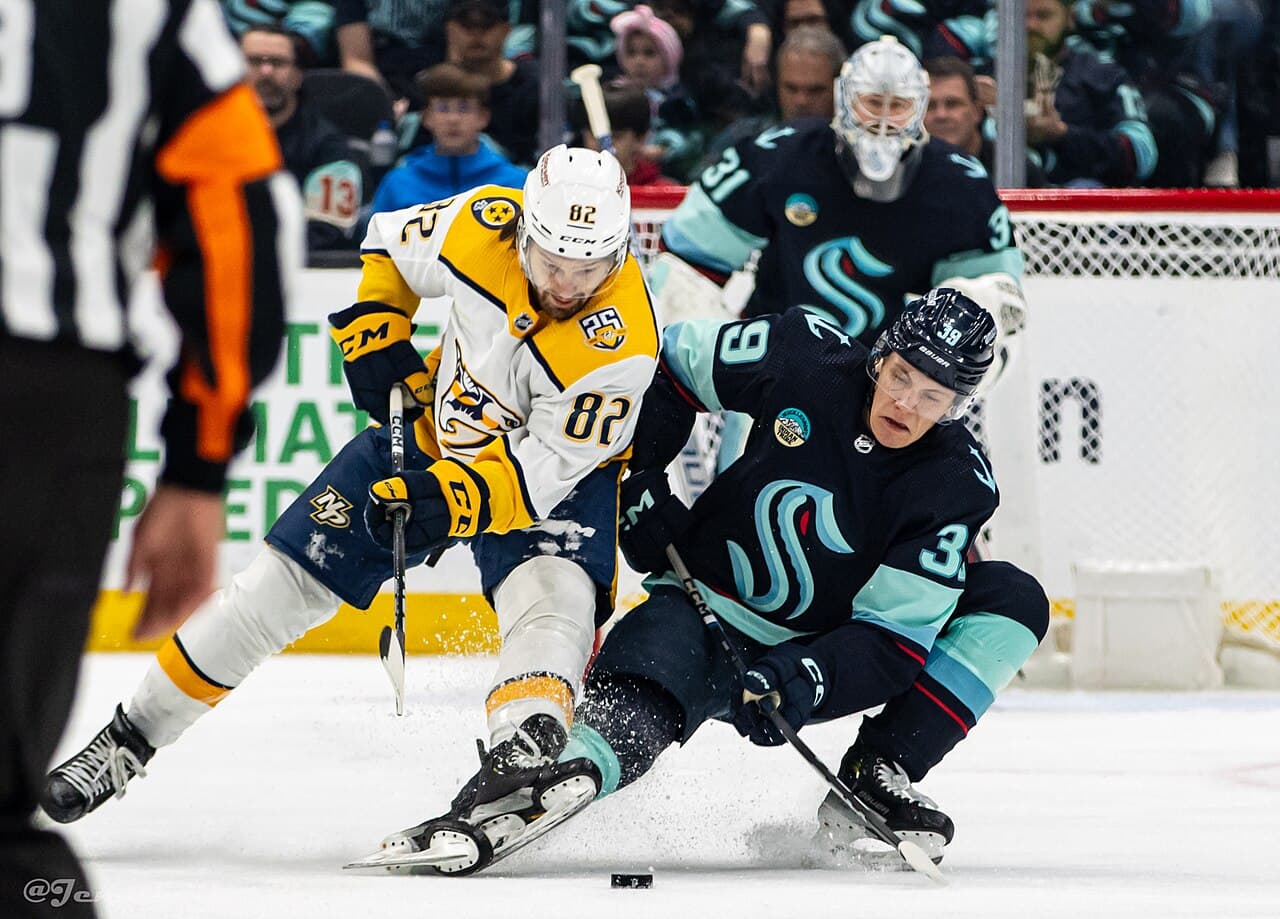
Pittsburgh signed forward Tommy Novak to a three-year contract extension on Friday worth $13.95 million, a $4.65 million annual cap hit that begins with the 2027-28 season. It is the kind of deal that generates no headlines outside Pennsylvania and quietly tells you a great deal about how the Penguins see their next three years.
Novak arrived in Pittsburgh via trade from Nashville during the 2024-25 campaign. In his first full season with the club he played all 82 games and produced 42 points on 16 goals and 26 assists, helping the Penguins finish second in the Metropolitan Division and reach the Stanley Cup Playoffs.
What the contract says about Pittsburgh
The structure is the interesting part. This extension does not begin until 2027-28, which means Pittsburgh has committed cap space two seasons out to a middle-six forward at a rate that will look either shrewd or heavy depending on where the cap lands and how Novak ages. Signing a player early, before his walk year concludes, is a bet on continuity.
Clubs make that bet when they believe the player's production is structural rather than circumstantial. Novak's 42-point season came with the durability marker that matters most in hockey: he played every game. Availability is the most consistently undervalued attribute in the sport, and it is the attribute a general manager is buying when he extends a player two years early rather than letting the market set the price.
The $4.65 million figure is market-appropriate for a forward producing at roughly a half-point-per-game clip with full-season durability. It is neither a bargain nor an overpay. It is a club paying for what it has.
Fantasy fallout
Novak has never been a fantasy centerpiece and this contract does not make him one. What it does is remove the single largest source of uncertainty attached to him, which is whether he would still be a Penguin.
For fantasy purposes, a 42-point full-season forward is a category-league specialist rather than a points-league staple. His value is concentrated in leagues that count shots, hits or faceoffs depending on his deployment, and in deep formats where 82 games of guaranteed availability is itself a category. Managers who have spent years chasing the last two roster spots on a 12-team roster know exactly how much a player who never misses a game is worth against a more talented player who plays 61 games.
The more important read is on Pittsburgh's forward group as a whole. A club that extends a middle-six forward two years early is a club that is not planning a teardown. That matters for how you value every Penguins skater in dynasty formats, because the fastest way to destroy a fantasy asset's value is to strand him on a team that decides to rebuild around him.
Where the power play sits
Novak's fantasy ceiling depends almost entirely on power-play deployment, which is true of nearly every forward in his production range. A middle-six forward who gets second-unit power-play time produces 40-odd points. The same forward promoted to the first unit produces 55 to 60. That is the difference between an undrafted player and a mid-round pick in a 12-team league.
Pittsburgh has not signaled a change to its power-play structure, and nothing about a contract extension guarantees one. Monitor the units in training camp, because that is the single input that would move Novak from a deep-league name to a genuine draft consideration.
The Verdexed model take
Verdexed's hockey projections treat games played as an explicitly modeled variable rather than an assumption, because injury-adjusted projections and raw per-game projections diverge sharply in a sport where the average roster player misses double-digit games.
Novak's profile is unusual in that his per-game projection is unremarkable and his full-season projection is better than his reputation, entirely because the model expects him to play. In a category league, that produces a player whose value is in the counting stats rather than the rate stats, which is exactly the profile that gets undervalued in drafts where managers evaluate on points per game.
The model's read on the contract is favorable to Pittsburgh in the first two years and neutral in the third. Forwards in Novak's production range typically hold their value into their early thirties before declining, and the deal is short enough to expire before the decline becomes expensive.
Betting angle
This does not move Pittsburgh's Stanley Cup odds and it should not. A middle-six extension that begins in two seasons has no bearing on the coming year.
The relevant market is the Penguins' season point total once it posts. A club that finished second in the Metropolitan Division and has now committed to continuity rather than a reset is a club whose roster will look similar in October to how it looked in April. Continuity is a positive input to a season-long projection, and it is the sort of thing that gets underweighted by markets that price on offseason splash.
The counterargument is age. Pittsburgh's competitive core has been aging for several years and the extension of a 29-year-old middle-six forward does nothing to change that trajectory. Continuity is a virtue only if the thing being continued is good.
What to do in your league
In standard 12-team leagues, Novak is not a draft pick. In 16-team and deeper category formats, he is a late-round option whose value is availability rather than upside. In dynasty, this is a small positive: he is now under contract through 2029-30 with a defined role on a club that is not tearing down.
The action item is a training camp watch. If Novak appears on Pittsburgh's first power-play unit in September, revisit him immediately. Until then, he is a name on a list.
What's next
Pittsburgh's remaining offseason business and its training camp line combinations will tell you whether this extension was the start of a broader commitment to the current group or an isolated piece of housekeeping. Watch the Penguins' cap situation heading into next summer, because a deal that starts in 2027-28 is a deal that constrains the roster the club can build around it.