Drake Batherson Signed for Eight Years and $86 Million Hours Before the NHL Closed the Window
By Verdexed NHL Desk
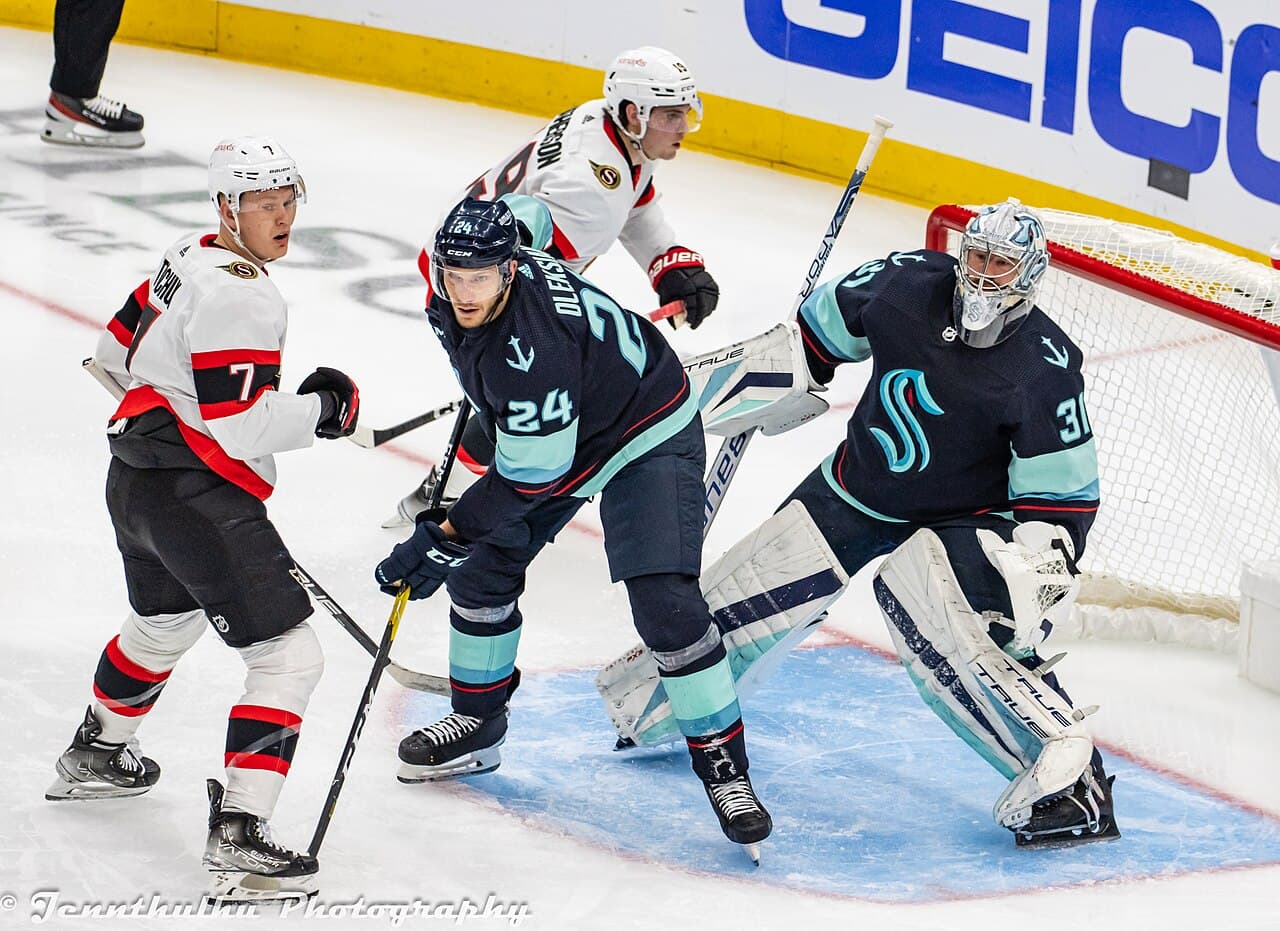
Ottawa signed Drake Batherson to an eight-year, $86 million extension on Tuesday, September 15, a $10.75 million average annual value that runs through 2034-35 and stands as the largest contract in Senators history. The timing was not a coincidence. September 15 was the last day an eight-year extension was legal. As of September 16, the new collective bargaining agreement caps re-signings with a player's own team at seven years and outside free-agent signings at six, and every contract negotiated from here forward lives under those rules.
The deal, and the deadline that shaped it
Batherson is coming off the best season of his career, with 33 goals and 38 assists for 71 points in 79 games in 2025-26, the first time he has cleared both 30 goals and 70 points. That production, at a position of need, on a team that has been trying to establish a competitive window, is what an eight-figure cap hit buys.
The deadline is what turned a negotiation into a signing. Both sides knew that failing to reach agreement by Tuesday night meant the maximum available term dropped by a year, which changes the total value on the table and the structure of the guarantee. Deadlines close deals. This one closed the biggest deal in the franchise's history.
What the CBA change actually does
The term reduction is one of the most consequential structural changes in the new agreement, and its effects compound over time. Under the old rules, a team could offer eight years to its own player and seven to an outside free agent, giving incumbent clubs a full extra year of term as a retention advantage. Under the new rules, that becomes seven and six.
Two things follow. First, cap hits go up. Term is the primary tool for lowering an average annual value, and taking a year away from the amortization window means the same total money produces a higher annual number, or the same annual number produces less total money. Second, players reach free agency more often. Shorter maximum deals mean more contracts expiring in any given summer, which means more player movement.
For fantasy managers in keeper and dynasty formats, that second effect is the one to plan around. Roster turnover across the league is going to increase, and long-term bets on players staying in favorable situations become riskier.
Why this matters for Batherson's fantasy value
The contract itself does not change what Batherson does on the ice, but it clarifies his role, and role clarity is the most useful thing a fantasy manager can get in September.
A player paid $10.75 million a year is a first-line player and a first-unit power play player, full stop. There is no version of the next several seasons where Ottawa pays that number and deploys him in a secondary role. That removes the deployment risk that usually attaches to a good-not-elite winger on a team with several forwards of similar quality.
The production case is straightforward: a 70-point season at even strength and on the power play, with usage now locked in, projects forward well. In an 84-game season, the extra two games are worth roughly a point of raw production on top of that baseline, which is a small but real boost to every counting-stat projection across the league.
The Verdexed model take
The model's read on Batherson is that he is a stable, high-floor fantasy winger whose value in points leagues exceeds his value in category leagues. The scoring is real and the power play usage is secure. The peripheral categories, hits, blocks and shots at elite volume, are where he is merely adequate.
Draft him as a solid second or third forward in points leagues and as a complementary piece in categories. The contract removes the downside scenario where a coaching change buries him, which raises his floor more than his ceiling.
The broader model implication is about the league, not the player. With eight-year deals gone, the model expects the distribution of long-term contracts to compress, which raises the value of players who already have term and role certainty locked in. Every player who signed an eight-year deal before this week now carries a scarce asset that nobody else can obtain.
Betting angle
Ottawa's season win total is the market to examine. Locking up a 70-point winger through 2034-35 does not change this season's roster, since Batherson was under contract anyway, but it does confirm organizational direction, and markets sometimes move on commitment signals even when the on-ice roster is unchanged. If Ottawa's number has drifted, that drift is noise rather than information, and it is a fade.
Batherson's individual points total is the cleaner market. A player coming off a career year, with locked-in first-line and power-play usage, in a season with two extra games, is a candidate for a total set on his prior 82-game production rather than his new 84-game opportunity. The over is the systematic play on any player whose season-long points total was set without adjusting for the longer schedule.
What happens next around the league
The rush to beat the September 15 deadline is over, and the market resets. Every negotiation from here operates under seven-year maximums for incumbents, which means the next wave of extensions will look different: higher cap hits, shorter guarantees, and more leverage for players who can reach the open market.
Watch for teams that missed the window on their own key players. Those clubs now face a harder retention problem than they did a week ago, and the players involved have more reason to test free agency. That is where the next round of fantasy-relevant movement comes from, and with training camps opening across the league and the season starting September 29, the clock on those decisions is already running.