 NHL2026-09-09
The Eight-Year Window Closes September 15 and Drake Batherson Is the Biggest Name Still Unsigned
By Verdexed NHL Desk
The NHL's contract landscape changes permanently next Tuesday, and a handful of teams have six days to finish deals that will not be available in the same form ever again.
The league's new collective bargaining agreement takes effect September 16, 2026 and runs through September 15, 2030. Among its structural changes is a reduction in maximum contract term. Through September 15, a player re-signing with his current team can sign for up to eight years. From September 16 forward, the maximum is seven. For players signing with a new team, the limit drops from seven years to six on the same date.
That is not a minor administrative adjustment. It changes the math on every long-term extension in the league, and it explains the flurry of eight-year deals that have been signed over the past several weeks.
Who has already used the window
Cale Makar and Zeev Buium both signed eight-year extensions with their current clubs in recent weeks, locking in the maximum term before it disappears. Those deals are the template: a team with a franchise player and cap certainty choosing security over flexibility because the option is about to vanish.
The logic is straightforward. An eighth year lowers the annual average value on a deal of a given total, which is a cap advantage. It also removes a player from the open market for an additional summer. Once September 16 passes, no team can offer either of those things again for four years.
That deadline pressure is why the last three weeks have looked the way they have around the league.
Ottawa and Drake Batherson
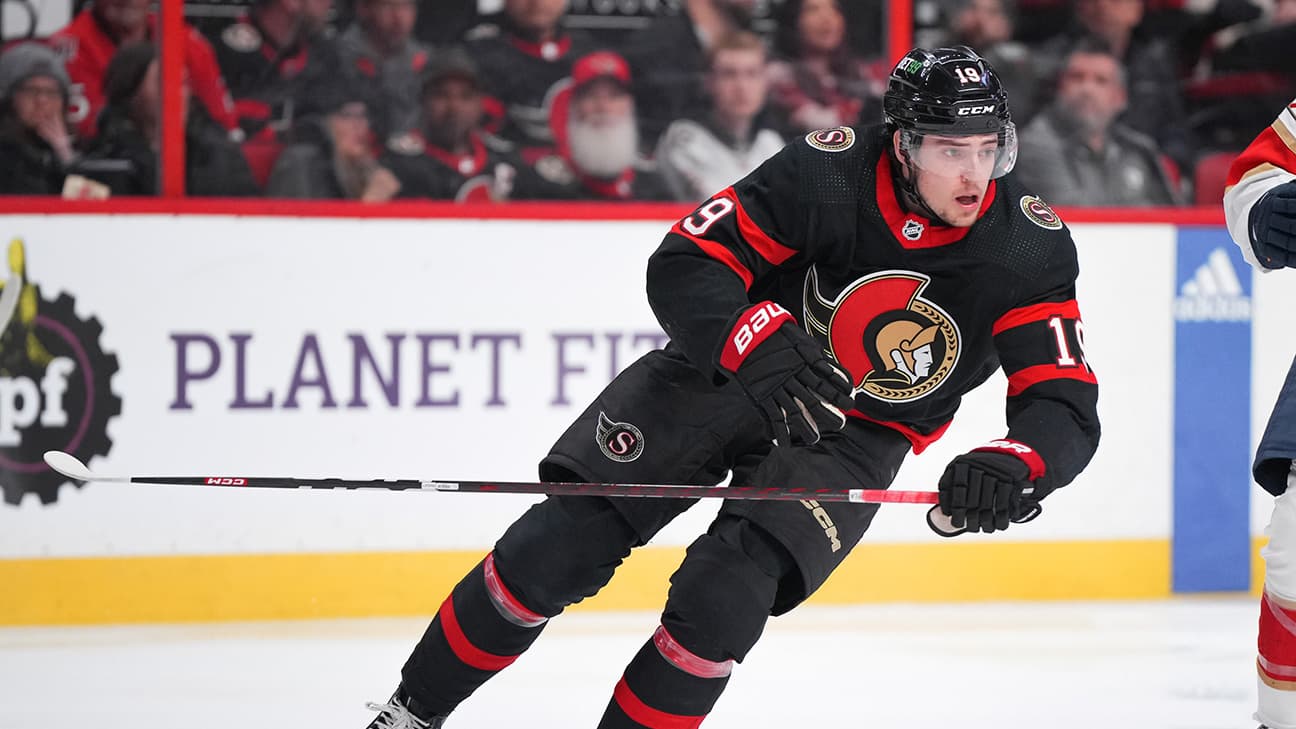
The biggest name still unsigned is Drake Batherson. The Senators winger is in the final year of the six-year deal he signed in 2021, carrying a cap hit of $4.95 million, and he is scheduled to reach unrestricted free agency next summer.
Reporting indicates Batherson is seeking eight years, and that the two sides are not believed to be close. Batherson has said publicly that he wants to stay in Ottawa and wants an extension completed before training camp.
The financial gap is the issue. Batherson could reasonably command a figure in the $10 million to $11 million range on the open market next summer, and the maximum term available to him at that point would be six years with a new club. That is a meaningfully different contract than the eight-year deal he can sign this week, which gives both sides an incentive to close and neither side an obvious reason to blink first.
If September 15 passes without a deal, Ottawa loses the eighth year permanently and Batherson moves one step closer to the market.
Detroit's stalemate
Simon Edvinsson's situation is the most unusual on the board. The 23-year-old restricted free agent defenseman is unsigned, and the reason has nothing to do with money.
Detroit does not have a general manager. Edvinsson has reportedly put negotiations on hold until the club completes its search, and he intends to attend training camp regardless of whether a contract is in place. That is a defensible position for a player and an untenable one for a franchise, because the eight-year option expires whether or not Detroit has hired anyone.
The Red Wings' broader situation compounds the problem. Captain Dylan Larkin requested a trade on June 4 and remains on the roster, with reporting indicating that talks with Minnesota stalled over Detroit's asking price. A club without a general manager cannot resolve a captain's trade request or sign its most important young defenseman, and the calendar does not wait.
The fantasy hockey angle
Contract situations are not usually fantasy inputs, but this deadline creates two that are.
Batherson's role in Ottawa is not in question this season regardless of what happens with the extension, which means his fantasy value is stable. What changes is the trade risk. A pending unrestricted free agent who does not extend becomes a deadline candidate, and a midseason move to a new team is one of the largest sources of fantasy variance in hockey. Drafters should discount him slightly for that risk in keeper and dynasty formats and not at all in single-season leagues.
Edvinsson is the more interesting case. If he signs long term, he is a defenseman entering his prime years on a team that will lean on him heavily, which is the standard profile for a fantasy breakout at the position. If the standoff drags into the season, his usage and power play deployment become genuinely uncertain, and defensemen without secure power play time are close to worthless in most formats.
The Verdexed model take
Verdexed's model treats contract certainty as a component of usage projection, because coaches deploy secure players differently than they deploy players in limbo. That effect is small for established stars and large for young players still earning their roles.
Under that framework, Edvinsson carries the widest projection range of any defenseman in his tier. The model's median outcome for him assumes a top-four role with second-unit power play time, but the distribution around that is unusually wide because his deployment depends on a front office that does not currently exist.
Batherson's projection is comparatively stable. The model projects him as a reliable middle-round winger whose main risk is a deadline relocation rather than a role change.
The betting translation runs through team futures rather than player markets. Ottawa's playoff odds and Detroit's point total both carry more variance than the market prices, because both clubs have unresolved roster questions that will not be settled by the time camps open.
What's next
Six days remain. The most likely outcomes are that Ottawa closes with Batherson at a number neither side loves, and that Detroit does not close with Edvinsson because there is nobody authorized to sign the paperwork.
Watch Tampa Bay as well, where Nikita Kucherov's eight-year window closes on the same date. Any deal that surfaces between now and Tuesday will be a maximum-term deal, and any that does not surface by then will be a shorter one whenever it eventually happens.
After September 15, the entire league operates under different rules for the next four years, and the seven-year ceiling becomes the new benchmark for every franchise extension in hockey.