 NFL2026-08-28
The Rams and 49ers Open in Melbourne With Opposite Travel Plans
By Verdexed NFL Desk
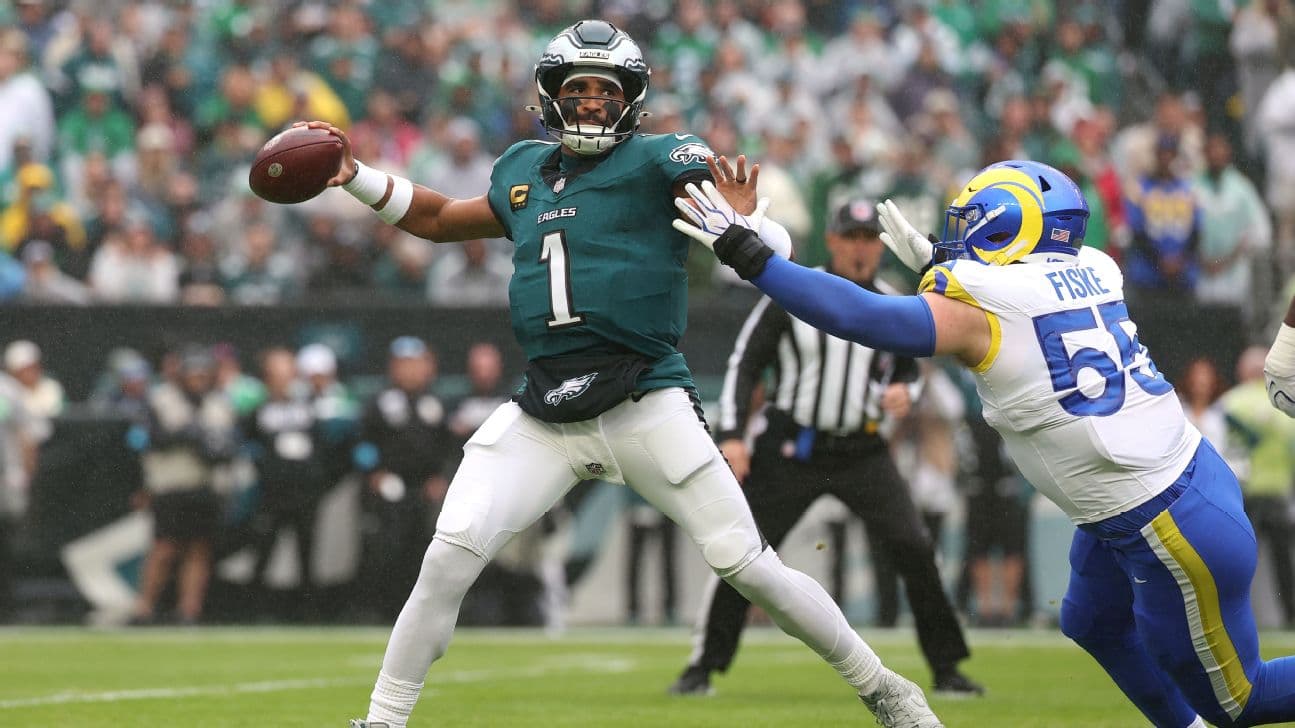
The NFL's first regular season game in Australia kicks off at the Melbourne Cricket Ground on Friday, September 11 local time, which is Thursday, September 10 at 5:35 p.m. Pacific for anyone watching in the United States. The Los Angeles Rams and San Francisco 49ers, division rivals who have played 150-plus times, will open the season roughly 8,000 miles from either home stadium in front of a venue that seats close to 100,000. And the two teams have chosen almost opposite ways to get there.
San Francisco plans to arrive about a week ahead of kickoff to acclimate to the 17-hour time difference. The Rams intend to fly in the day before the game and fly home immediately afterward, mirroring the approach they used for a London game last season when they landed on game morning. Los Angeles did not guess at this. The organization sent staff members from Los Angeles to Melbourne and back specifically to track when and how severely jet lag hit them, and built the travel plan around what came back.
That disagreement between two smart organizations is the most interesting thing on the Week 1 board, because it is a rare case where two teams have looked at the same problem and reached contradictory conclusions in public.
Why the travel split matters
The research on long-haul travel and athletic performance is not settled, and the two approaches are defensible for different reasons. The early-arrival case is the intuitive one: circadian rhythm adjusts at roughly a day per time zone crossed, and a week on the ground gets a roster meaningfully closer to normal sleep architecture before it has to play a football game at what feels like the middle of the night.
The late-arrival case is the one the Rams have run before and clearly believe in. It holds that a team is better off staying on home time entirely, playing the game inside the window when its body still thinks it is a normal afternoon, and leaving before the accumulated sleep debt of a foreign time zone catches up. A 10:35 a.m. Melbourne kickoff is roughly 5:35 p.m. in Los Angeles, which is a perfectly ordinary time to play football if a body never left Pacific time.
Both things can be true. What matters for a bettor is that this is one of the few games all season where the preparation variable is not noise. It is a stated, public, structural difference between the two sidelines.
The fantasy fallout
The first practical concern is scheduling, not performance. This game is on Thursday night in the United States, which means Rams and 49ers players lock before the rest of a fantasy manager's Week 1 lineup. Anyone rostering a starter on either side is making a start-sit decision a full three days ahead of everyone else, with no ability to pivot if news breaks Friday or Saturday. That alone is worth a small fade in tournament formats where correlation and flexibility matter.
The second concern is usage. Teams that travel internationally have historically leaned on rotation more heavily in the second half, and coaching staffs are candid about managing snap counts when the trip is unusual. That cuts against workhorse backs and toward the pass catchers who stay on the field regardless of fatigue. It also raises the floor of a backfield's No. 2, which is a specific reason to look at handcuffs on both rosters as Week 1 flex dart throws rather than pure insurance.
The third concern is the defense and special teams slot. Neither of these units is a comfortable Week 1 DST play. Both offenses are established, the game is between familiar division rivals who know each other's tendencies, and the special teams variance in a stadium neither team has ever played in is a real coin flip. If a manager needs a Thursday DST, this is not the game to find one in.
The betting angle
The Rams entered the offseason as the market's Super Bowl favorite, and the number in this game reflects that. What the number does not obviously reflect is the travel asymmetry, because there is no reliable historical base rate. The NFL has never played a regular season game in Australia. The London and Munich sample is real but small, and it mostly involves teams traveling east across five to nine time zones, not seventeen.
That absence of precedent is the opportunity. Markets are efficient when they have data to be efficient about. Here they have almost none, which means the price is being set largely on team quality and the usual home-field-neutral adjustment. Any bettor with a genuine view on how travel plans convert into second-half performance is not fighting a well-informed line.
The total is the cleaner expression of that view than the side. Fatigue in a football game tends to show up as sloppiness rather than as a systematic advantage for one team: more penalties, more missed assignments, slower situational decisions, and an early-season officiating crew that has not settled. Sloppy games in unfamiliar conditions skew under, and a Thursday opener between two defenses that know each other well already had a case for the under before anyone got on a plane.
The Verdexed model take
Verdexed's model prices this as a close game between two of the better rosters in the NFC, with a wider confidence interval than any other Week 1 matchup on the board. The reason is straightforward: the model's inputs are built on domestic conditions, and every adjustment it can make for this game is an extrapolation rather than a fit.
Where the model does take a firm position is on variance. It projects a lower play count than a typical Rams game, driven by the expectation that both staffs will manage tempo and clock more conservatively than usual, and it grades special teams as the single most likely source of a swing result. The practical translation is that this is a game to bet the total in, not the side, and a game to build a small DFS lineup around rather than a large one.
What to watch before kickoff
Three things will tell the story before the ball is in the air. The first is the Rams' final injury designations, which will be filed on a compressed schedule because of the Thursday kickoff. The second is whether San Francisco actually holds to the full week on the ground or shortens it, since a change of plan would signal the staff got new information. The third is the weather at the MCG, where a September morning in Melbourne can produce conditions no NFL team has practiced in this year.
The game is unusual enough that the honest position is humility about the side and conviction about the total. Take the under, take the pass catchers over the workhorse backs, and treat any Thursday-locked player as a slightly riskier start than his ranking says.