The Brewers Lead the Dodgers by Two Games for the National League's Top Seed and Own the Tiebreaker
By Verdexed MLB Desk
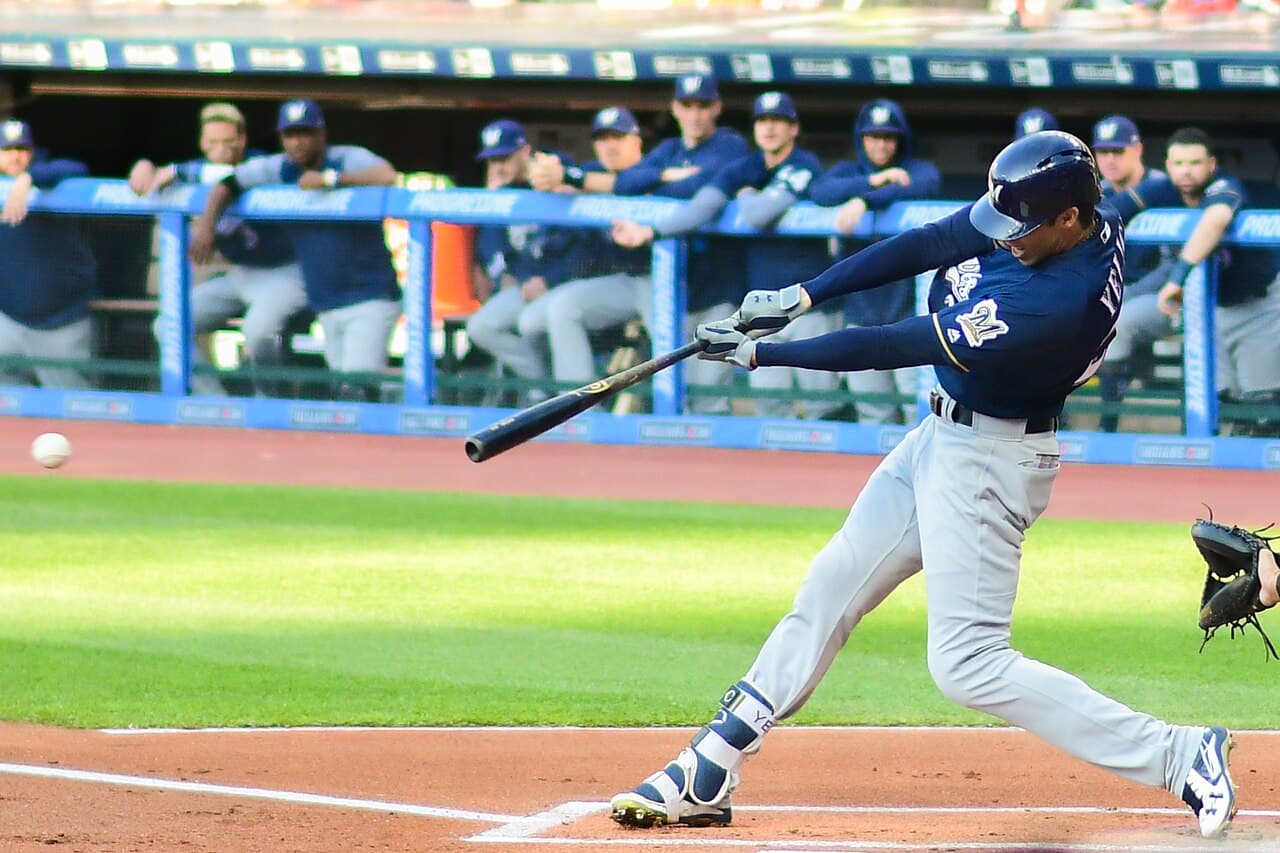
Milwaukee carries the best record in the National League into the final week and a half of the regular season, holding a two-game lead over the Los Angeles Dodgers for the No. 1 seed and home field advantage throughout the National League playoffs. The Brewers' magic number to lock the top seed has fallen into the single digits.
The more important fact is the tiebreaker. Milwaukee already owns the season series against Los Angeles, which means the Dodgers cannot catch the Brewers by finishing level. Los Angeles has to finish at least one game ahead of Milwaukee over 162 games to take the top seed, and that requires making up ground rather than simply holding serve.
What the top seed is actually worth
Under the current format, the top two seeds in each league skip the Wild Card Series and open in the Division Series. Both Milwaukee and Los Angeles are already locked into a bye, so the fight is not for rest. It is for home field advantage through the National League Championship Series and, should they get there, the World Series.
That is a smaller edge than the standings drama suggests, and it is also not nothing. Home field in a best-of-seven means the deciding game is played at home, and the historical home win rate in Game 7s is meaningfully above the baseline home win rate. For a market pricing pennant and championship odds, the seed is worth a few percentage points rather than a transformation.
The Brewers clinched their fourth consecutive National League Central title earlier this week, becoming the first team to win four straight titles in that division since it was created in 1994. It is the sixth division title in nine seasons for a franchise that operates near the bottom of the payroll table.
The rotation question that decides October
Milwaukee's case for the top seed rests on run prevention. Jacob Misiorowski has been the story of the season, carrying the best earned run average in the major leagues while piling up strikeouts at a rate that puts him in the middle of the Cy Young conversation. A team that can hand a Division Series Game 1 to a pitcher with a sub-2.00 earned run average is a team with a puncher's chance against anyone.
Los Angeles counters with depth rather than a single arm. The Dodgers have reduced what was a six-man rotation for most of the season to four fully stretched-out starters, and that quartet is the best on paper in baseball. Yamamoto, Skubal, Snell and Glasnow is a postseason rotation without a weak link, and the Dodgers acquired Skubal at the deadline specifically to build it.
The structural read is that Milwaukee's edge is in the regular season and Los Angeles's edge is in a short series. Depth matters over 162 games. Top-end starting pitching matters more over five and seven.
The Verdexed model take
Verdexed's model gives Milwaukee the higher probability of finishing with the top seed, which follows directly from the two-game lead and the tiebreaker. The model puts the Brewers comfortably above a coin flip to hold the position, with the remaining uncertainty concentrated in the strength of each team's remaining schedule rather than in team quality.
On championship odds, the model reverses the order. Los Angeles projects as the stronger team in a short series despite the worse record, because the model weights top-of-rotation starting pitching and lineup quality more heavily as series length shortens and bullpen usage compresses. That is the gap worth understanding: the team more likely to win the top seed is not the team most likely to win the pennant.
The model's read on Milwaukee is that its run prevention is real but that its offense is the constraint. Teams that win on pitching and defense have the widest range of postseason outcomes, because a single cold series from the lineup ends the run regardless of how the rotation performs.
Betting angle
The National League pennant market is where the disconnect shows up. Milwaukee's price has shortened steadily as the Brewers built the best record in the league, and it is now shorter than the model's projection supports. Los Angeles is the better value at a longer number despite sitting a seed lower.
The top-seed market itself is close to efficiently priced. A two-game lead with a tiebreaker in hand and roughly a week and a half to play produces a probability that the market has found. There is no edge in betting a race that is already mostly decided.
The more interesting angle is in the World Series market, where Los Angeles is chasing a third consecutive title. No National League team has ever won three in a row. That historical rarity gets priced into the market as if it were a causal constraint rather than a description of how hard winning a World Series is, which can create value on a team that is genuinely the best in its league.
What's next
Both teams spend the closing week managing workload rather than chasing wins, which makes daily betting markets on either club unusually treacherous. Lineups get shortened, starters get pulled early, and bullpen usage follows October logic rather than September logic.
For anyone with a position on the National League, the thing to watch is not the standings. It is which starters each team lines up for the final turn through the rotation, because that reveals how each club intends to set up its Division Series. Milwaukee's handling of Misiorowski over the next ten days will say more about the Brewers' October plan than the seed they end up with.