 MLB2026-07-20
Shohei Ohtani Shut Down From Pitching Indefinitely: The Knee That Reshapes His Value and the Dodgers' Deadline
By Verdexed MLB Desk
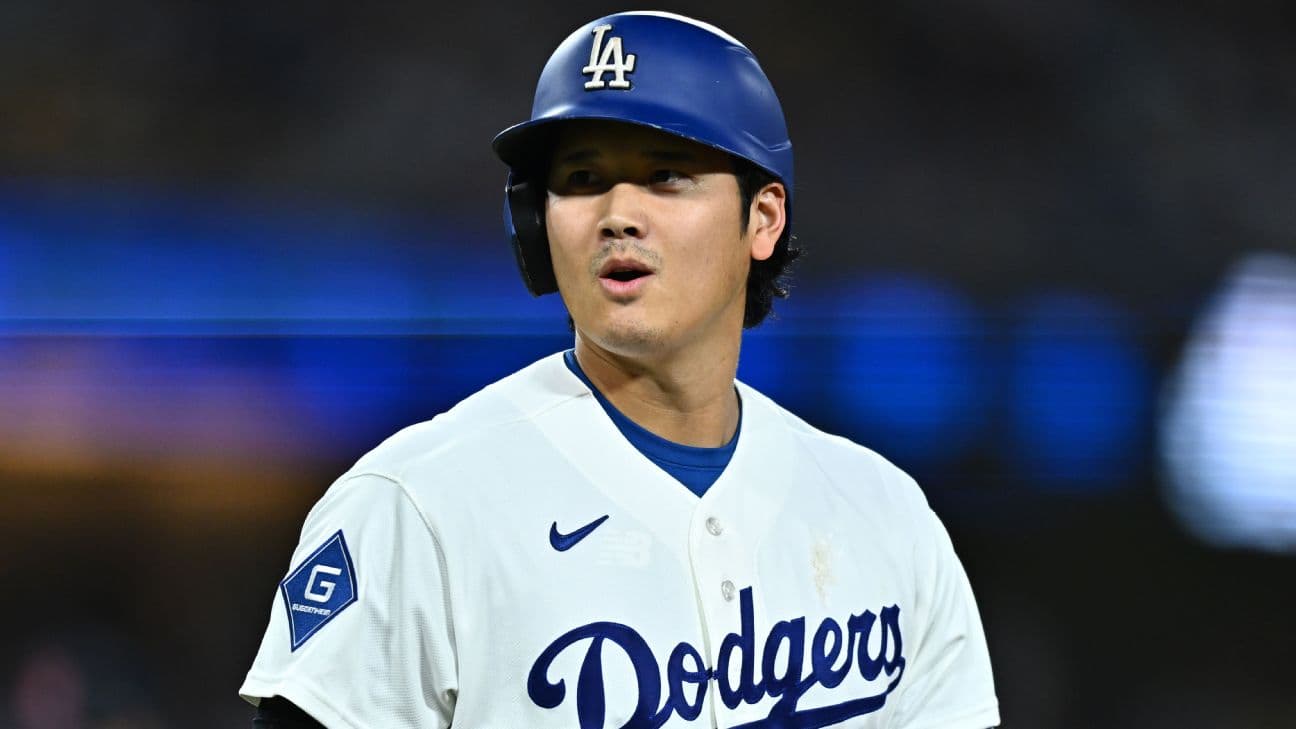
Shohei Ohtani will not pitch for the Los Angeles Dodgers for the foreseeable future. Manager Dave Roberts announced Sunday that Ohtani will miss his scheduled start against the Philadelphia Phillies and will be out of the rotation indefinitely because of irritation in his left knee. The plan changed, Roberts said, when Ohtani told the training staff his knee was not progressing as expected before a scheduled bullpen session. For fantasy managers who drafted the four-time MVP for the rare two-way boost, this is a meaningful hit to the pitching side. For the Dodgers, it is a reason to lean harder into the rotation market with the deadline two weeks out.
The news, and what it is not
Roberts framed the timeline bluntly, saying that where things stand, a return to the mound is "going to be some time." Crucially, the Dodgers are not placing Ohtani on the injured list, because the knee issue only flares when he pitches, not when he hits. He felt no pain swinging the bat, and Los Angeles has no intention of shutting down its best hitter. Roberts added that he fully expects Ohtani to pitch again this season, but he could not say when.
That distinction matters for roster decisions. This is not a Michael-Lorenzen-style dual injury that costs a team both halves of a player. Ohtani keeps hitting on his normal schedule, keeps hitting near the top of the sport's best lineup, and keeps producing the elite offensive line that would make him a first-round bat even without a single inning pitched.
Fantasy fallout
The clean read: Ohtani's bat is unaffected, and his bat is most of his value. In the vast majority of formats, he was drafted primarily as a hitter with pitching as the tiebreaker that pushed him to the top of boards. Managers who roster him should not panic, and they should not sell low into a market that overreacts to the word "indefinitely."
The real loss is concentrated in specific league types. If you are in a format that lets Ohtani occupy both a hitter and a pitcher slot, or one that heavily rewards his innings and strikeouts, this shutdown erases a chunk of the edge that made him worth a premium pick. In those leagues, the smart move is to shore up starting pitching through the waiver wire and the trade market now, treating Ohtani as a pure hitter for the near term and banking any pitching contribution as a bonus if it returns in September.
Do not add or drop based on the pitching side alone. His hitting floor is high enough that he is a must-start every day regardless of when, or whether, he throws again in 2026.
The Dodgers' deadline just got sharper
Losing Ohtani's arm, even temporarily, sharpens a rotation need Los Angeles was already navigating. A team with October designs cannot count on a two-way ace's innings when that ace's knee only cooperates at the plate, and the front office knows it. This development is exactly why the Dodgers have been among the loudest names connected to the top of the starting-pitching market, and it is a reason to expect them to be aggressive before August 3.
That has downstream fantasy effects. If Los Angeles adds a front-line arm, that pitcher inherits elite win support behind one of the sport's best offenses, an immediate boost to his rest-of-season value. And every inning the Dodgers give to a rotation filler in the interim is an inning that becomes streamable-or-not based on matchup, which is the kind of edge deep-league managers can exploit.
The betting angle
The market has already priced the Dodgers as a heavy favorite in the National League, and an indefinite pitching absence for Ohtani nicks that number only slightly, because his bat remains and because Los Angeles is positioned to add. The more actionable read is on the days he was scheduled to pitch: those Dodgers team totals and run lines shift toward the bullpen-and-offense profile rather than the ace-anchored one, and books adjust quickly.
Watch the Dodgers' pennant and World Series prices around any rotation addition. If Los Angeles lands a top arm to cover the innings Ohtani cannot, that is the kind of move that firms up an already short number rather than lengthening it.
The Verdexed model take
The model separates Ohtani cleanly into two assets and marks down only the smaller one. His hitting projection is essentially unchanged, which keeps his overall fantasy value near the top of the pool in standard formats. The pitching projection drops to near zero for the indefinite term, with a modest tail for a possible September return that the model treats as upside rather than baseline.
For the Dodgers, the model reads this as a nudge that raises their probability of a significant deadline addition, which in turn raises the projected value of whichever arm they acquire. The actionable takeaways: hold Ohtani everywhere and lean on his bat, backfill pitching in two-way and deep formats, and treat any Dodgers rotation add as a buy in fantasy and a firming signal in the futures market.
What is next
The next marker is medical rather than competitive. Roberts said Ohtani will need his knee to progress before he throws again, so the update to watch is the next bullpen session that actually happens. Until then, run him out at DH, chase pitching elsewhere, and keep an eye on the Dodgers' deadline board, because the team's response to this news may create more fantasy value than the news itself costs.