 MLB2026-07-26
Shohei Ohtani Throws a Bullpen Days After Being Pulled From the Rotation: The Two-Way Fantasy Read
By Verdexed MLB Desk
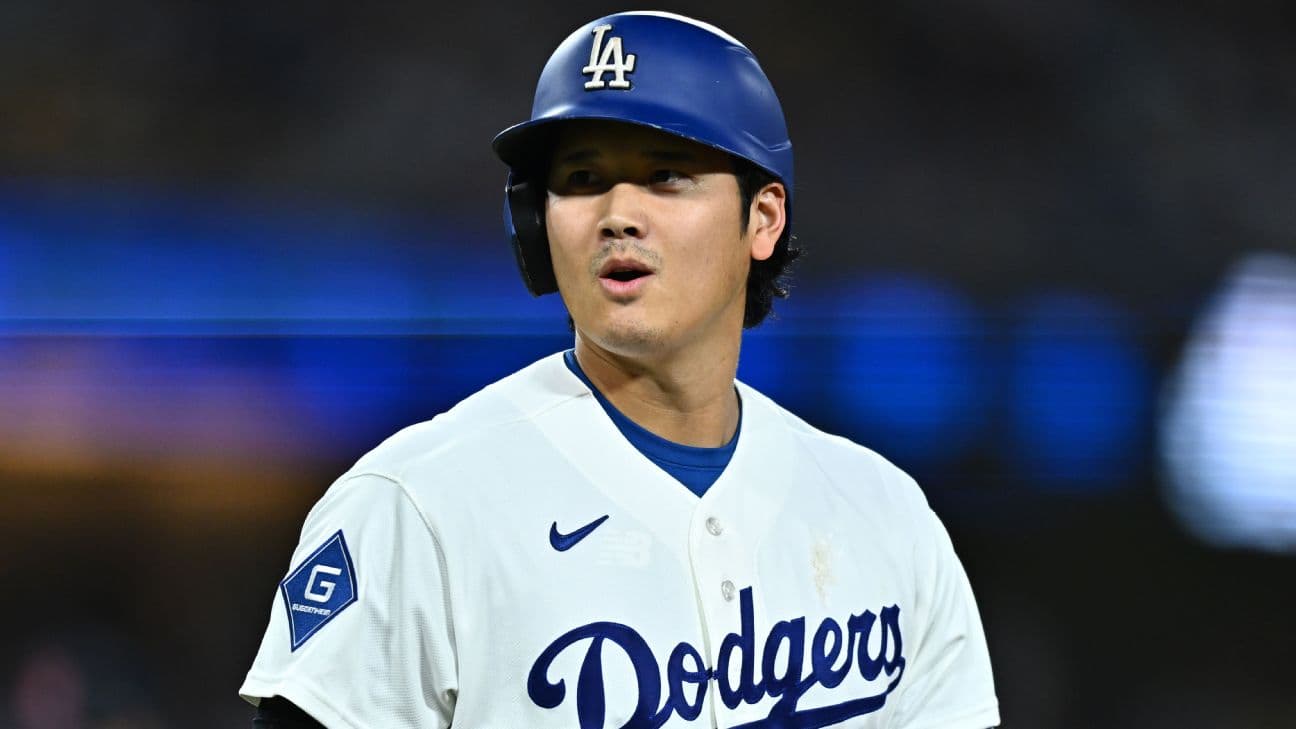
Shohei Ohtani threw a bullpen session at Citizens Bank Park roughly three days after the Dodgers removed him from the starting rotation indefinitely because of irritation in his left knee, and he came through it without a setback. Manager Dave Roberts indicated the knee has felt better since Ohtani received an Orthovisc injection, and a second bullpen was tentatively lined up before the club faced the Mets. Roberts had originally described a mound session over the weekend at Citi Field, and Ohtani felt good enough to move it up.
The mechanism of the problem is specific and, for fantasy purposes, unusually convenient. Per Roberts, the torque of landing on the left leg while pitching is what aggravates the knee. Hitting does not. Ohtani continued to start as the Dodgers designated hitter throughout, and his availability as a bat was never in question.
Where his season stood on the mound
Ohtani had been among the most effective pitchers in the National League before the shutdown, with reporting placing him at a 1.79 ERA across 14 starts, 85 and two-thirds innings, and 95 strikeouts. Los Angeles had also drained fluid from the knee to relieve irritation following a game earlier in the month, which is the sequence that ultimately led to the injection and the rotation removal.
The Dodgers have said they expect Ohtani to pitch again in 2026 without committing to a date, and the operative phrase in the reporting has consistently been that the club wants the knee fully healed before he returns to a mound. That is the posture of a team protecting an asset with October in mind, not a team managing a crisis.
Fantasy fallout for two-way roster spots
This is the rare injury that halves a player's fantasy identity while leaving the more valuable half untouched. In leagues that give Ohtani separate hitter and pitcher eligibility, the hitter slot continues producing at an elite level with no interruption. The pitcher slot has become dead weight for an indeterminate stretch.
The roster-management question is whether to hold the pitching side. In a standard 12-team league with limited injured list slots, the answer is usually yes, and it is close. A returning Ohtani would immediately be a top-tier streaming-proof starter for the final six weeks and into any head-to-head playoff run, and there is no waiver-wire arm who matches that ceiling. Dropping the pitcher side to chase a marginal fifth starter is a short-term gain and a long-term error.
The exception is a manager who is one roster spot away from being competitive right now. If your rotation is actively costing you weeks in July and August, the theoretical September Ohtani does not help you if you do not make the playoffs. That is a real argument, and managers in that position should take the certain innings.
The Dodgers rotation ripple
Removing a sub-2.00 ERA starter from a rotation for an open-ended period creates innings that have to come from somewhere, and those innings are where streaming value lives. Whoever absorbs Ohtani's turn through the rotation inherits starts against a schedule that Los Angeles would otherwise have covered with its best arm, which means the replacement is pitching for a team that scores runs and holds leads. Wins remain the most randomly distributed pitching category in fantasy, and a Dodgers starter is the best win lottery ticket available on any waiver wire.
The bullpen effect matters too. A rotation short one high-inning starter leans harder on relievers across the second half, which suppresses the availability of the highest-leverage arms on consecutive days and creates save volatility. Managers chasing saves should expect a noisier Dodgers back end than usual over the next month.
The betting angle
The Dodgers moneyline is the market that moves here, and it has already moved. Los Angeles was a materially shorter price on Ohtani's start days than on any other day, and the removal of those starts flattens the team's day-to-day pricing across the rotation.
The more actionable derivative is the team total on days Ohtani does not pitch. He remains in the lineup as the designated hitter, so the offense is unchanged, but the run environment on the pitching side is worse than the market's Ohtani-start baseline. That combination, unchanged offense and softer run prevention, argues for the over on total runs in Dodgers games relative to where those totals sat earlier in the season. Books have generally adjusted, but not always fully in the first week after a rotation change.
The Verdexed model take
The model treats Ohtani's return timeline as genuinely open, with the bullpen progression as the most informative signal available. A pitcher who moves his first mound session forward voluntarily, three days after an indefinite shutdown, is not a pitcher on a long timeline. The model's central case has him back in a big-league rotation before the end of the regular season, with the caveat that the Dodgers have both the depth and the incentive to slow-play this.
On the hitting side, the model's projection is unchanged, and that is the headline. The knee does not affect his swing, he has been in the lineup throughout, and there is no basis for discounting his bat.
The model flags one risk that the market may be underweighting: knee irritation tied specifically to the landing leg is a mechanical problem, not an inflammation problem, and mechanical problems recur. An injection buys relief, it does not change the load. A return followed by a second shutdown is a live branch of this projection, and managers should treat any 2026 Ohtani pitching value as a bonus rather than a plan.
What's next
Watch the bullpen cadence. Two clean sessions followed by live batting practice would put a rehab start realistically in range. A gap of more than a week between sessions, or any mention of soreness afterward, would push the timeline toward September and make the hold-or-drop calculus much harder for managers with tight rosters.