 MLB2026-08-26
Shane Bieber Is on the IL With a Teres Major Injury and Toronto's Rotation Is Thin Again
By Verdexed MLB Desk
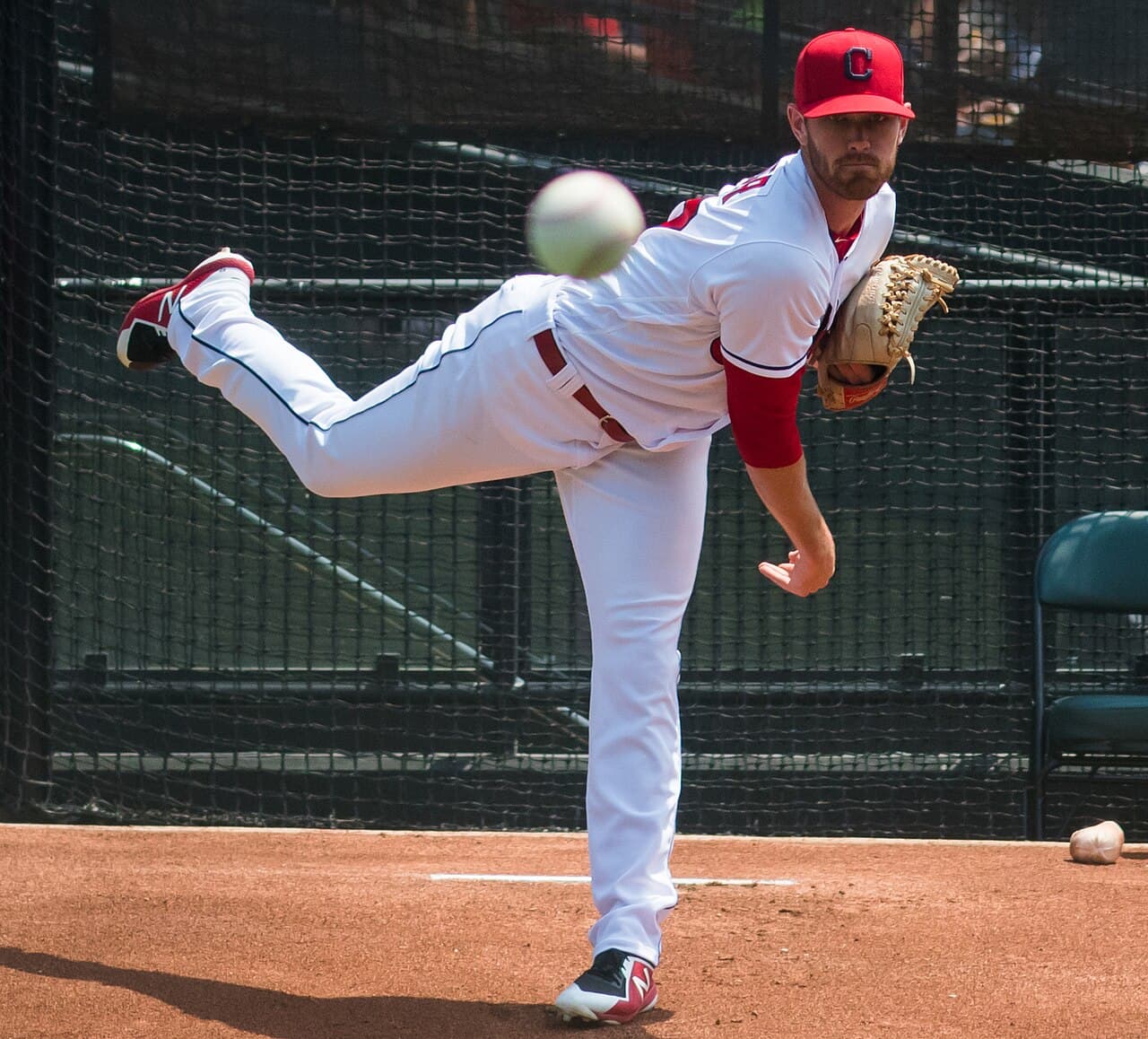
The Toronto Blue Jays placed right-hander Shane Bieber on the 15-day injured list with right teres major inflammation, retroactive to August 21. Bieber felt discomfort during a bullpen session in New York, an MRI that night revealed the injury, and the club will shut him down for at least two weeks. Toronto recalled right-hander Chad Dallas from Triple-A Buffalo in the corresponding move.
The timing is what makes this hurt. Bieber had just thrown his two best starts of the season.
What the injury is
The teres major connects the shoulder blade to the upper arm and is part of the group that decelerates a pitcher's arm through release. Inflammation there is not a ligament injury and does not carry the catastrophic implications of an elbow diagnosis, but it is also not a strain a pitcher throws through. The muscle group is directly loaded on every pitch.
Reporting on the MRI described the finding as a mild to moderate teres major injury. That range is the meaningful part. Mild teres major issues tend to resolve within a standard IL stint. Moderate ones frequently do not, and pitchers who return too quickly from them tend to come back a second time.
A two-week shutdown followed by a throwing progression and at least one rehab appearance is not a two-week absence. Even a clean recovery puts Bieber's realistic return in the back half of September.
Why this lands harder than the numbers suggest
Bieber was pitching well. Across his previous two starts, against the New York Yankees and the Tampa Bay Rays, he allowed two earned runs on eight hits with 12 strikeouts across 13 innings and won both games. Those are the outings of a pitcher who had found something, not one whose arm was sending warning signs.
Toronto is also not in a position to absorb this comfortably. The Blue Jays entered this week around 64-68 and fourth in the American League East, but the AL wild card race has been compressed enough all season that a team with a losing record has remained within striking distance of the third spot. FanGraphs has kept Toronto's postseason odds alive but modest.
That is the profile of a team for whom every remaining start matters and which has no margin for a rotation hole.
Fantasy fallout
Bieber is a drop in shallow leagues and a hold in leagues with IL slots. The math is simple: a two-week shutdown plus a build-up means he is unlikely to provide more than a handful of starts the rest of the way, and those starts will come with a workload cap. If you are chasing a head-to-head title in September, that roster spot is worth more as an active arm.
In leagues with deep benches and IL flexibility, hold. A healthy Bieber in the final week of the season is still a useful streamer, and the downside of holding is one roster spot.
Chad Dallas is the direct beneficiary and is a matchup-dependent streamer at best. Recall-and-replace arms in a contending rotation get a real opportunity, but they also get the shortest leash on the roster.
The rest of Toronto's rotation absorbs more innings, which raises the ratio risk on every Blue Jays starter you own down the stretch. Max Scherzer's season has been difficult, and a rotation leaning harder on its remaining arms in September is a rotation whose ERA and WHIP contributions get less predictable.
Louis Varland and the Toronto bullpen deserve a mention here. Toronto's ninth inning settled after the club moved Jeff Hoffman at the deadline, and Varland has the job without competition. A rotation that cannot go deep means more bullpen innings, which is a modest positive for save opportunities and a modest negative for the relievers' ratios.
The Verdexed model take
Verdexed's pitcher availability model treats muscular shoulder-group injuries as materially higher recurrence risk than the equivalent forearm or oblique diagnosis, and it applies that risk to the return date as well as to the post-return performance projection.
For Bieber specifically, the model's expected remaining innings for 2026 sit low enough that his rest-of-season value in most fantasy formats rounds to a streaming arm rather than a rostered starter. The projection is not that he pitches badly when he returns. It is that he does not return often enough to matter.
At the team level, the model's read on Toronto's postseason probability moves down by a small but real amount. The Blue Jays were already an underdog for the final wild card spot, and removing a functioning starter from a rotation that needs to overperform to close a gap is the kind of subtraction that compounds.
The betting angle
Toronto's remaining regular-season game totals are the place to look. Removing a starter who was pitching well and replacing him with a recalled arm should push the Blue Jays' game totals up on the days Dallas or another replacement starts.
The Blue Jays' postseason futures are the second market, and they are the harder one. Toronto's number was already long. The correct read is that it should be longer, not that there is value in fading a team already priced as a long shot.
What to do in your league
Drop Bieber in leagues with 12 or fewer teams and no IL slot. Hold him everywhere else. Do not pick up Dallas as anything other than a two-start-week streamer with a favorable matchup.
If you own other Blue Jays starters, this is a reason to be slightly more willing to sit them in bad matchups down the stretch, because a thinner rotation means more short outings and more bullpen exposure.
What's next
The concrete checkpoint is Bieber's throwing progression. If Toronto has him playing catch and building toward a bullpen within the two-week window, the mild end of the diagnosis held and a late-September return is realistic. If the shutdown extends, his season is over, and the Blue Jays will be making their wild card push with the rotation they have.