 NFL2026-07-09
Patriots Backfield 2026: Rhamondre Stevenson Holds the Inside Track While TreVeyon Henderson Carries the Upside
By Verdexed Fantasy Desk
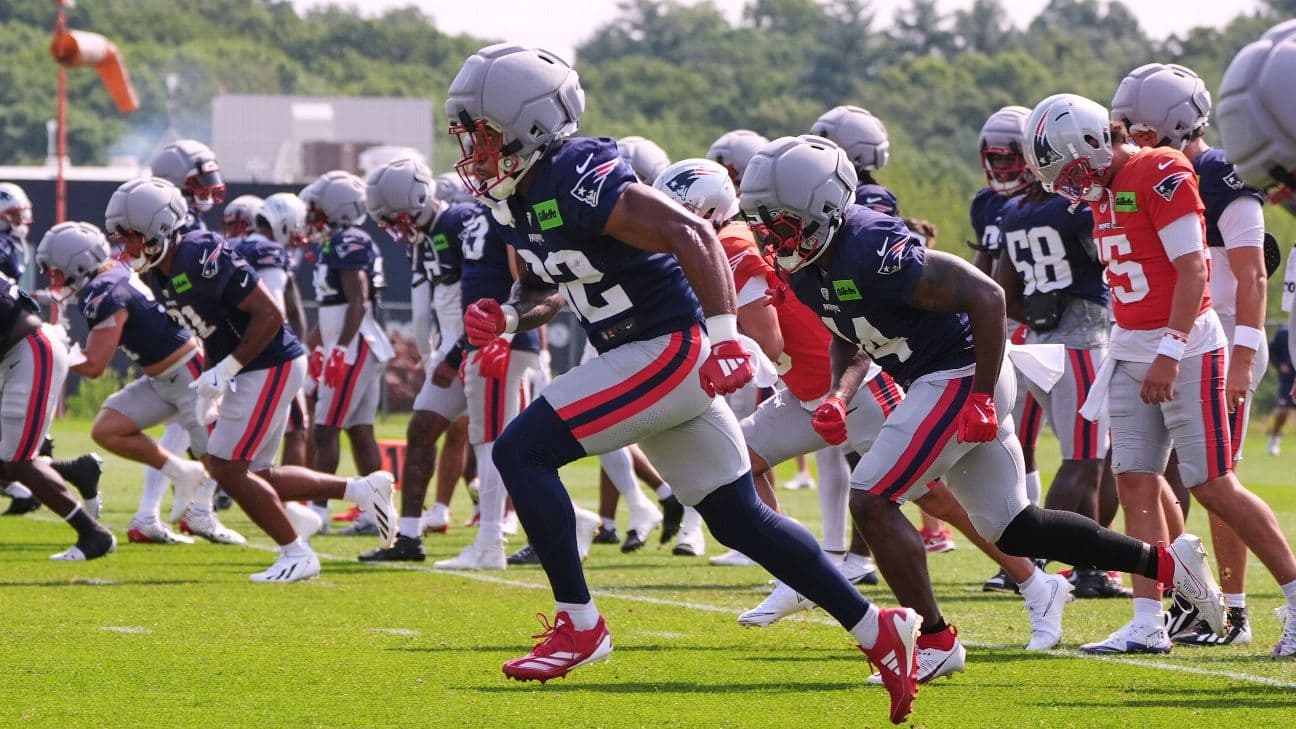
New England's backfield is one of the most consequential training-camp battles on the fantasy board, and it enters the summer genuinely unsettled. Rhamondre Stevenson and TreVeyon Henderson both return atop the depth chart for a Patriots team that reached the Super Bowl behind young quarterback Drake Maye. The regular-season workload last year was closer to an even split, but the playoff picture told a different story, and how the coaching staff resolves it will decide which back is a weekly starter and which is a frustrating flex.
The news, plainly
During the 2025 regular season, Henderson handled the larger rushing workload as a rookie, pairing a healthy carry count with strong per-touch production and a real receiving role. Stevenson worked as the complementary back and pass-game option. Then the postseason flipped the script: during New England's Super Bowl run, Stevenson re-emerged as the clear lead back, logging the large majority of the snaps and rush attempts while Henderson's role shrank.
That late-season shift is the entire fantasy debate. Was the playoff usage a sign that the staff trusts Stevenson in the biggest moments and will feature him in 2026, or was it matchup-specific and reversible once camp resets the competition? Both backs remain on the roster, both have fantasy utility in a good offense, and the split is the question.
The case for Stevenson
Stevenson holds the inside track heading into camp, and the reason is recency plus trust. When the games mattered most, the Patriots leaned on him for the bulk of the work, which is the strongest possible signal a coaching staff can send. He is the more proven interior runner, he has a receiving role of his own, and he has been the more reliable option in pass protection, which keeps him on the field on third downs and in two-minute situations.
For fantasy managers who can only roster one Patriots back, the consensus read is Stevenson. His floor is higher because his role touches all three downs, and the playoff usage suggests the staff will hand him the early-down majority if the season started today. He profiles as a back-end RB2 with league-winning upside if he consolidates the workload.
The case for Henderson
Henderson is the more explosive player, and that matters. He showed as a rookie that he can produce disproportionate output on limited touches thanks to home-run speed and receiving ability. In an offense with a rising young quarterback, a back who can catch passes and break long runs has weekly ceiling that a grinder does not.
The risk is opportunity. If Henderson opens the season on the smaller side of the split, his value becomes touchdown-and-big-play dependent, which is volatile week to week. But his profile is exactly the kind that wins a job outright in camp with a strong August, and if he does, he has the higher ceiling of the two. He is a high-risk, high-reward pick whose ADP should reflect both the upside and the committee uncertainty.
The Verdexed model take
Verdexed's model projects a committee that leans Stevenson early, with the split tightening if Henderson forces the issue. The model's base case gives Stevenson the early-down majority and goal-line work, valuing him as a low-end RB2 with standalone value, while Henderson profiles as a big-play flex whose weekly output swings on usage. The model flags Henderson as the higher-variance, higher-ceiling asset and Stevenson as the safer, more consolidated role.
The key model input is pass-game deployment. In a Drake Maye offense that should throw at a reasonable clip, the back who commands the receiving snaps carries the most stable fantasy floor. Both backs caught passes last season, which is why the model does not fully write off either one and keeps the committee projection live into camp.
The offense matters as much as the split
One factor working in favor of both backs is the quality of the offense around them. A Patriots team fresh off a Super Bowl appearance, with a rising young quarterback and a defense that keeps games close, is the kind of environment that produces positive game scripts and goal-line opportunities. Running backs on good teams get to close out games with the lead, which means clock-killing carries and short touchdown chances, the two most fantasy-friendly situations a back can be in. Even in a committee, a back attached to a winning offense has a higher floor than a workhorse on a bad team.
That context is why the model does not punish either New England back too harshly for the timeshare. The pie is bigger and tastier here than it would be on a struggling roster, and a 55-45 split of a productive, run-leaning offense can still support two flex-worthy backs in deeper formats. The question is not whether this backfield produces fantasy value. It is how that value gets distributed, and which back captures the goal-line and passing-down work that separates a startable asset from a touchdown-dependent gamble.
What to do in your league
If you want one Patriot, take Stevenson: the playoff usage and three-down role give him the safer path to weekly starter value. If you are chasing upside in the middle rounds, Henderson is the swing, a player whose explosiveness could turn a committee into a feature role with one strong camp. The savviest move in deeper leagues is to draft both and let the season sort it out, because the range of outcomes here runs from clean split to one back seizing the job outright.
What is next
Camp reps and preseason snap distribution are the tells. Watch who runs with the first team on early downs, who handles the two-minute and third-down work, and who gets the goal-line looks in preseason. New England has shown it will ride the hot hand, and the postseason suggests that hand belonged to Stevenson when it counted. Until the staff tips its plan, treat this as the committee it is, and price both backs for the range of roles they could end up filling.