 NHL2026-07-04
Rangers Add Oliver Bjorkstrand on a 1-Year Deal: A Proven 20-Goal Scorer Bets on a Bounce-Back
By Verdexed NHL Desk
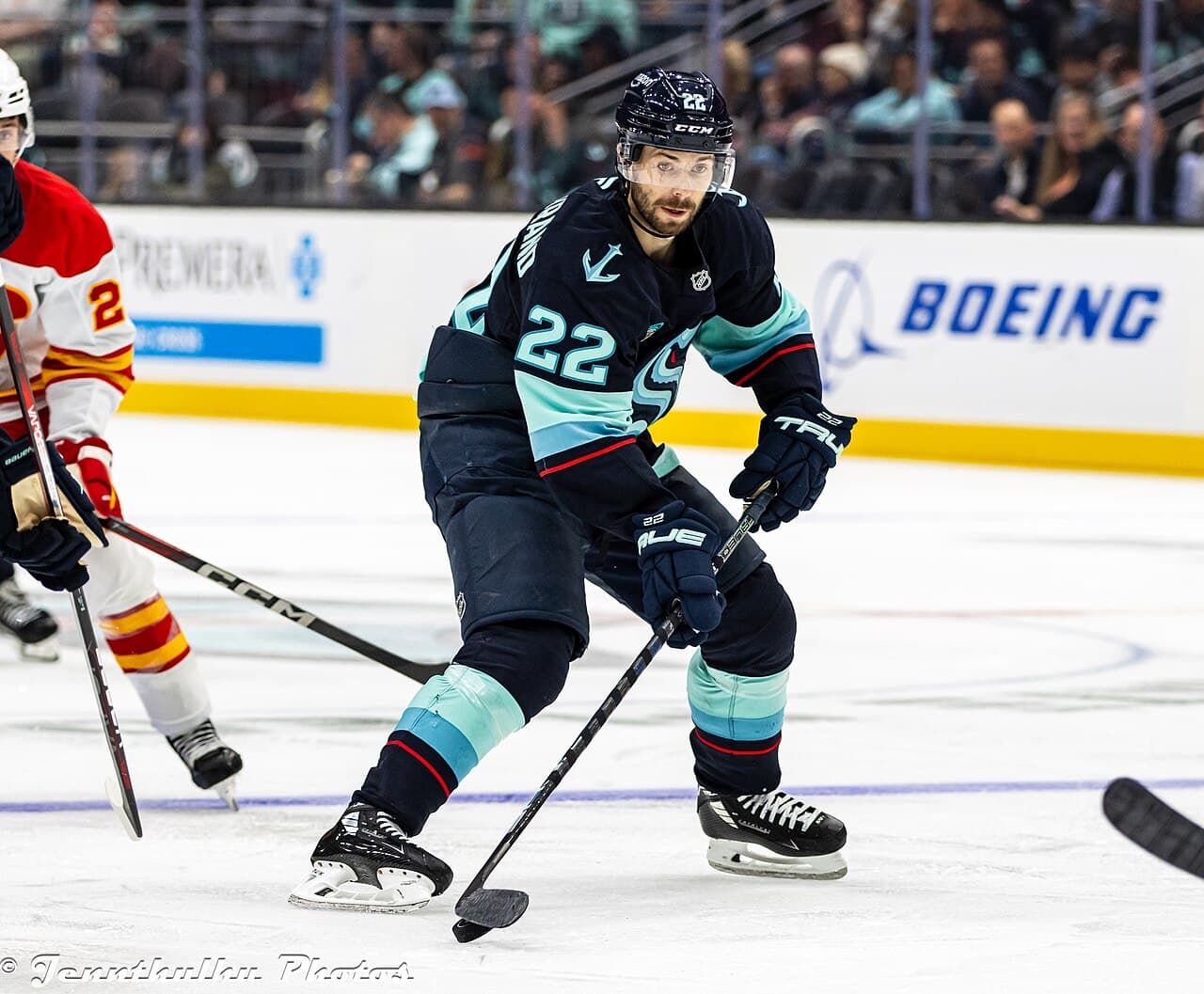
The New York Rangers added a bounce-back candidate to their middle six on July 1, signing free-agent winger Oliver Bjorkstrand to a one-year contract with a reported $4.5 million cap hit. Bjorkstrand is a proven scorer coming off a down season, which makes him one of the more interesting low-cost fantasy fliers of the offseason: a player with a clear track record of production on a prove-it deal, with the motivation and the potential opportunity to rediscover it in New York.
The profile
Bjorkstrand, 31, reeled off four straight 20-goal seasons before a difficult 2025-26 in which he reportedly managed 12 goals and 20 assists in 80 games while averaging just 13:38 of ice time with Tampa Bay. The dip in production tracked with a dip in usage; a scorer who is playing bottom-six minutes is not being put in position to score. Across his career with Columbus, Seattle, and Tampa Bay, he has reportedly compiled more than 400 points in over 700 games, the résumé of a reliable middle-six contributor rather than a one-year wonder.
That distinction matters for the bounce-back thesis. A player who has never scored is a projection. A player with four consecutive 20-goal seasons who slipped in a low-usage year is a candidate for a rebound the moment his opportunity improves, which is exactly the bet the Rangers are making.
Why the opportunity could be there
New York signed Bjorkstrand to bolster its middle six, and the upside case rests on him climbing the depth chart into a more prominent role than he held in Tampa Bay. If he lands top-six minutes or, more importantly, power-play time, his cost-controlled value could significantly outpace his late-season output from a year ago. Power-play deployment is the single biggest lever for a scoring winger's fantasy value, and it is the detail to watch when the Rangers set their units in camp.
The prove-it nature of the contract adds a motivational layer. A one-year deal at a modest cap hit is the kind of contract that rewards a strong season with a bigger payday, which tends to bring out a veteran's best. Bjorkstrand has every incentive to reestablish his scoring, and New York has every incentive to give a proven finisher the chance to do it.
Fantasy fallout
Bjorkstrand is a late-round flier and a watch-list name rather than a draft-day priority, and that is the correct framing. In deeper leagues, he is worth a speculative pick given the combination of a proven scoring track record and a potential opportunity bump. In shallower formats, he is a player to monitor through the early-season line and power-play reports, ready to add if he climbs into a top-six or power-play role.
The key is not to pay for the bounce-back before it is confirmed. His value is entirely opportunity-dependent: in a bottom-six role with no power-play time, he is close to fantasy irrelevant, while in a top-six spot with a unit, he could return to the 20-goal range that made him a useful asset for years. The gap between those outcomes is why he is a flier rather than a target.
The betting angle
Adding a proven scorer on a cheap one-year deal is a low-risk depth move that gives the Rangers optionality up front, and a bounce-back season would quietly upgrade their offensive depth. On its own, the signing does not move New York's team total, but it is the kind of value bet that can pay off for a contender if the player rediscovers his form in a better role.
The Verdexed model take
The model treats Bjorkstrand as a high-variance depth add whose projection swings sharply on deployment. Given a top-six or power-play role, it sees real bounce-back potential toward his established scoring level; given a bottom-six role, it projects limited fantasy value. Until the Rangers set their lineup, it carries a wide range and flags him as a watch-list flier rather than a draftable lock.
The practical read: keep Bjorkstrand on your radar, add him in deeper leagues as a late flier, and be ready to grab him off the wire the moment the early-season reports confirm a top-six or power-play role. That confirmation is what turns a cheap signing into a genuine fantasy value.
The bounce-back blueprint
Bjorkstrand fits a profile that fantasy managers should learn to recognize, because it recurs every offseason: an established scorer whose numbers dipped alongside his usage, signing with a new team that has a plausible path to more minutes. The players who cash in are the ones whose down year was about opportunity rather than decline, and a four-time 20-goal scorer averaging under 14 minutes a night is a textbook case of the former. The stuff that made him productive did not vanish; the ice time did.
The risk, and the reason he is a flier rather than a target, is that opportunity is never guaranteed. New York has its own established top-six, and Bjorkstrand will have to earn his way up rather than being handed a role. That is why the responsible move is to draft the possibility cheaply in deep leagues and let the depth chart, not the reputation, dictate how much you invest.
What is next
The story to follow is New York's line and power-play construction in camp. If Bjorkstrand is skating in the top six or drawing power-play time when the season opens, the bounce-back thesis is live and his fantasy value climbs accordingly. If he settles into a checking role, he stays a name to monitor rather than roster. Either way, the model keeps him flagged as one of the offseason's more intriguing low-cost fliers, entirely dependent on the opportunity New York gives him.