 NHL2026-07-21
Nico Hischier's Extension Locks Up New Jersey's Core: The Fantasy Read on the Devils' Captain
By Verdexed NHL Desk
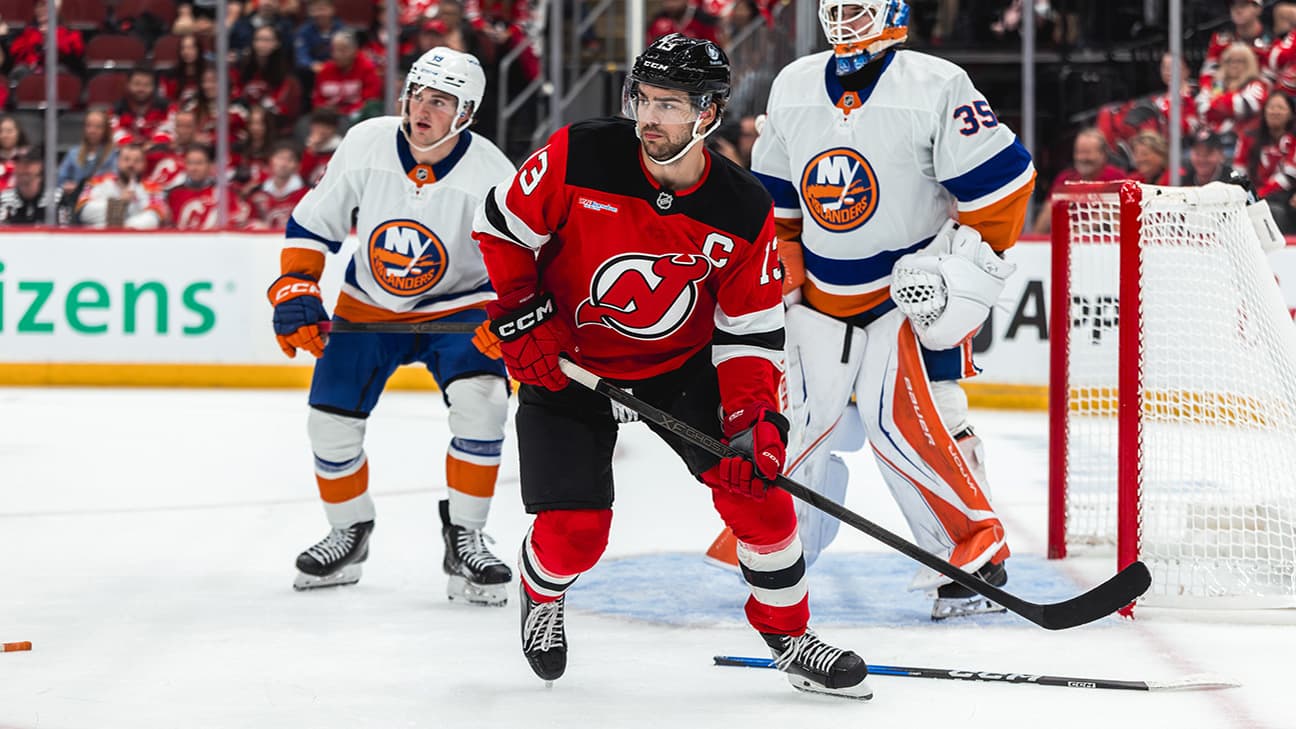
The New Jersey Devils have re-signed captain Nico Hischier to a five-year contract extension, reported at an average annual value of roughly $11.7 million, that begins with the 2027-28 season and runs through 2031-32. The deal removes the last major question about New Jersey's core, keeps a top-line center in place through his prime, and reinforces a fantasy profile that has quietly been one of the most reliable at the position. For fantasy managers, the news matters less for the dollar figure than for what it confirms: the Devils are building around Hischier, and his usage is not going anywhere.
The deal and the context
Hischier, the first overall pick in 2017, has spent his entire career in New Jersey and now becomes the long-term anchor of a contention window the franchise has been trying to force open for several seasons. The extension slots him near the top of the market for a No. 1 center, and it does so on a term that carries him through his age-27 to age-32 seasons, the years when a two-way pivot typically holds his value best.
The timing is notable. Hischier is coming off a season in which he posted 28 goals and 66 points in 82 games, production that came during what was widely described as a down year for the team around him rather than a decline in his own game. New Jersey's front office, now led by general manager Sunny Mehta, prioritized locking up its captain as the cornerstone piece before addressing the roster around him. That order of operations tells fantasy managers something useful: the Devils view Hischier, not just the more explosive Jack Hughes, as the player they build outward from.
Why the two-way profile travels in fantasy
Hischier's fantasy case has always rested on breadth rather than a single elite category. He is an all-situations center who plays the toughest matchups, takes and wins critical faceoffs, kills penalties, and still produces at even strength and on the power play. That combination is exactly the kind of usage that drives fantasy value in the formats that reward ice time, because the Devils trust him in every game state.
In points-only and standard rotisserie leagues, the appeal is his even-strength production paired with a locked-in power-play role. Hischier does not need a career year to return value; he needs the steady top-six deployment he already has, and the extension guarantees it. In leagues that count faceoff wins, he is a genuine specialist, one of the reasons his floor is higher than his raw point totals suggest. And in deeper category formats, his defensive assignments mean heavy total ice time, which quietly inflates the peripheral counting stats that accumulate over a full season.
The one caveat is for managers in leagues built around hits and blocks. Hischier is not a physical, shot-blocking presence in the mold of a checking-line grinder, so he is worth less in formats that weight those categories heavily. But in the far more common setups that reward ice time, faceoffs, and balanced two-way production, his profile is close to ideal: a center who contributes something in nearly every category and almost nothing negative.
What the extension means for New Jersey's fantasy assets
Locking up Hischier does more than secure one player. It cements the top of the Devils' depth chart and, by extension, the fantasy standing of the players around him. Jack Hughes remains the highest-ceiling offensive talent in the group, the player whose per-game rate can win a fantasy week outright when healthy. Jesper Bratt, one of the franchise's longest-tenured players alongside Hischier, is the steady points producer whose chemistry with Hughes has anchored New Jersey's top six.
The strategic point for fantasy managers is that a stable, committed core protects everyone's role. When a team's centerpiece signs long term, the coaching staff can build set lines and power-play units with confidence, and set roles are the single biggest driver of predictable fantasy production. Hughes and Bratt both benefit from the certainty that the Devils are in win-now mode rather than facing the kind of teardown that scrambles usage and tanks counting stats. The extension is, in effect, an insurance policy on the entire top six.
Where Hischier fits in the 2026-27 draft
Hischier profiles as a mid-round center in most standard fantasy drafts, and the extension does nothing to change that range while strengthening the case for taking him at it. He is not a first- or second-round pick; that tier belongs to the highest-ceiling scorers. Instead, he is the kind of selection that stabilizes a roster in the middle rounds, a center whose floor is among the safest at the position because his role is guaranteed and his production does not depend on shooting variance.
The actionable takeaway is to target Hischier as a floor-raising second or third center rather than reaching for him as a league-winner. His value is highest in leagues that count faceoffs and reward ice time, and in those formats he can be drafted a round or two ahead of his points-only ranking. In pure points leagues, let him come to you at his mid-round price and enjoy the reliability. Managers chasing upside should still prioritize Hughes among the Devils; managers building a stable spine should be glad to land Hischier.
The Verdexed model take
The Verdexed model treats guaranteed role and all-situations ice time as leading indicators of fantasy floor, and Hischier scores well on both. The framework reads his extension as a usage guarantee rather than a production bump: the number on the contract does not add points, but the commitment it represents locks in the top-line, power-play, and defensive deployment that his fantasy value depends on. That distinction is why the model tends to rate Hischier ahead of flashier names whose roles are less secure.
On the team level, the model views the extension as a modest positive for New Jersey's division and playoff outlook, because retaining a top-two center is the kind of move that keeps a contention window open rather than one that lifts a projection on its own. The Devils' point production forecast still hinges on health, particularly Hughes staying in the lineup, but the floor of the team's outlook rises when its captain is signed through his prime. For projected point production, the model's read on Hischier is stability: a center whose expected output sits comfortably in the mid-tier range with a narrow band of outcomes, which is exactly what a manager wants from a middle-round anchor.
The edge for a Verdexed reader is to value the certainty. In a market that often overpays for last season's point totals, a player with a guaranteed elite role and a wide contribution base is undervalued precisely because his ceiling is not eye-catching. Hischier is that player, and the extension is the model's confirmation of it.
What's next
With the captain signed, attention turns to how Mehta builds around the core. The Devils still need to solidify their wing depth and settle their goaltending picture, and those moves will shape the ceiling of New Jersey's fantasy assets more than Hischier's deal does. Managers should watch training camp for the top-six line combinations and power-play alignments, because the exact wingers flanking Hischier and Hughes will determine which secondary Devils become draftable values.
For now, the read is straightforward. Hischier's extension is a floor-setting event for New Jersey's core, a reinforcement of a two-way fantasy profile that travels across formats, and a signal that the Devils intend to contend rather than retool. Draft him as the reliable mid-round center he is, prioritize him higher in faceoff and ice-time leagues, and treat the deal as what the Verdexed model calls it: certainty, not a spike. In fantasy hockey, certainty is worth paying for.