 NHL2026-07-21
Kings Add Erik Haula and Mats Zuccarello: The Fantasy Angle on L.A.'s Veteran Depth Moves
By Verdexed NHL Desk
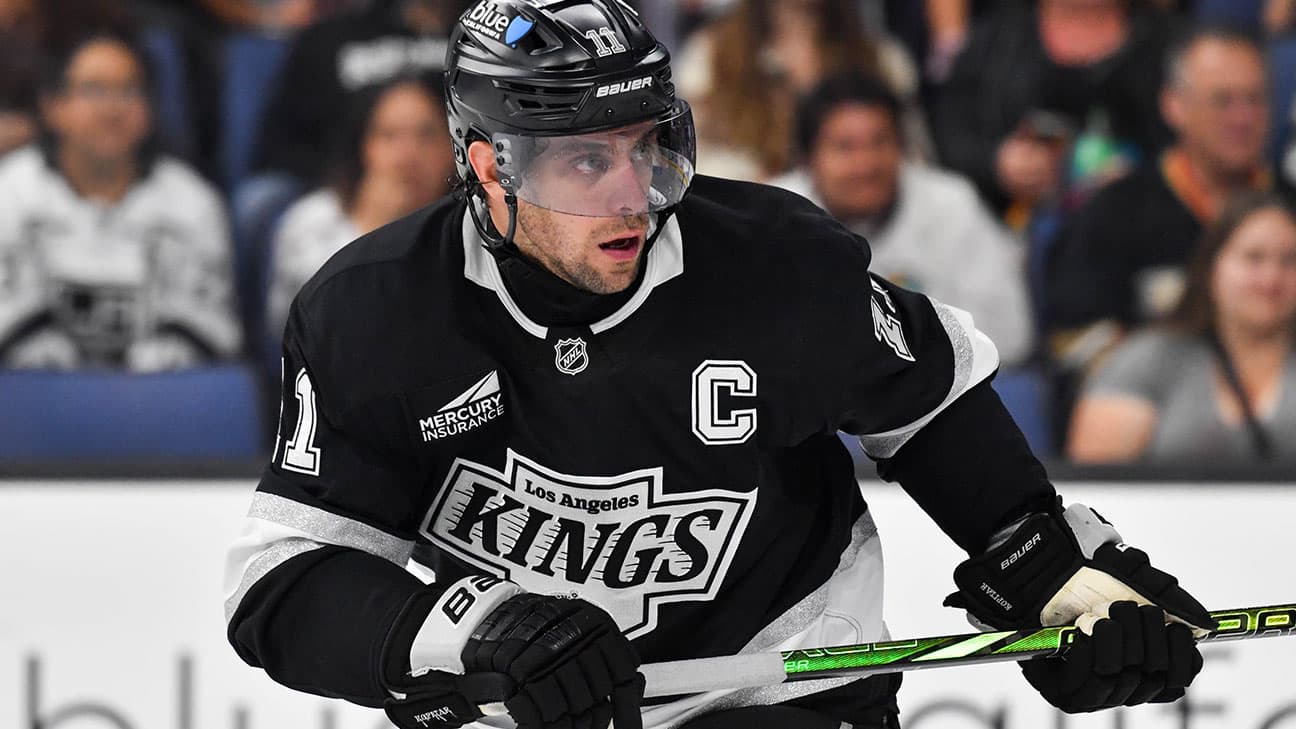
The Los Angeles Kings are rebuilding their forward group with experience. In the opening days of free agency the Kings signed center Erik Haula to a two-year contract worth roughly $7.2 million, an average annual value near $3.6 million, and added veteran winger Mats Zuccarello on a one-year, incentive-laden deal. The two additions headline an offseason of turnover for a team entering its first season without longtime captain Anze Kopitar, who retired after the 2025-26 campaign following 20 years with the franchise. For fantasy managers, the moves are a study in scale: one signing carries real deep-league intrigue, the other mostly fills a role. Here is what each brings and where the value lives.
The signings and the roster reset
Haula, 35, arrives after a career-high 81 games with the Nashville Predators, where he posted 14 goals and 28 points across the 2025-26 season. He is entering his 14th NHL season and joining his eighth franchise, a well-traveled two-way center who profiles as a middle-six presence and special-teams contributor rather than a scoring driver. The two-year term and roughly $3.6 million cap hit reflect that role, and it slots him behind Los Angeles' top options down the middle.
Zuccarello, 38, reaches Los Angeles after the Minnesota Wild let him walk in free agency. He finished his final season in Minnesota with 15 goals and 54 points and remained a mainstay on the Wild's top power-play unit. His one-year contract is structured around a modest base salary with bonus money attached, a common framework for a productive veteran late in his career. Los Angeles doubled down on that veteran approach across the offseason, also adding Corey Perry and defenseman Erik Gustafsson and re-signing Scott Laughton, filling out a group reshaped by Kopitar's departure.
The Kopitar question at center
Kopitar's retirement is the context that frames everything. For nearly two decades he anchored the Kings down the middle, absorbing top-line and matchup minutes and stabilizing the power play. Replacing that is not a one-signing fix, and Los Angeles has approached it as a committee problem rather than a search for a single successor.
The early expectation is that Quinton Byfield takes on a larger role at center, with Adrian Kempe a candidate to move back to the middle after years on the wing alongside Kopitar. Kevin Fiala remains the team's most dynamic offensive winger, and Alex Laferriere continues to grow into a bigger role. Haula factors into this picture as a reliable two-way center who can take defensive-zone draws and penalty-kill minutes, insulating the younger players above him. That is valuable for the hockey team. It also caps his fantasy ceiling, because faceoff work and checking minutes do not translate into standard-league counting stats.
What Zuccarello brings
Zuccarello's appeal is playmaking and power-play value that has aged better than most. He is a high-skill, low-shot-volume winger whose game is built on vision, puck distribution, and comfort operating from the half-wall on the man advantage. Even at 38, a player who runs a top power-play unit and sets up scoring chances retains offensive relevance, and his 54-point finish in Minnesota was not the profile of a player in freefall.
The question is deployment. If Los Angeles pairs Zuccarello with a finisher such as Fiala and gives him a spot on the top power-play unit, his assist totals and power-play points could carry deep-league value. Projected line combinations circulating this offseason have floated exactly that kind of scoring-line usage. If instead he settles into a secondary role and a second power-play unit, the counting stats thin out quickly at his age. His fantasy case is entirely usage-dependent, and it tilts toward assist-heavy, power-play-driven formats.
What Haula brings
Haula's contribution is role and reliability. He wins faceoffs, kills penalties, and can play up or down the lineup without being exposed defensively, the kind of veteran a coaching staff trusts in tight games. That utility is real, and it matters for a Kings team trying to replace Kopitar's two-way steadiness by committee.
For fantasy, though, Haula is a marginal standard-league asset. His 28-point season in a career-high 81 games sets a modest baseline, and his projected middle-six spot behind the team's scoring options does not point to a leap. He carries some appeal in the deepest leagues that value faceoff wins, blocks, and shorthanded time on ice, but in most formats he is a name to note rather than a player to roster.
The fantasy angle
The split is clean. Zuccarello is the deep-league dart worth tracking, and the trigger to watch is his power-play placement. Managers in points-heavy or assist-friendly leagues should monitor training camp and preseason usage: a top-unit assignment next to a shooter makes him a viable late-round or waiver-wire add, while a demotion to the second unit makes him droppable. His floor is low and his ceiling is capped by age, but the path to relevant production exists if the deployment cooperates.
Haula is a hold-for-context name in standard leagues. His value is in the roster picture rather than the box score, and he is best viewed as a stabilizer whose fantasy relevance is limited to the most granular category formats. Neither player belongs on a draft board in shallow leagues, but Zuccarello is the one whose usage could force a mid-season second look.
The Verdexed model take
The Verdexed model reads the Kings as a playoff-caliber team operating in a crowded Western Conference, with the veteran additions cushioning the Kopitar loss without fully replacing his two-way impact. The model views the forward group as deeper and more experienced than it is dangerous, which supports a solid but not elite team point-production projection and keeps Los Angeles in the model's playoff picture rather than among the conference's top seeds.
On the individual signings, the model treats Zuccarello as a low-floor, usage-capped fantasy asset whose projection swings on power-play deployment, and it flags top-unit placement as the single input that would move his outlook from irrelevant to deep-league useful. Haula projects as a role player whose value is defensive and structural, with a standard-league fantasy line the model rounds down. The broader signal is that Los Angeles bought reliability and depth, choices that help the model's win projection more than they help any single fantasy stat line.
What's next
The center picture is the story to follow into camp. Whether Byfield or Kempe takes the largest share of top-line minutes will shape the entire forward alignment, and where Zuccarello and Haula land relative to Fiala and Laferriere will determine their fantasy relevance. Managers should treat the preseason power-play chart as the key document: it will confirm whether Zuccarello earns the top-unit look that makes him worth a deep-league flier and whether Los Angeles' committee approach at center can hold together in Kopitar's absence. The veteran depth is in place. The deployment will decide what any of it is worth.