Kevin McGonigle and Sal Stewart Have the Rookie of the Year Races Effectively Won
By Verdexed MLB Desk
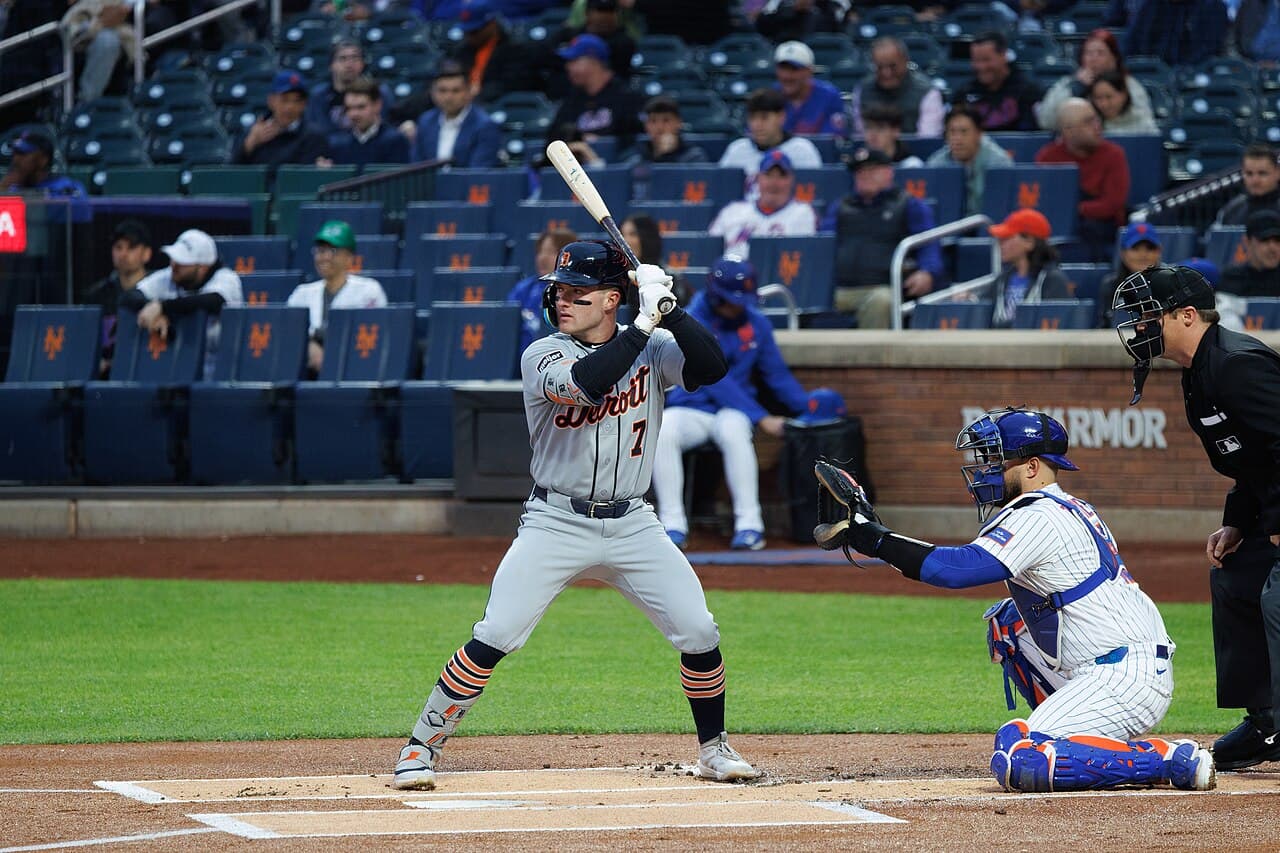
Both Rookie of the Year races are decided in all but the announcement, with Detroit's Kevin McGonigle a prohibitive favorite in the American League and Cincinnati's Sal Stewart carrying an even shorter price in the National League. Each was named his league's Rookie of the Month for the opening stretch of the season, and neither has given the field an opening since.
For fantasy managers heading into keeper deadlines and dynasty offseasons, the award itself is the least interesting part. What matters is what these two seasons imply about the players going forward, and whether the market has already priced it.
McGonigle in Detroit
McGonigle has been the most valuable rookie in baseball by wins above replacement and has done it as an up-the-middle infielder, which is the profile that ages best. The plate discipline is the standout trait: he has drawn more walks than any rookie in the league while keeping his strikeout total in the same neighborhood, a ratio that is rare at any experience level and almost unheard of in a debut season.
Detroit signed him to a long-term extension barely two weeks into his rookie season, which tells you everything about how the organization evaluated him internally. Teams do not commit that kind of money to a player with two weeks of major league performance unless the underlying evaluation was already complete.
The counting stats are solid rather than spectacular, with double-digit home runs and double-digit steals and a batting average in the .270s supported by an on-base percentage near .375. That combination, contact plus patience plus positional value plus some speed, is the profile of a player who accumulates value steadily rather than in bursts.
Parker Messick of Cleveland is the nominal runner-up, and his season deserves the mention. The left-hander has made 27 starts with an ERA in the mid-2.40s and a strikeout-to-walk ratio near four, which in most years is a Rookie of the Year season. This is not most years.
Stewart in Cincinnati
Stewart's case is built on run production. He leads the entire major leagues in RBI, which is a remarkable thing for a rookie to accomplish and a function of both his own performance and his place in a Cincinnati lineup that gets on base in front of him. He set a Reds franchise record for RBI before the end of April, which set the tone for the whole season.
The caveat worth naming is that RBI is a context statistic, and a hitter leading the league in it is not automatically the league's best hitter. Stewart's award case is stronger than his underlying value case, which is exactly the kind of gap dynasty managers should be paying attention to.
JJ Wetherholt is the name to watch as the late complication. He has been working back from injury and is nearing a return, which is not enough time to change an award race but is enough to change how the 2027 conversation starts.
The fantasy read
McGonigle is the more valuable dynasty asset of the two by a comfortable margin. An up-the-middle infielder with elite plate discipline, double-digit steals and a long-term contract in place is the single most stable profile in fantasy baseball. He should be a top-15 overall pick in dynasty startups next spring and is essentially untouchable in existing leagues.
Stewart is the player to consider selling. A first baseman whose headline number is RBI is a player whose fantasy value is partly a function of lineup context, and lineup context changes. His acquisition cost this offseason will be set by a league-leading RBI total and a Rookie of the Year award, both of which are the highest-visibility versions of his value. That is the moment to trade a player, not the moment to buy one.
This is not a negative evaluation of Stewart as a hitter. He is clearly good. It is an observation that the gap between his perceived value and his projected value is wider than McGonigle's, and dynasty leagues are won by exploiting exactly that gap.
The Verdexed model take
Our rookie projection system weights plate discipline and contact quality far above counting statistics when forecasting year two, because walk rate and strikeout rate stabilize faster than any production metric. By that standard McGonigle's season is one of the strongest rookie signals in recent years and Stewart's is good but more dependent on inputs he does not control.
The model's year-two forecasts reflect that divergence, projecting McGonigle for a modest step forward and Stewart for a step back in RBI with roughly flat rate statistics. Neither is a bust call. Both are reminders that the award and the projection are answering different questions.
What's next
Neither award market is worth betting at current prices. The interesting markets are the 2027 futures that will open this winter, and the historical pattern there is consistent: Rookie of the Year winners are systematically overpriced in the following season's award and MVP markets, and the runner-up who had a quieter season is systematically underpriced.
Messick is the specific name to file away. A starter with 27 quality starts and a sub-2.50 ERA in his rookie season who loses the award to a position player will open next season at a price that reflects the loss rather than the performance.
The redraft angle for next spring
Both players will be drafted significantly higher next March than their projections justify, and that is the practical consequence of winning this award. Rookie of the Year winners carry a name-recognition premium into the following draft season that typically costs two to three rounds of value in redraft formats.
McGonigle is worth paying part of that premium for, because middle infielders who walk more than they strike out and steal bases are scarce. Stewart is not, because first base is the deepest position in fantasy baseball and a corner bat whose calling card is run production in a specific lineup is the most replaceable kind of asset.
The discipline required here is the same discipline that separates good drafters from bad ones. The award is a fact about last season. The draft price should be a forecast about the next one, and the two are related only loosely.