James Wood Hits the Injured List for the First Time in His Career
By Verdexed MLB Desk
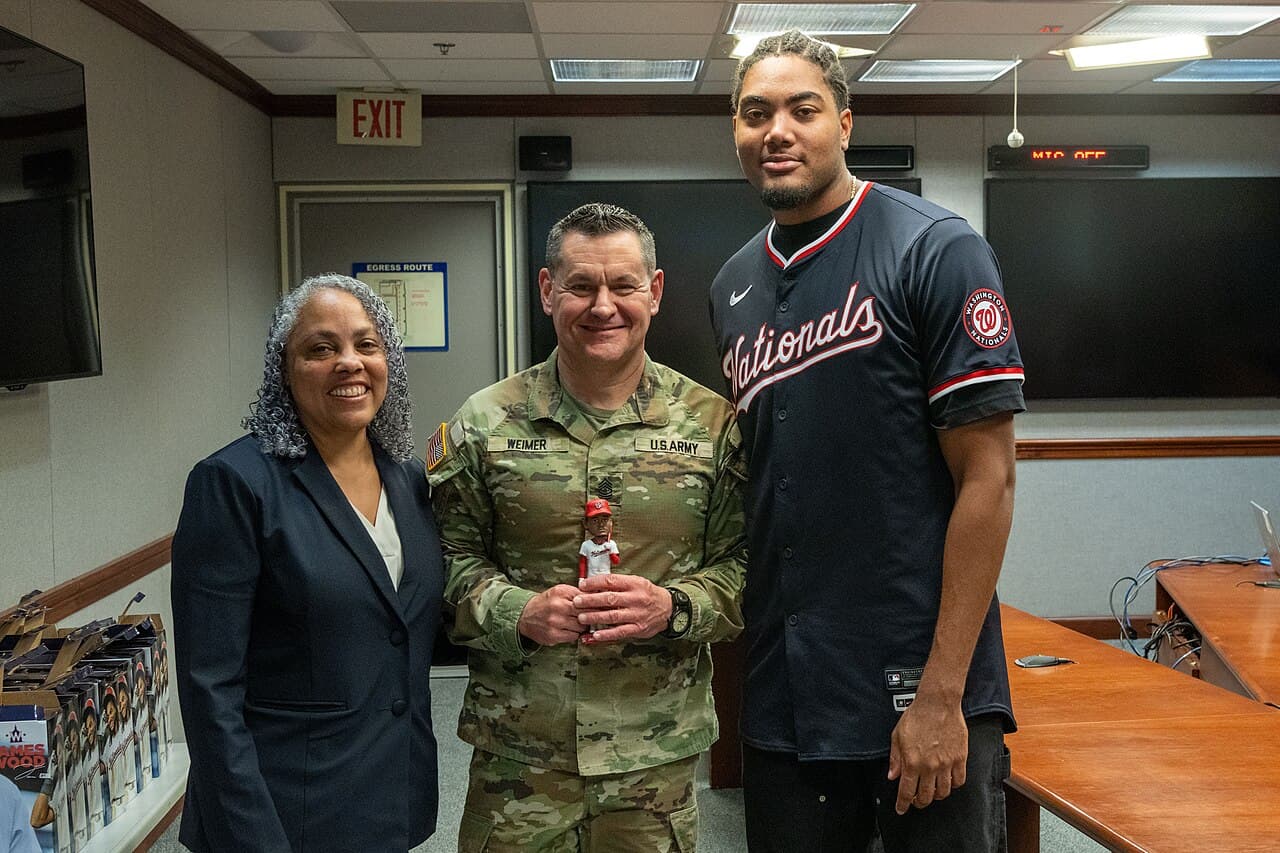
The Washington Nationals placed James Wood on the 10-day injured list Tuesday with a left oblique strain, the first IL stint of the outfielder's major league career. Wood felt discomfort on the final swing of a seventh-inning at-bat Monday, a ground out, and an MRI the following day showed what the club described as a mild strain.
Manager Blake Butera indicated the team is hopeful this is a short-term absence. Washington selected the contract of outfielder Andrew Pinckney from Triple-A Rochester in the corresponding move.
The durability context is remarkable. Wood had appeared in 350 of Washington's 355 games since making his major league debut on July 1, 2024, including every one of the Nationals' 114 games this season before Tuesday.
Why "mild" is the word that matters, and why it should not calm you down
Oblique strains are among the most treacherous injuries in baseball for exactly the reason that Wood's diagnosis sounds encouraging. The initial imaging frequently shows a low-grade strain, and the initial timeline frequently gets extended.
The mechanism is the problem. The oblique fires on every swing and on every throw, and there is no way to play through it or to protect it. A hitter who returns at 90 percent will either re-injure it or will lose the ability to turn on velocity, and organizations have learned the hard way that rushing these costs more days than it saves.
The historical distribution for a mild oblique strain in a position player runs longer than 10 days more often than not. Three weeks is a reasonable central expectation. Six weeks is not an outlier outcome.
The fantasy decision
Wood is a first-round asset in nearly every format, which makes the roster decision simple in leagues with an IL slot and complicated in leagues without one.
If you have an IL spot, use it and wait. There is no scenario in which you drop a hitter of this caliber for a mild strain, and the trade market will price him at a discount that is not worth accepting in early August. Managers contending this season should hold and plan for a return in late August at the earliest.
If you do not have an IL spot, the calculus changes. Carrying a bench bat who cannot play for three or more weeks during the heart of a fantasy pennant race is a real cost, and the honest answer is that it depends on your roster's depth. Teams with margin should hold. Teams fighting for a playoff spot week to week may not be able to afford the dead weight.
The trade angle is worth considering from the other direction. If a manager in your league is panicking, an oblique strain with a "mild" designation is exactly the injury to buy on. The player is a top-tier asset, the return is likely within the fantasy season, and the discount is being driven by a headline rather than a diagnosis.
What it does to Washington
The Nationals lose their best hitter and one of the National League's most productive bats in a season in which he had been drawing MVP attention. Andrew Pinckney takes the roster spot and will presumably split outfield time, which is a replacement-level substitution in fantasy terms.
For deeper leagues, Pinckney is a speculative add in NL-only formats and nothing more in mixed leagues. Call-ups who arrive to cover a star's absence rarely receive the playing time necessary to matter in shallow formats, and Washington has no reason to force at-bats.
The larger organizational effect is on the lineup around Wood. Hitters who bat immediately behind a star see meaningfully worse pitch quality when that star is out of the lineup, because pitchers no longer have to navigate around him. That is a mild negative for everyone in Washington's batting order.
Betting angle
The Nationals' team totals should come down, and books will move them. The relevant question is whether they move enough.
Markets systematically under-adjust for the removal of a single elite bat from a lineup, because the run-scoring effect of one hitter over nine innings is smaller than intuition suggests but larger than the typical line movement reflects. When a team loses its best hitter and the total drops by a quarter run, that is usually not enough.
Washington unders are the cleaner side while Wood is out, particularly against right-handed starters who would otherwise have had to face him. Team total unders are the more precise expression, since the opposing team's offense is unaffected.
The Verdexed model take
Our model has already reduced Washington's projected runs per game for the duration of Wood's absence and widened the uncertainty band around his return date. The oblique classification carries one of the largest timeline uncertainty adjustments in our injury framework, precisely because the initial diagnosis has such poor predictive value.
The rest-of-season projection for Wood himself is down modestly, reflecting both the missed games and the historical tendency for hitters returning from oblique strains to underperform their baseline for two to three weeks after activation. That post-return efficiency drag is the part most projection systems ignore, and it is the part that costs fantasy managers games in September.
For prediction markets, Wood's individual award odds should lengthen. A player missing three weeks of an MVP-caliber season loses counting stats that cannot be recovered, and voters reward accumulation.
What's next
The first checkpoint is whether Wood begins baseball activities within the 10-day window. Oblique recoveries progress through dry swings, then tee work, then live batting practice, and each stage takes days. A player who is not swinging by the end of the first week is not returning at the minimum.
The second is whether Washington sends him on a rehabilitation assignment. Hitters returning from oblique strains almost always need one, and the length of it is the best available signal about how the team views the recovery.