 MLB2026-08-31
Byron Buxton Is Back on the IL With a Hip Impingement and Surgery Is an Option
By Verdexed MLB Desk
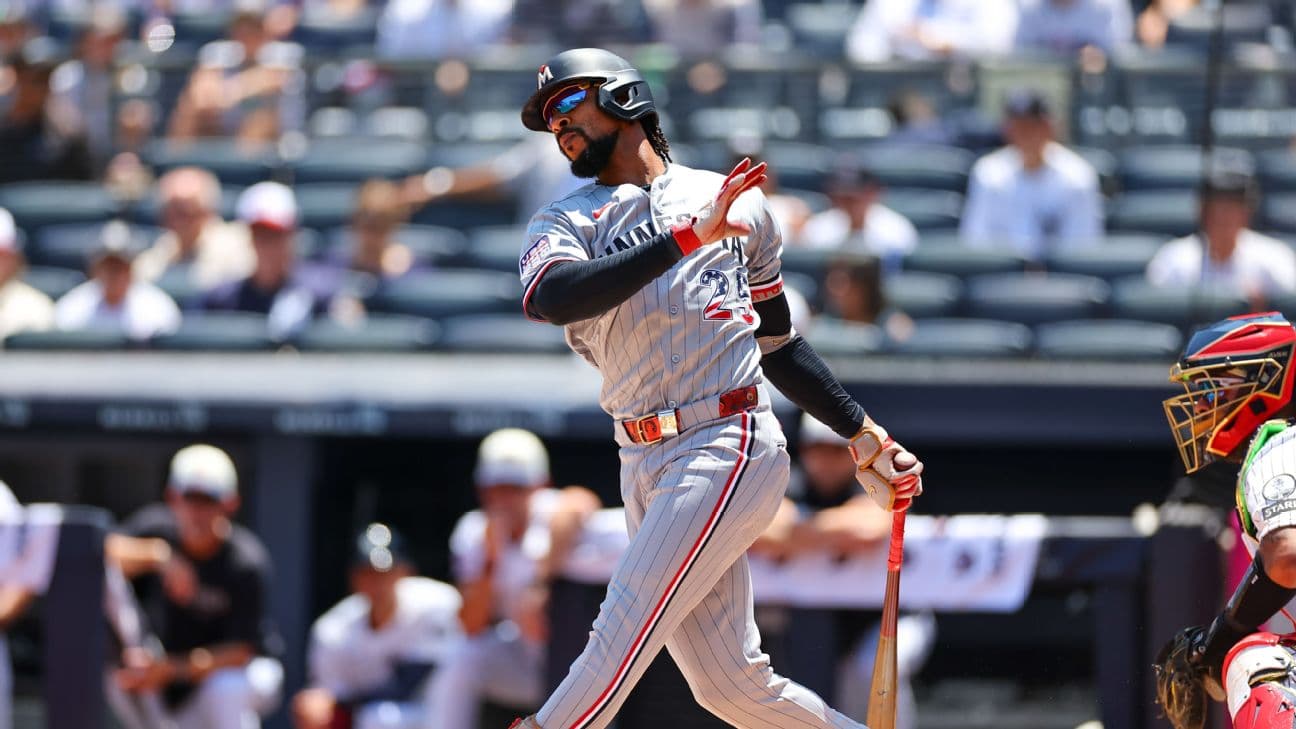
The Minnesota Twins placed center fielder Byron Buxton on the 10-day injured list on Sunday with a right hip impingement, retroactive to August 27. It is his third hip-related IL stint of the season, and the club's front office has publicly acknowledged that a surgical option remains a possibility while expressing hope he can return before the season ends.
Buxton has not played since leaving a game against the Athletics early last week. Minnesota gave the hip several days to respond before making the move. He is batting .254 with 25 home runs and 46 RBIs across 93 games this season.
Why this one is different from the first two
The first two stints were interruptions. This one arrives on August 30 with roughly a month of regular season remaining, and it arrives with the word "surgical" attached to it by the team itself. That combination changes how a fantasy manager should treat him.
A 10-day placement retroactive to August 27 makes him eligible to return in early September. But eligibility and expectation are different things, and a player who has needed three separate absences for the same joint in one season does not typically come back and hold up under an everyday center field workload.
The RBI total is the number that jumps out. Twenty-five home runs and only 46 RBIs in 93 games reflects both his spot in the order and how little traffic has been in front of him. That matters for anyone counting on counting stats in the final month.
Fantasy fallout
If you are in a redraft league and still holding a playoff spot, Buxton is now a stash rather than a starter. Roster him only if you have an IL slot. If your league has no IL slot and you are in a must-win week, the honest answer is that a player with an open-ended hip issue and a possible surgery in his future is not worth an active roster spot in September.
The replacement conversation in Minnesota is the more useful piece of information. The Twins have leaned on younger outfielders as the season has gotten away from them, and rosters expand to 28 players on September 1 with a 14-pitcher cap. Playing time in a non-contending outfield is exactly where September fantasy value comes from, because the innings are real and the competition for them is not.
Fantasy managers chasing steals and runs in head-to-head playoffs should be watching who takes the everyday center field reps in Minnesota this week rather than waiting on Buxton.
The Verdexed model take
Our projection system now assigns Buxton a rest-of-season plate appearance total closer to a part-time player than a regular, and it has widened the distribution around his return date rather than picking one. The model treats recurring same-joint injuries as a structurally different category from acute ones: a hamstring strain has a recovery curve, and an impingement that has recurred three times in five months carries a real probability of not resolving at all this season.
For dynasty and keeper leagues, the model has not moved his long-term value as much as the news implies. Buxton is 32 and his production, when available, remains excellent. The availability discount was already baked into every projection of him for years. What changed Sunday is the 2026 line, not the player.
The category math for head-to-head managers
Buxton's specific fantasy profile makes this worse than a generic injury. He is a power and speed contributor whose value concentrates in home runs, runs and stolen bases, three categories that swing weekly matchups more than batting average does. Losing a source of concentrated category production in September is harder to replace than losing an equivalent overall value player who contributes a little everywhere.
The practical implication: replace him with a player who does one thing well rather than a balanced regular. If your matchup is close in steals, take the running back-end outfielder getting everyday reps for a team out of the race. If you need power, take the corner bat with a bad average and real exit velocity. Roster construction in the final month should be built around the categories you can actually win, and that logic gets sharper the day a five-category star goes down.
Betting angle
Minnesota is not a team whose games carry heavy market interest in September, which is precisely why the props are worth a look. Team total unders in games where the Twins face a quality starter get slightly better with Buxton out, because he is the one bat in that lineup capable of changing an inning by himself.
The more general angle applies league-wide. September is the month when lineup information is worth the most and priced the least. Books set totals off season-long team profiles, and rosters expanding to 28 means the actual nine names in a lineup can look very different from the team that produced those season-long numbers. Checking confirmed lineups before betting a total is a bigger edge in September than in any other month.
What to do in your league
Move Buxton to your IL slot if you have one and do nothing else. There is no trade market for him at this point in the calendar, and cutting a player of his quality on the chance he never returns is a decision you will only regret in one direction.
Spend your remaining free agent budget on playing time rather than name value. A replacement-level outfielder who is going to bat fifth every day for a team out of the race will out-produce a star who plays six of your remaining thirty games. That is the whole strategy for the final month, and Buxton's IL stint is the cleanest illustration of it available today.
What's next
The Twins have not put a timeline on the return, and the mention of surgery being on the table means the next update is likely to come from an imaging result rather than a rehab report. Watch for whether he begins baseball activities within the 10-day window. If that has not happened by the middle of this week, plan your fantasy playoffs without him.