 NHL2026-06-30
Alex Ovechkin Reaches Free Agency: The NHL's All-Time Goal King Weighs a One-Year Deal or Retirement
By Verdexed NHL Desk
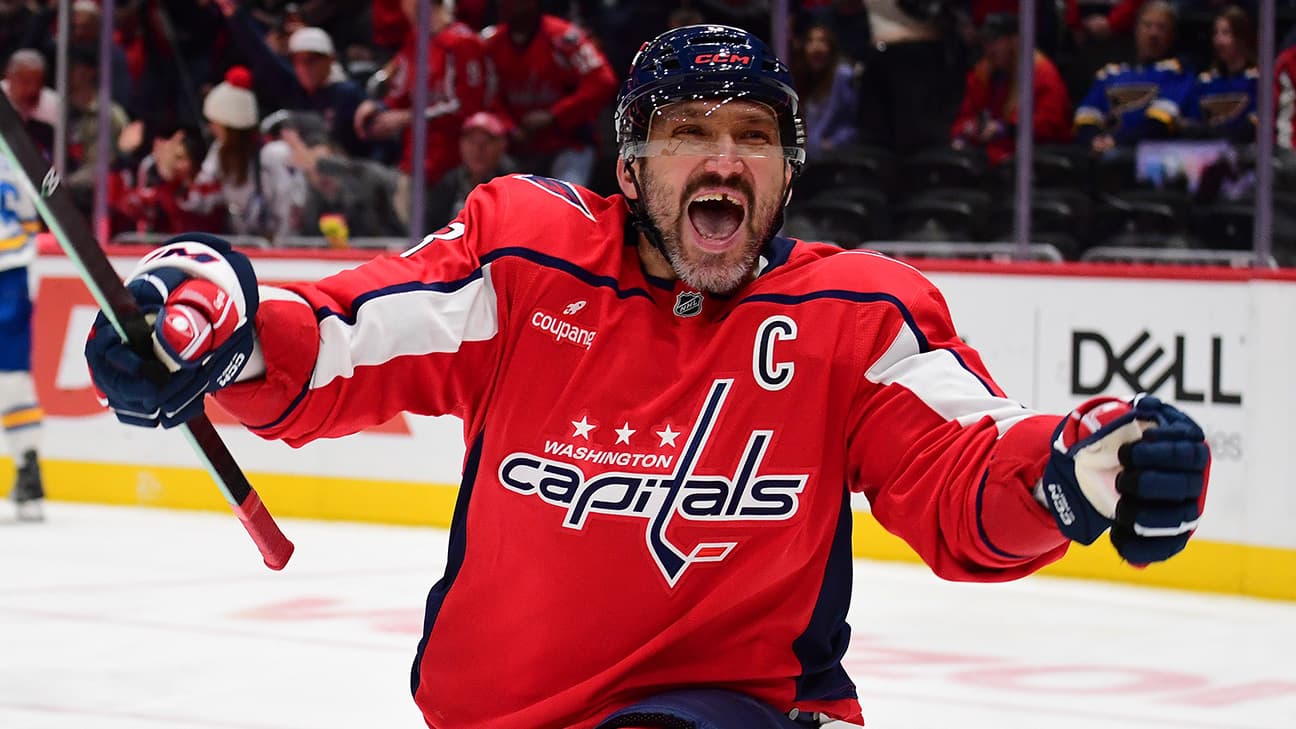
Alexander Ovechkin is set to become an unrestricted free agent on July 1, closing the book on the five-year contract he signed with the Washington Capitals in 2021. The decision in front of the NHL's all-time leading goal scorer is not which team to join, but whether to keep playing at all. Reports indicate the only contract under serious consideration is a one-year deal for the 2026-27 season, and Ovechkin has long maintained he cannot envision suiting up for any franchise other than Washington.
A decision on his own timeline
Capitals general manager Chris Patrick has said the organization expects clarity in the near future, while acknowledging there is no firm deadline. The lack of urgency is by design: when a player has stated repeatedly that he will either return to his lone NHL home or walk away, there is no rival bidding war to force the issue. Ovechkin, who turns 41 in September, holds the leverage of a legend, and Washington will wait for him to decide on his own terms.
That backdrop makes this one of the most-watched non-moves of the offseason. A one-year deal keeps the game's greatest goal scorer in the league for another season; retirement ends one of the defining careers in hockey history. Either way, the conversation between Ovechkin and the Capitals is the storyline that the rest of Washington's offseason hinges on.
He can still fill a fantasy role
The on-ice case for one more season is straightforward: Ovechkin can still score. He posted 32 goals and 64 points across a full 82-game slate this past season, production that, while down from his peak, remains useful in the right fantasy context. His value has always been concentrated in goals, shots on goal, and power-play points, and that profile ages better than playmaking-dependent games because it relies on his signature one-timer rather than foot speed.
For fantasy managers, a returning Ovechkin is a targeted asset rather than an every-category star. In leagues that weight goals, shots, and power-play production, he carries real value as a specialist who can be deployed for his strengths. In banger and multi-category formats, he chips in hits as well. The realistic projection is a useful middle-rounds winger whose floor is his shot volume and whose ceiling is another 30-goal campaign if his role and health hold.
What it means for Washington
Ovechkin's choice shapes the Capitals' cap and roster planning. A one-year return keeps a marquee shooter on the top power-play unit and influences the deployment and fantasy value of the linemates who feed him. A retirement opens minutes, power-play time, and shot opportunities for the younger forwards in Washington's lineup, which would create fantasy openings for the players who inherit that ice time. Either outcome has downstream effects worth tracking for managers who roster Capitals.
The Verdexed model take
Verdexed's model values aging scorers through shot generation, because shots on goal are the most stable predictor of goal output as a player ages. Ovechkin's continued high-volume shooting is exactly why the model still projects him as a viable fantasy contributor in a return scenario, with goals and power-play points as the categories that carry his value. The model discounts his even-strength playmaking and accounts for the age risk, but it does not write off a player whose elite shot remains intact.
The model's broader read is on Washington's power play: whether Ovechkin returns or retires, the distribution of those high-value man-advantage points is the swing factor for the Capitals' fantasy-relevant forwards, and it adjusts their projections based on his decision.
Betting angle
For the futures market, an Ovechkin return is a modest positive for Washington's offensive outlook and the props tied to it, particularly any season-long goal-scoring markets that will inevitably be posted for a player chasing milestones. The more interesting angle is the uncertainty itself: until the decision is made, the books cannot fully price Washington's forward group, and the early lines may not reflect the eventual resolution.
The legacy stakes
There is also a milestone dimension the market will not ignore. As the all-time goals leader, Ovechkin turns every game of a potential final season into an event, and that visibility has downstream effects on his deployment: a team leaning into a star's strengths tends to maximize his power-play time and shot volume. The flip side is the risk that a farewell campaign comes with reduced minutes or a diminished role, which would sap the very production that makes him worth rostering. Managers weighing an Ovechkin pick are really betting on how a storied franchise chooses to use a legend in what could be his final act, and that usage question is the whole ballgame for his fantasy value.
What is next
The hockey world waits on one man. A one-year deal keeps the greatest goal scorer the sport has ever seen on the ice and on fantasy radars as a shot-volume specialist. Retirement closes the chapter and redistributes his minutes to Washington's next generation. For fantasy managers, the action item is simple: monitor the decision, because it determines both Ovechkin's value and the value of the Capitals who play around him.
Few offseason storylines carry this much weight on so little movement. One signature, or its absence, decides whether the greatest goal scorer in NHL history laces them up again, and whether a fantasy-relevant shot-volume specialist remains on the board. Until then, the only move is to watch and wait with the rest of the hockey world.