 NHL2026-07-20
Alex Ovechkin Re-Signs in Washington for a 22nd Season: The Fantasy Read on the NHL's Goal King
By Verdexed NHL Desk
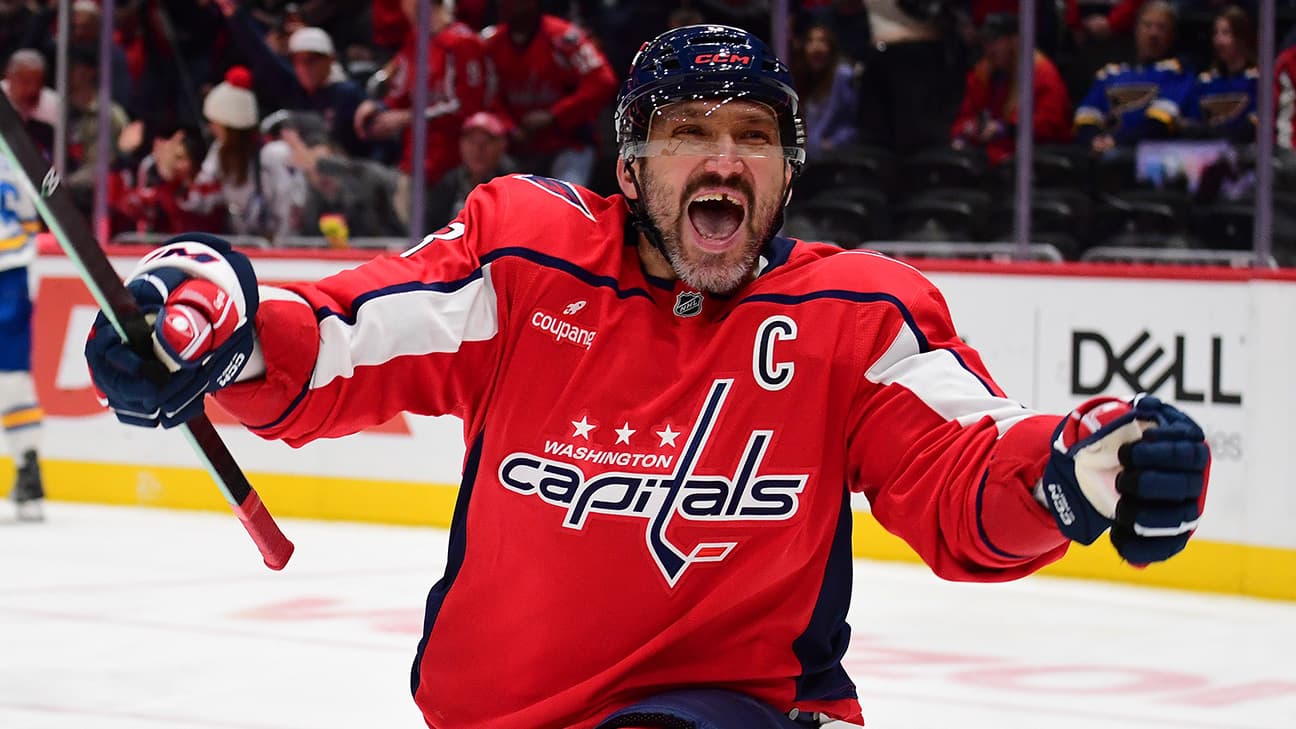
Alex Ovechkin is running it back. The Washington Capitals re-signed their captain to a one-year contract for the 2026-27 season, ensuring the NHL's all-time goal king returns for a 22nd campaign, all with one franchise. Coming off a season in which he became the first player in league history to reach 900 regular-season goals, Ovechkin remains a fantasy asset built almost entirely around a single elite skill. Here is what that skill is still worth on a draft board and where his value sits in category leagues.
The deal, and the milestones
Ovechkin returns on a one-year contract structured around a modest base salary, a games-played bonus tied to reaching ten games, and a signing bonus, for an average annual value in the low millions. The financial specifics matter less to fantasy managers than the fact that he is playing, and playing in Washington, where he has led or co-led the team in goals in all 21 of his seasons.
The milestone backdrop is staggering. Last season Ovechkin led the Capitals in goals and points, extending a run of goal-scoring dominance that culminated in becoming the first player ever to 900 regular-season goals, and he also reached 1,000 combined regular-season and playoff goals. This upcoming season he joins an exclusive club of players to spend 22 seasons with one franchise, and he becomes the longest-tenured athlete in the history of Washington professional sports.
Fantasy fallout
Ovechkin's fantasy profile is specialized, and drafters need to understand exactly what they are buying. His value is concentrated in goals, shots on goal, power-play points, and hits, a category set that makes him a strong contributor in leagues that count those specific stats. He is not a balanced multi-category producer, and his assist totals and plus-minus are secondary to the shooting volume that defines him.
The power-play component is central. Ovechkin's one-timer from the left circle remains one of the most productive shots in hockey, and as long as he anchors the top unit, his power-play goal and point production keeps him relevant in fantasy. Managers in goals-and-shots formats should value him meaningfully higher than those in balanced builds, because his elite category strength is exactly the kind of specialization that wins those specific categories.
The age caveat is real. At this stage of his career, a slight decline in raw totals is the reasonable expectation, and drafters should price him as a category specialist rather than the every-category force he once was. The floor of shot volume and power-play usage, however, gives him a stable base that many younger, flashier names cannot match.
Draft strategy
The move is to draft Ovechkin as a targeted category filler rather than an early-round anchor. If your league rewards goals, shots, power-play points, and hits, he is a value in the middle rounds who can single-handedly lift those categories. If your league is balanced across all nine categories, temper the enthusiasm, because his weaknesses in assists and defensive metrics cap his overall value.
In one-year-deal terms, there is also the narrative tailwind of a legend chasing round numbers, which historically has kept Ovechkin's usage and power-play role secure. A player motivated by milestones and secured in his role is a stable fantasy commodity even in decline.
The betting angle
Ovechkin's individual scoring markets are the relevant angle. His season-long goal totals and any milestone-driven props are set with an aging-but-productive shooter in mind, and the read depends on whether you believe his power-play role and shot volume hold. Washington's team markets are less affected by one veteran forward, though his presence supports the Capitals' power-play production, a factor in their scoring-based team props.
The Verdexed model take
The model prices Ovechkin as an elite category specialist with a modest age-related decline, projecting continued strength in goals, shots, and power-play points while flagging his balanced-league limitations. It treats his secured top-unit power-play role as the key input that keeps his fantasy floor stable.
The actionable takeaways: draft Ovechkin as a middle-round category filler in goals-and-shots formats, fade him a tier in balanced nine-category builds, and count on his power-play usage as the anchor of his value. He is no longer a first-round fantasy force, but as a targeted specialist he still wins the categories he is drafted to win.
The linemate factor
The variable that will decide how much of Ovechkin's category ceiling survives is who feeds him. His signature production comes from a repeatable formula: a center and a distributor who move the puck to the left circle for the one-timer. As long as Washington keeps a capable playmaker on his line and the top power-play unit intact, the shot volume and power-play looks that anchor his fantasy value hold up regardless of age. If the Capitals shuffle him down the lineup or reshape the top unit, that is the scenario that would erode his numbers faster than natural decline alone, and it is the specific thing to monitor in camp.
There is also a schedule-usage angle worth noting for daily fantasy and streaming formats. Ovechkin remains a premium play in any single-game slate where Washington has a favorable matchup, because his shot and power-play volume give him one of the safer floors for goal and shots-on-goal props among veterans. Managers in weekly formats can lean into his matchups against teams that struggle to kill penalties, where his one-timer becomes a genuine leverage play.
What is next
Watch Ovechkin's role on the Capitals' top power-play unit, because that usage is the single biggest driver of his fantasy value in a 22nd season. A legend chasing history on a one-year deal is a stable, specialized commodity, and drafters who understand exactly which categories he moves can still extract real value from the NHL's greatest goal scorer.