 NFL2026-09-07
Week 1 Runs Six Days and Your Lineup Locks Earlier Than You Think
By Verdexed Fantasy Desk
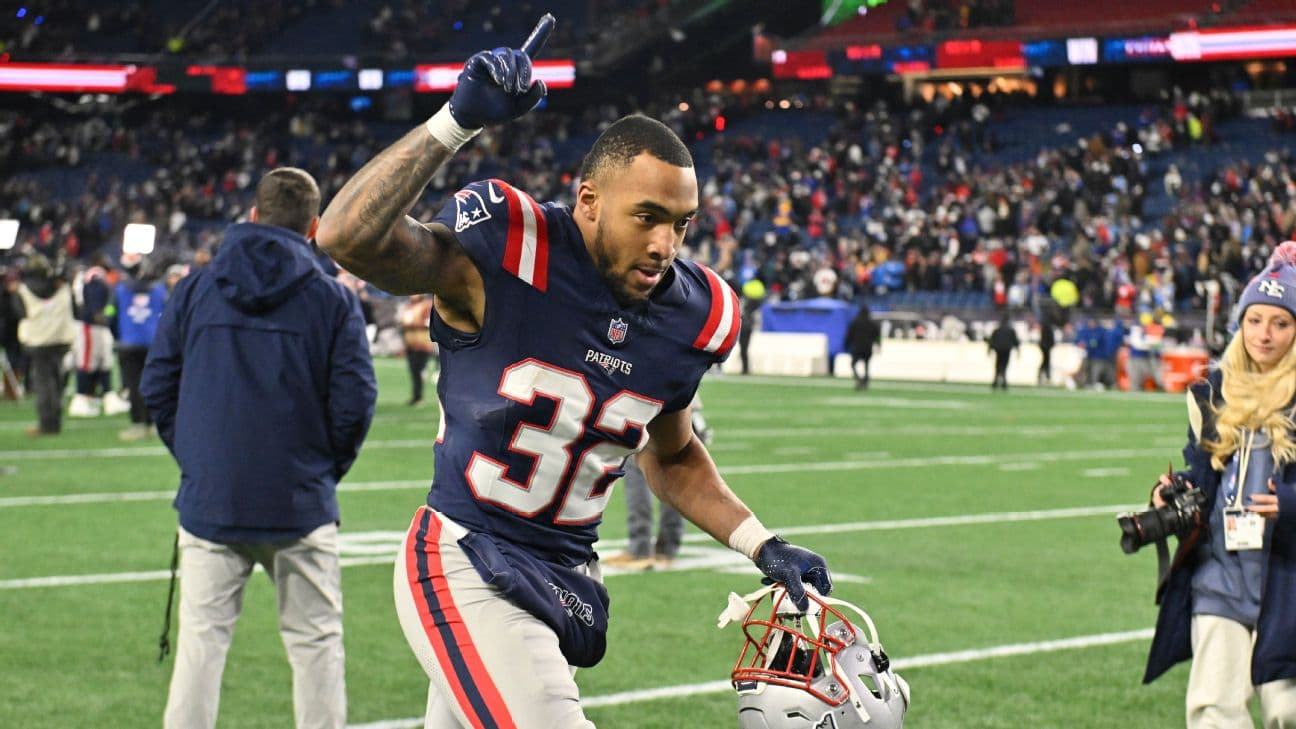
The 2026 season opens on Wednesday, September 9, when Seattle hosts New England, moves to Melbourne on Thursday for the Rams and 49ers, stacks 13 games into Sunday, and closes with Denver at Kansas City on Monday night. That is six days, four distinct game days, and a practice schedule that does not resemble any other week of the season.
Most fantasy managers will treat it like a normal week. That is the mistake, and it costs real points.
Wednesday is the new Thursday
The first practical consequence is that participation reports are shifted. For the teams playing Wednesday, Sunday's practice was the functional equivalent of a Thursday session in a normal week. New England listed three players as non-participants on Sunday, including Christian Barmore, backup center Ben Brown, and running back TreVeyon Henderson, whose ankle has kept him out since late August. Seattle listed several starters as limited, including receiver Tory Horton with a hamstring.
A fantasy manager who waits until Wednesday morning to check practice reports for a Wednesday night game is reading history, not news. For the opener, the reporting window closed over the weekend.
The same compression applies in reverse to Melbourne. The Rams and 49ers are filing reports on an accelerated schedule around a 20-hour flight, which is why Sunday produced meaningful news on both sides: Myles Garrett back in drills, Kittle and Bosa on the plane, Sam Okuayinonu staying home with a foot injury.
The lineup lock problem
Most fantasy platforms lock a player when his game kicks off, but a meaningful minority use a weekly lock tied to the first game of the week. In a normal season that distinction is invisible. This week it means the difference between setting a lineup Wednesday evening and setting it Sunday morning.
Check the setting before Wednesday night. If a league locks all rosters at the start of the first game, every waiver claim, every injury reaction, and every start-sit decision has to be finished four days earlier than usual, and the Sunday morning inactive reports that normally resolve the hardest calls will arrive after the deadline.
That single setting is worth more than most Week 1 waiver claims.
The waiver run is also compressed
Most leagues process their first waiver run early in the week. This year that run happens before four teams have played and after two have, which creates an information asymmetry that experienced managers can exploit.
If a Wednesday or Thursday game produces an injury, the affected backup hits the wire while everyone else is still evaluating players who have not taken a snap. The managers who move fastest on Thursday morning, before the Sunday-focused crowd wakes up to it, get a full week of a starting job for a claim that would cost a top waiver priority in any other week.
The corollary: do not spend the first big free agent bid of the season on a player from a game that has not happened. Cut speculative adds loose after Thursday, not before.
DFS implications
The main Sunday slate excludes the Wednesday, Thursday, and Monday games, which removes four teams from the pool. That has two effects worth pricing.
First, the player pool is smaller and therefore more concentrated, which raises ownership on the remaining chalk. A 13-game main slate with the Rams, 49ers, Seahawks, Patriots, Broncos, and Chiefs removed leaves fewer elite options and pushes the field toward the same handful of plays.
Second, the showdown slates on Wednesday and Thursday are the softest fields of the entire season. The first two games of a year draw casual entries in volume, and neither game has any in-season data to model. That is a leverage opportunity for anyone willing to build off practice reports rather than reputation.
The Verdexed model take
Our model treats Week 1 as the noisiest week of the year, and this particular Week 1 as noisier still. There is no in-season data, coaching staffs have changed, and a six-day schedule means the usual correlation between Sunday morning news and Sunday afternoon outcomes is broken across four separate windows.
The practical output is a wider confidence band on every projection, which argues for a specific approach: favor confirmed roles over projected talent. A player whose usage is known, like Jadarian Price with Seattle's backfield to himself, is worth more in Week 1 than a more talented player whose snap count is a guess.
That is not how most drafts were built. It is how most Week 1 lineups should be set.
Betting angle
Line movement follows information, and information arrives on a strange schedule this week. The Wednesday and Thursday games have already absorbed most of their news. The Sunday games have not, and several of them carry unresolved questions, including a Falcons team that has not named a quarterback for its trip to Pittsburgh.
The patient position is to bet the early games now, when the injury picture is largely settled, and wait on the Sunday board until Friday, when the final practice reports land. Betting a Sunday side on Monday because the number looks good is paying for uncertainty that will be free to resolve in four days.
What to do this week
Check the lineup lock setting in every league today. Read the Seattle and New England reports before Wednesday, not after. Hold the first waiver bid until Thursday morning. Treat the two early showdown slates as the best DFS value of the season, and treat the Sunday main slate as a smaller, chalkier pool than usual.
The schedule is unusual once. The managers who adjust to it get a full week of advantage over the ones who do not notice.