 NBA2026-09-01
Victor Wembanyama Opened as the 2026-27 MVP Favorite and Shai Gilgeous-Alexander Is the Better Price
By Verdexed NBA Desk
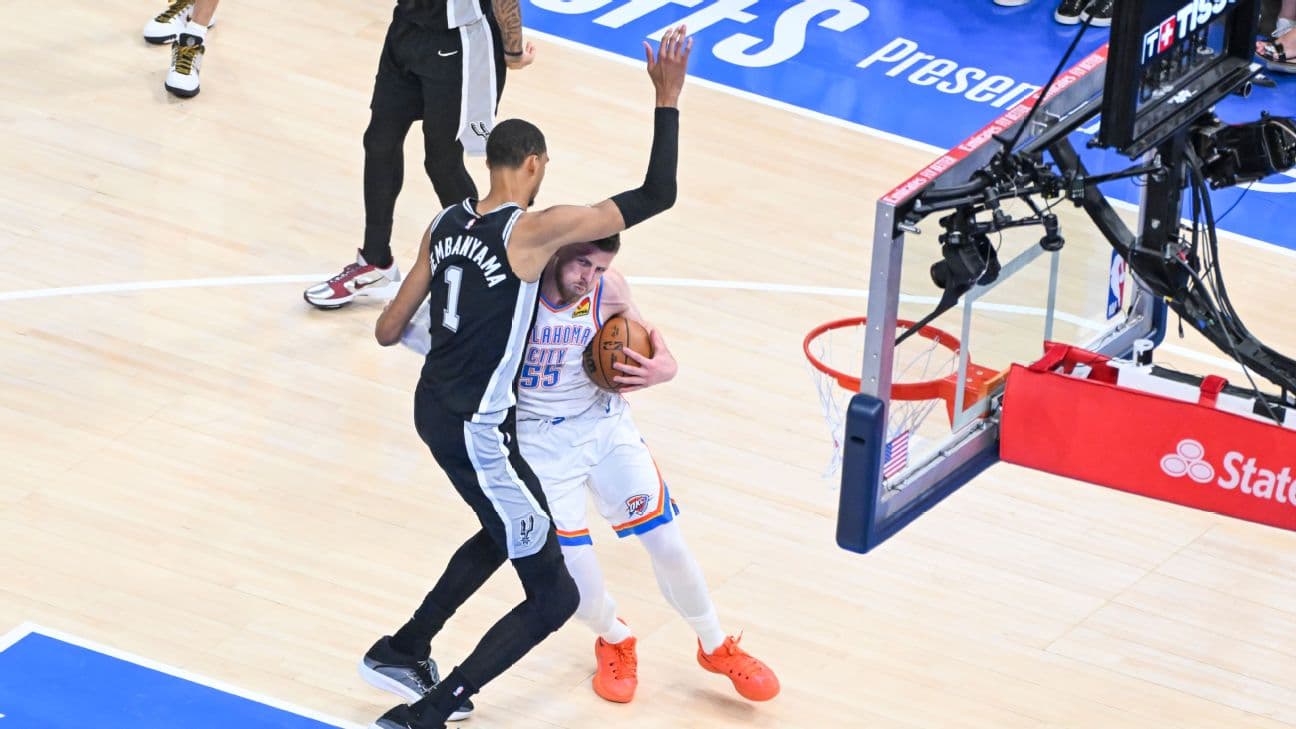
The opening board for the 2026-27 NBA Most Valuable Player award has Victor Wembanyama as the favorite at roughly +200, with back-to-back winner Shai Gilgeous-Alexander next at about +330 and three-time winner Nikola Jokic around +500. Luka Doncic, now with the Lakers, is the only other name inside 10-to-1 at roughly +650. Anthony Edwards and Cade Cunningham headline the group behind them.
A +200 favorite for an award decided by a voting panel across 82 games is an aggressive number. It implies roughly a one-in-three chance, which is close to the highest preseason MVP probability the market ever assigns to anyone.
Why the market is there
The case for Wembanyama is not complicated. He is the most statistically distinctive player in the league, he anchors a San Antonio team that opens the season with title-level expectations, and voters have spent two years waiting for the season where the counting stats and the team record arrive at the same time. The Thunder and Spurs are being priced as co-favorites in the championship market, and MVP voting is heavily conditioned on team success.
The case against is availability. Wembanyama's career to this point has included significant missed time, and the MVP award has a de facto games-played threshold that voters enforce whether or not it is written down. The league's minimum-games rule for award eligibility has made that enforcement explicit. A player who is the best in the league for 60 games does not win MVP; a player who is the second-best for 75 does.
That is the entire structure of the bet. You are not betting on whether Wembanyama is good enough. You are betting on whether he plays enough.
The Verdexed model take
Our award model separates two probabilities that the market tends to blend: the probability a player performs at an MVP level when he plays, and the probability he clears the availability bar.
On the first, Wembanyama grades at or near the top of the league. On the second, he grades below Gilgeous-Alexander and Jokic, both of whom have long track records of high-volume availability. Multiply them and the model's implied probability for Wembanyama lands below what +200 implies, while Gilgeous-Alexander's lands above what +330 implies.
There is a second factor the model weights that the market underprices, which is voter fatigue running in both directions. A back-to-back winner faces resistance from voters looking for a new story, which is real and depresses Gilgeous-Alexander's price appropriately. But that resistance is not as strong as it used to be, and it is routinely overstated in preseason markets when a clear alternative narrative exists.
The model's conclusion: Gilgeous-Alexander is the best price on the board, Jokic at +500 is roughly fair, and Wembanyama is the most likely winner but not at a price worth paying.
The fantasy read
MVP odds are a useful proxy for fantasy value in category leagues, but the mapping is imperfect and the differences are where drafters find edges.
Wembanyama is the most valuable fantasy player in the league on a per-game basis by a wide margin, because blocks are the scarcest category in fantasy basketball and he supplies them at a volume nobody else approaches while also contributing across the board. That per-game dominance is exactly what makes him the first-round pick who most needs an availability discount.
Gilgeous-Alexander is the safer fantasy asset for the same reason he is the better MVP price: he plays. In roto formats, where a missed game is a permanent loss of counting stats, availability compounds. In head-to-head, a player who misses a week during your playoffs costs you a season.
Jokic remains the most complete fantasy line in basketball and the most reliable, which is why he continues to be drafted at or near the top regardless of where the MVP market puts him.
Betting angle
The disciplined position on this board is to take the second and third names rather than the first. That is not a contrarian pose; it is what the availability math produces.
There is a second, better-priced version of the same view in the derivative markets. Season-long games-played props, where they are offered, and awards markets that pay on top-three finishes rather than outright wins both let you express confidence in a player's level without taking on the full availability risk of an outright MVP ticket.
The Defensive Player of the Year market is the third place to look. Wembanyama's profile is the closest thing to a lock that a defensive award ever produces when a player is healthy, and that market prices availability risk less aggressively than MVP does because it has fewer competing narratives.
What to do
If you want Wembanyama exposure, take it in DPOY or in a top-three MVP finish market rather than at +200 outright. If you want the best expected value on the outright board, that is Gilgeous-Alexander at +330.
In fantasy drafts, Wembanyama remains a top-two overall pick on talent, and the correct adjustment is not to pass on him but to build the roster around the possibility of missed games: prioritize availability at every other position, and value your bench differently than a manager whose first-rounder plays 78 games.
What's next
The season opens October 20 with Detroit at Boston, Philadelphia at the defending champion Knicks, and Oklahoma City at San Antonio. The final game of that opening night is the co-favorites playing each other, which makes it the first real data point on both the championship market and the MVP race. Preseason availability reporting out of San Antonio in the first week of camp will move the Wembanyama number more than any performance will.