TreVeyon Henderson Is Still Chasing Pass Protection in New England
By Verdexed Fantasy Desk
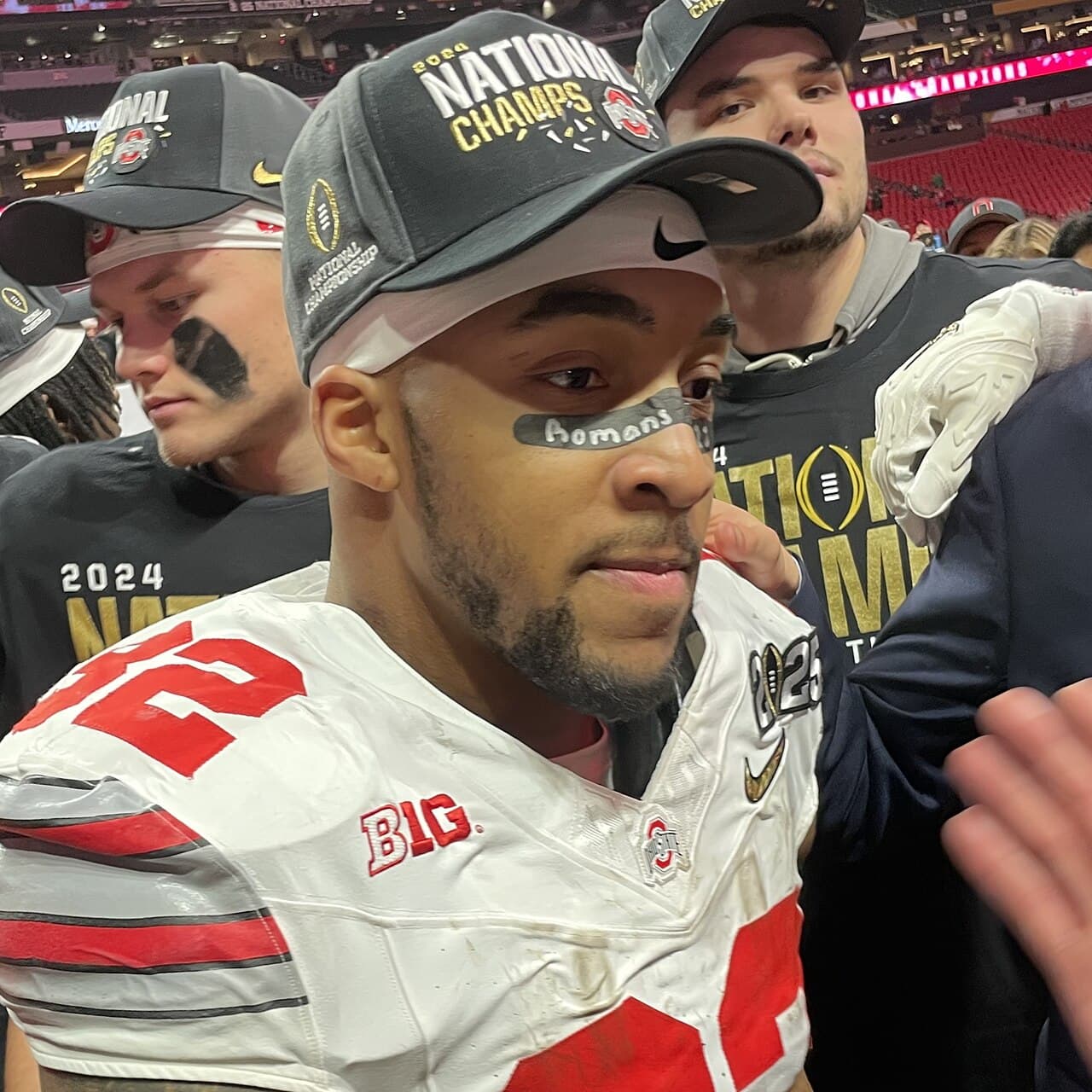
Mike Vrabel offered the most useful sentence of New England's camp when he praised the way Rhamondre Stevenson protects the quarterback and added that TreVeyon Henderson is continuing to work on it. In a backfield where fantasy managers are trying to figure out which back gets the third-down snaps, that is the answer, at least for now.
Stevenson has been getting the bulk of the early-down work through the opening stretch of camp and has flashed reliable hands on throws from Drake Maye. Henderson, entering his second season, has produced the highlight plays, including a diving end-zone catch that made the rounds, but the coaching staff's public framing has consistently put Stevenson in the trusted-veteran role.
The context nobody should skip
New England is coming off a run to Super Bowl LX, which it lost to Seattle. Teams that reach a Super Bowl on the back of a specific offensive identity rarely abandon that identity in the following training camp, and the Patriots leaned heavily on Stevenson during that run. Continuity is the default, and the burden of proof sits with the player trying to take snaps away.
That does not mean the split stays where it is. Henderson is the more explosive player, and explosive backs in their second year historically see their share of the workload grow as the season progresses rather than as camp progresses. The reporting consensus is that both will share the rushing load with Stevenson holding a slight edge, and that Henderson remains the big-play threat whenever he touches the ball.
Why pass protection is the whole argument
Third-down snaps are the highest-leverage fantasy snaps in football. They come with receiving opportunity, they come in high-scoring game scripts, and they come at the end of drives. A back who cannot be trusted in protection does not get them, regardless of how good he looks catching the ball in a seven-on-seven period.
The good news for Henderson managers is that pass protection is one of the most improvable skills for a young running back. It is technique and recognition, not athleticism, and the standard trajectory is that a second-year back who was a liability as a rookie becomes adequate by midseason. The bad news is that the improvement rarely happens by Week 1.
Fantasy fallout
Henderson's cost this summer has consistently been higher than Stevenson's, and the market is buying the explosiveness and the trajectory. That is defensible as a season-long investment and dangerous as a September one. The realistic outcome is a slow first month for Henderson followed by a growing role, which is exactly the shape that frustrates managers who drafted him as an RB2.
Stevenson is the better value at cost. He is being drafted like a player whose job is in jeopardy while the head coach publicly describes him as the more complete back, and he holds the early-down and short-yardage work in an offense that just went to a Super Bowl.
The honest read is that both are flex plays in the median case and one of them is an RB2 in the good case, but which one is decided by pass protection reps that nobody outside the building can properly observe.
The Verdexed model take
The model projects a near-even carry split with Stevenson holding a clear edge in third-down snaps through the first six weeks and the gap narrowing after that. Henderson's projected receiving line is the single most volatile input in the Patriots' offensive projection.
On a per-touch basis the model is firmly on Henderson, with a yards-per-touch projection meaningfully above Stevenson's. On a total-points basis it is close to a tie, because per-touch efficiency without volume does not win fantasy weeks.
Drake Maye's development is the multiplier here. A quarterback taking a real step forward raises the scoring environment for both backs and raises the number of third-down passing situations, which specifically helps whichever back wins the protection battle.
Betting angle
Stevenson's rushing attempts prop is the number that best reflects the camp reporting and is priced closest to a committee assumption. The lean is over.
Henderson's rushing yardage prop carries the wider distribution and is the better lottery ticket, because a second-year explosive back who takes over a backfield in October can beat a full-season number in eleven games. The two are not mutually exclusive positions.
What to do in your league
If you can get Stevenson two or three rounds after Henderson, take both. Owning a split backfield is annoying but it is the only way to guarantee you capture whichever side wins, and this particular split has a clearly identified resolution mechanism.
If you can only take one, take Henderson in leagues that reward upside and Stevenson in leagues where consistency wins. Then watch New England's preseason games specifically for third-down personnel. The back on the field on third and six in the second quarter of the second preseason game is the back who will lead this room in fantasy points.
What's next
New England's joint practices with Indianapolis on August 11 are the first outside look at this offense against a different defense. Protection reps in team periods against an unfamiliar front are the cleanest available evidence, and they will be reported. That is the checkpoint.
The historical base rate
Second-year running backs who split a backfield as rookies have a strong record of consolidating the role in year two, but the consolidation almost never happens in September. The pattern is consistent enough to plan around: the veteran opens as the lead back, the younger player's snap share climbs through October, and by the fantasy playoffs the split has inverted.
That timeline is what makes Henderson a better bet in leagues with deep benches and a worse one in shallow formats where a slow start costs a roster spot. It is also why the trade market for him in mid-October is usually more attractive than the draft market for him in August: managers who drafted him as an RB2 will be frustrated by a month of ten-touch games, and frustrated managers sell.
The counterweight is that New England has a reason to protect Drake Maye that most teams do not. A young quarterback the organization has built around gets the more reliable pass protector on third down for longer than talent alone would dictate.