Travis Etienne and Alvin Kamara Are Splitting the Saints Backfield by Down
By Verdexed Fantasy Desk
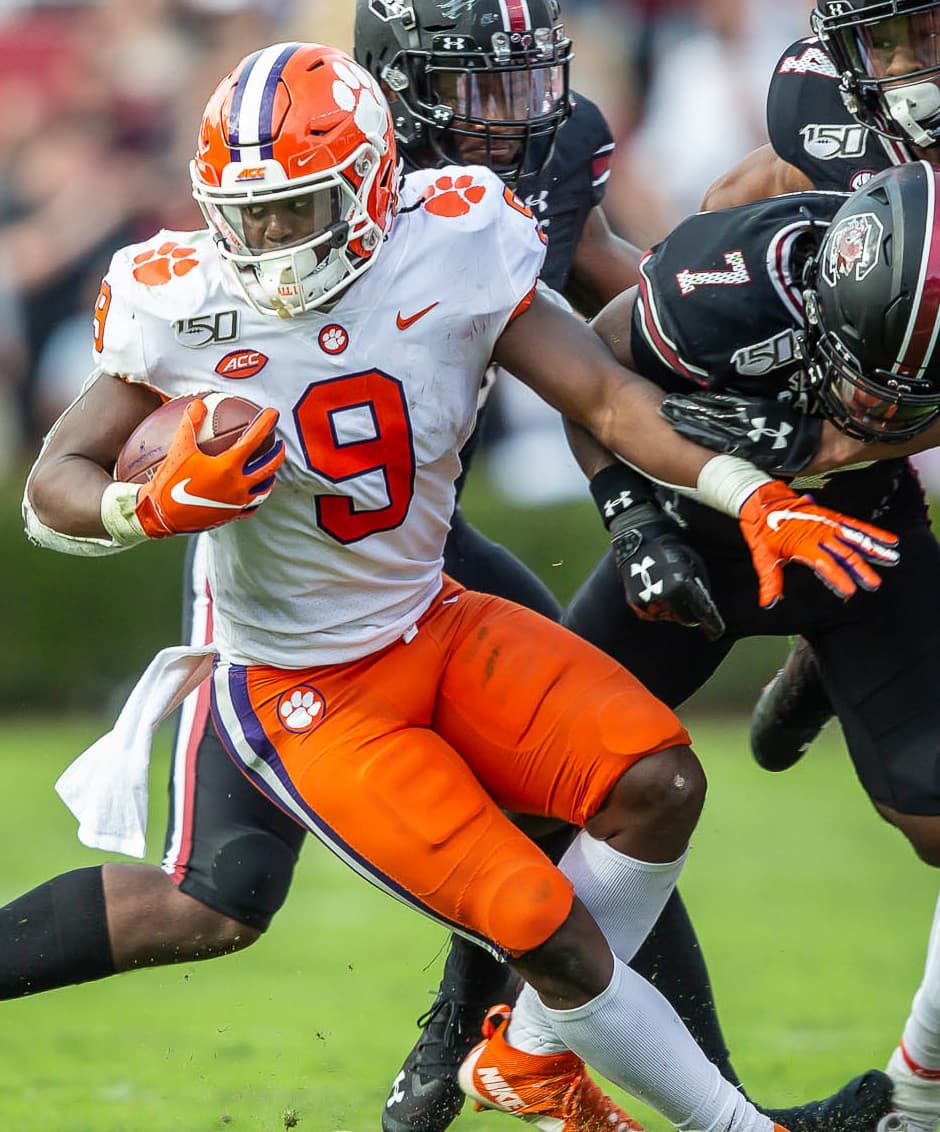
New Orleans is running a genuine two-back operation through the first week of training camp, and the split is cleaner than most committees. Travis Etienne Jr. has taken the bulk of first-team reps on early downs while Alvin Kamara has been getting first call on third down and in obvious passing situations, according to camp reporting from multiple outlets covering Saints practices.
That is not the arrangement most fantasy drafters penciled in when Etienne signed with the Saints in March on a reported four-year deal worth around $52 million. A contract that size at running back normally signals a bell-cow role. New Orleans then reworked Kamara's contract to keep him for another season, and the backfield the Saints are actually fielding looks like a partnership rather than a handoff.
Why the split matters more than the reps count
A 60-40 or 70-30 rep split does not tell you much on its own. What down those reps come on tells you almost everything, because down-and-distance determines what kind of production a back is positioned to generate.
Early-down work in a functional offense produces rushing volume, goal-line carries and touchdown equity. Passing-down work produces receptions, which in PPR scoring are worth roughly as much as ten rushing yards apiece and arrive with far less variance. Two backs can post nearly identical touch counts and end the season 40 fantasy points apart based purely on which downs those touches came on.
As camp is currently structured, Etienne is set up to be the higher-volume, higher-touchdown, higher-variance option. Kamara is set up to be the reception-heavy, lower-ceiling, PPR-resilient option. Neither is the profile most managers drafted.
Fantasy fallout
Etienne's outlook is still the better one in most formats, and the gap should widen as the season progresses. Beat writers covering the Saints have signaled they expect Etienne to emerge as the primary back rather than settle into an even split, and the contract structure supports that reading. Teams that pay for a lead back generally get around to using him as one.
The risk is the early-season stretch. If the split holds through September, Etienne posts RB2 lines rather than the RB1 lines his ADP implies, and managers who spent a mid-round pick will be looking at a frustrating month. That is a real scenario and it deserves to be priced in.
Kamara is the more interesting value. He has been drafted at a steep discount relative to his career norms, reflecting age and the assumption that Etienne would take the job outright. A defined passing-down role in an NFL offense is worth more in PPR than the market is currently paying, and Kamara has been one of the most productive receiving backs of his generation. In full-PPR leagues he profiles as a late-round pick with a legitimate path to weekly flex value.
The Verdexed model take
Our running back projections split expected touches into rush attempts and targets and price each separately, which is why backfield committees produce very different model outputs than the raw touch share suggests. Applying the current camp split, the model produces two backs in the RB25 to RB40 range rather than one back in the top 15 and one outside the top 50.
That is the key insight for drafters. The market is pricing this backfield as if it will resolve into a clear hierarchy. The model, given the information currently available, is pricing it as if it will not. When those two views diverge, the profitable play is usually to fade the expensive side and buy the cheap side, because you capture most of the upside at a fraction of the cost.
The input that would change the projection is a shift in third-down usage. If Etienne starts taking passing-down reps with the first team during the preseason, the model reverts quickly toward a bell-cow projection and his value climbs sharply. Watch the preseason snap distribution rather than the preseason box scores.
Betting angle
Season-long rushing yardage props on Etienne are the cleaner market than his touchdown totals. Rushing yardage tracks early-down volume, which is the part of his role camp has actually confirmed. Touchdown props require assumptions about goal-line usage that no one can make confidently in the first week of August, and New Orleans has historically given Kamara meaningful work near the end zone.
On the Kamara side, reception totals are where the value sits if the number was set before camp reporting clarified his role. A back who has first call on third down in an NFL offense catches a lot of passes, and preseason reception props are often anchored to the prior year rather than the current depth chart.
For game-level markets, a true committee backfield modestly increases the variance in Saints team totals without moving the expectation much. There is no strong edge in the totals here. The edge is in the player props.
What to do in your league
If you are drafting now, let Etienne fall. His ADP reflects a role he does not currently have, and the discount you get by waiting a round or two is real. If he is still on the board a round past where the market says he should go, take him, because the underlying talent and contract still point toward him winning the job outright by midseason.
Draft Kamara in every PPR league where he lasts into the late rounds. A defined passing-down role on a team that has used its passing-down back heavily for a decade is not a dart throw. It is a floor play at a dart-throw price, and if Etienne misses time the ceiling gets very large very quickly.
If you already hold Etienne at a premium price, the correct move is patience rather than panic. Camp splits in early August are not depth charts. But set your expectations for September accordingly, and make sure your bench has a starter-quality option for the weeks where the split holds.