 NBA2026-07-05
Thunder Re-Sign Isaiah Hartenstein on a Three-Year Deal: Oklahoma City Keeps Its Contending Core Together
By Verdexed NBA Desk
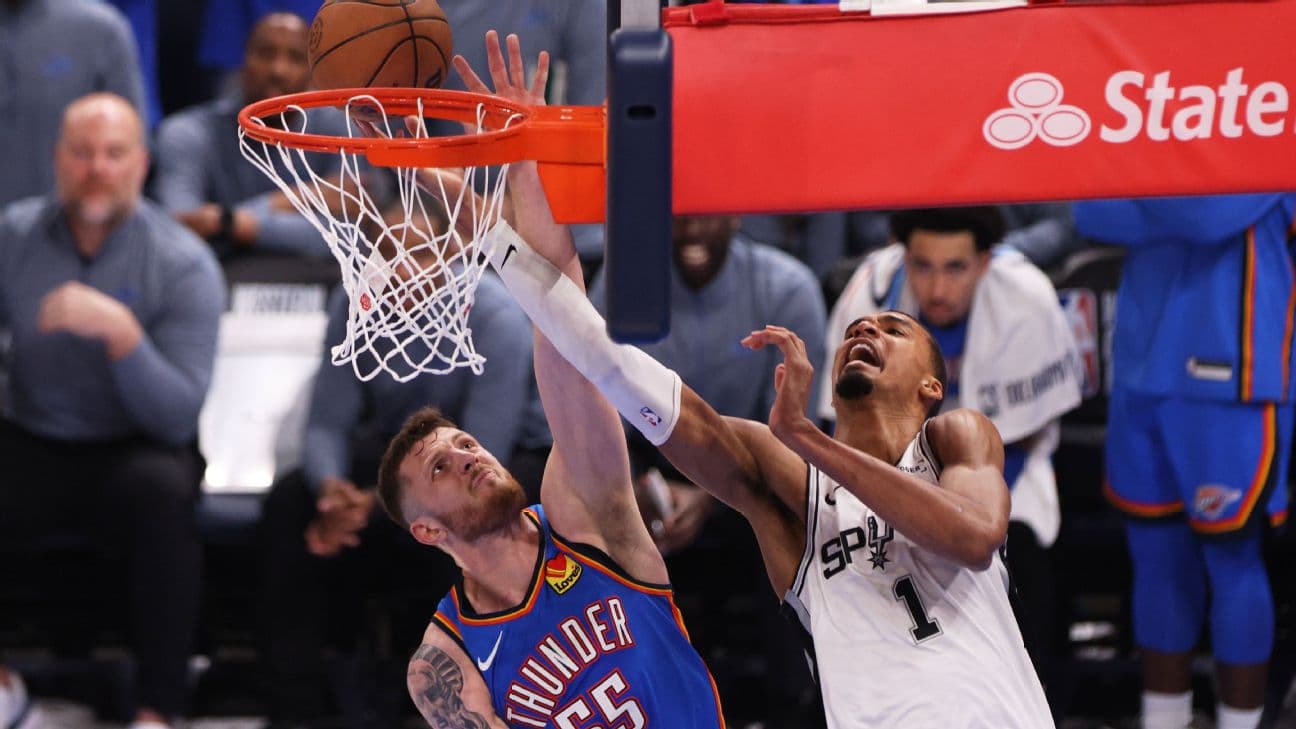
Oklahoma City is running it back. The Thunder agreed to a three-year contract extension with center Isaiah Hartenstein worth roughly $75 million, binding him to the franchise through the 2028-29 season and keeping one of the league's deepest contenders intact. The deal reportedly includes a 15 percent trade kicker and a mutual option on the final year, a structure that gives both sides flexibility down the road.
For fantasy managers, continuity on a great team is a green light: stable roles and stable minutes are the foundation of reliable production. Here is the Verdexed read on the Hartenstein extension and what it means for Oklahoma City's fantasy value.
Why the deal matters for OKC
Hartenstein has been a crucial connective piece for the Thunder, providing rebounding, screening, passing, and interior defense alongside a young, star-driven core. Re-signing him removes one of the few genuine questions from Oklahoma City's offseason and preserves the two-big flexibility that has helped define the team's identity.
Keeping the band together is the entire point for a franchise in its title window. The Thunder built one of the NBA's most complete rosters around efficient, high-usage stars, and the Hartenstein extension ensures the frontcourt rotation stays exactly where it was, which matters for both on-court chemistry and championship odds.
Fantasy fallout: a stable double-double source
Hartenstein's fantasy profile is built on the boring, valuable stuff: rebounds, field-goal percentage, assists for a big, and the occasional steal and block. He is not a high-volume scorer, but his all-around contributions and reliable minutes make him a steady mid-round category asset, particularly in formats that reward rebounding and efficiency.
The extension protects that value by removing relocation risk. A player traded into a new role can see his usage and minutes swing unpredictably; a player locked into a defined job on a contender is far easier to project. Hartenstein's managers can draft him knowing the role that produced his value is intact.
The ripple effect on the Thunder's stars
Hartenstein's return also stabilizes the fantasy outlooks of Oklahoma City's headliners. With the frontcourt rotation set, the touches, minutes, and defensive assignments across the roster stay largely predictable, which is a quiet positive for the team's high-usage guards and forwards. Fantasy value is often about certainty as much as ceiling, and the Thunder just removed a variable.
The one caveat is depth. Oklahoma City's roster is deep enough that big nights can be spread around, which can cap any single player's counting stats on a given evening. That is the cost of playing on a loaded team, and it applies to Hartenstein as much as anyone: elite team, but blowout-driven minutes management is always a possibility.
The Verdexed model take
Verdexed's model reads the extension as a modest positive for Hartenstein's fantasy floor and a neutral-to-slight-positive for the rest of the OKC core. His projection is anchored by rebounding and efficiency, categories that travel regardless of scoring volume, and the model values the certainty of a locked-in role on a contender.
The model's broader takeaway is about the Thunder's championship equity. Continuity is undervalued in preseason title markets, and a team that retains its full rotation while rivals reshuffle should hold or improve its standing. From a betting standpoint, Oklahoma City projects as one of the more stable contenders on the board, precisely because it avoided the roster turnover that introduces variance for other clubs.
The deal structure and what it signals
The contract itself tells a story. A three-year term with a mutual option on the final season and a 15 percent trade kicker is a flexible structure, not a max-length lockup. It keeps Hartenstein in the fold through the heart of the title window while preserving Oklahoma City's ability to rework the books in a couple of years if the roster or the cap landscape shifts. For a front office that has prized optionality, that is a deliberate choice.
The number matters too. At roughly $25 million per season, Hartenstein is paid as a valuable starter rather than a star, which fits a Thunder salary structure built around ascending young talent. That balance, paying role players fairly without compromising the ability to keep the core together, is exactly how a team sustains a contention window. For fantasy managers, the practical read is that Oklahoma City is unlikely to blow up its rotation midseason, which means the minutes distribution that produced this year's fantasy values should carry forward.
Comparing him to the frontcourt market
Against the broader wave of 2026 free-agent and re-signed big men, Hartenstein sits in the sweet spot of the position: more offensively involved than pure rim-runners, more reliable than higher-ceiling gambles, and locked into a defined role on a great team. In category leagues, that combination of rebounding, efficiency, and playmaking from the center spot is a stabilizer, the kind of pick that lets managers take swings elsewhere. His floor is among the safest at the position, even if his ceiling is capped by a lack of scoring volume.
What to do in your league
Draft Hartenstein as the reliable category specialist he is: a mid-round source of rebounds, efficiency, and dime-and-block sprinkles whose role is now locked in through the extension. Do not expect scoring he has never provided, and account for the blowout risk that comes with a dominant team. For the Thunder's stars, treat the news as confirmation that their environment is stable, which is exactly what you want from a fantasy anchor. Oklahoma City kept its core together, and for fantasy purposes, stability is the story.