The Grizzlies Waived D'Angelo Russell and He Never Played a Game for Them
By Verdexed NBA Desk
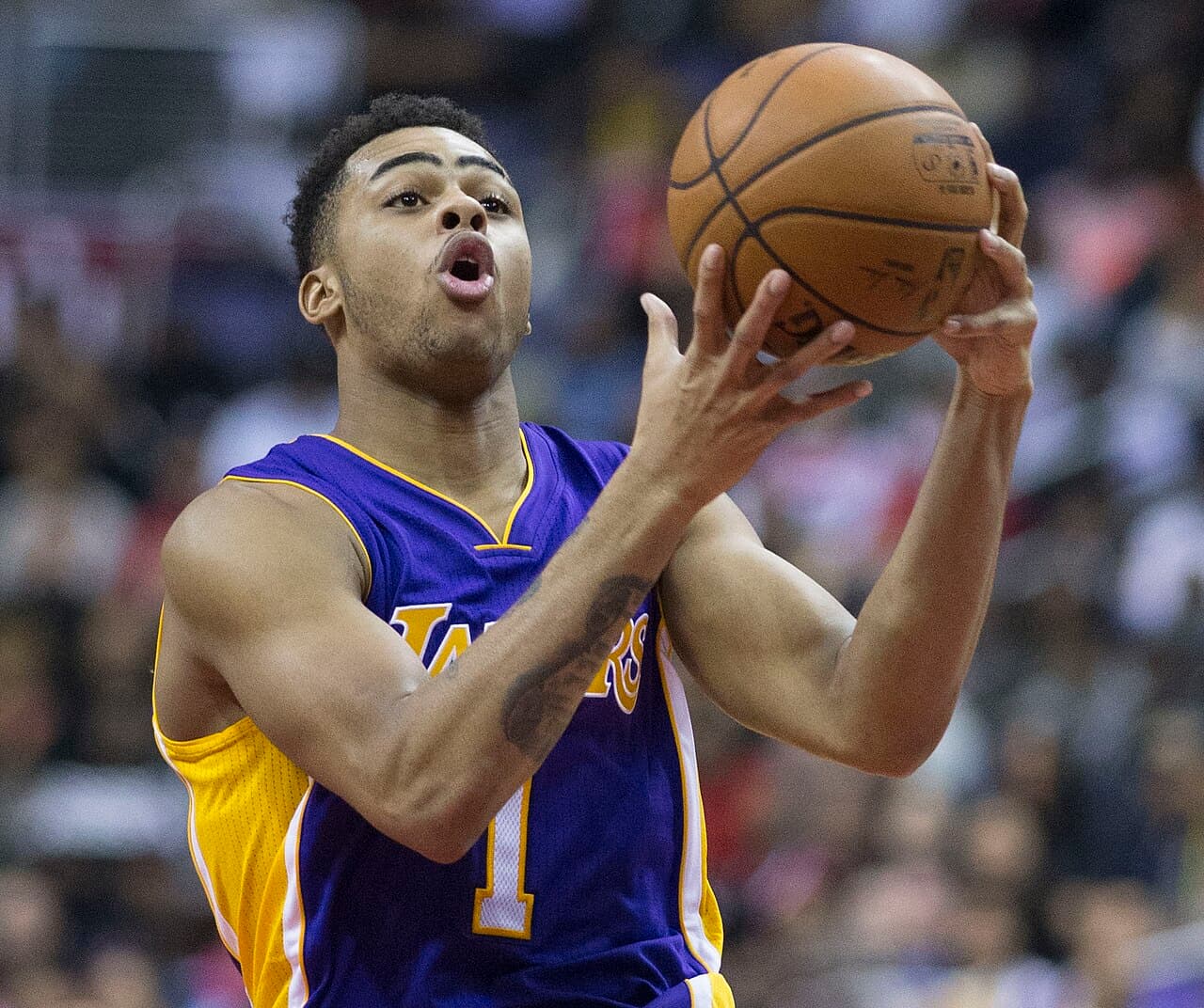
The Grizzlies waived D'Angelo Russell on Friday, making the former All-Star guard a free agent roughly a month before the season begins. Memphis acquired him in a six-team deal over the summer and he never played a game for them, just as he never played a game for Washington after arriving there in February as part of the Anthony Davis trade. Russell has now been moved twice and released once in a single calendar year without appearing for either acquiring team.
Reporting indicates Memphis made the move for roster flexibility, and the timing is deliberate. Waiving him now gives Russell time to find a new team before opening night rather than leaving him stranded in October. His reported salary for this season was $5.9 million, which Memphis will likely absorb.
What Russell actually is now
The honest evaluation is that Russell is a 30-year-old backup point guard with real offensive skill and persistent defensive limitations. His last meaningful run came with Dallas, where he played 26 games and averaged just over 19 minutes, 10.2 points, 4 assists and 2.3 rebounds.
Those numbers describe a specific type of player: a bench scorer who can run an offense for stretches and create his own shot, without the efficiency or defensive utility to hold a starting job on a good team. That has a place on an NBA roster. It does not have much of a place in fantasy basketball.
He has reportedly expressed a preference for landing with a contender, which is the least likely outcome for a player in his position. Contenders looking for a backup guard prioritize defense and shooting. Russell offers neither at the level a playoff team needs.
Fantasy fallout: mostly none, and that is the point
The most useful thing to say about Russell's fantasy value is that he probably does not have any this season. National fantasy coverage reached the same conclusion, and the logic is sound: the situations where he would get enough minutes to matter are bad teams with no better options, and bad teams with no better options tend not to be the teams that sign veteran guards in late September.
If he lands somewhere with an injury-depleted backcourt and a clear path to 25 minutes a night, he becomes a streaming option in deep leagues. Short of that, he is a name to ignore in drafts.
The more relevant fantasy question is what this means for Memphis. Removing a veteran point guard from the roster clarifies the backup minutes behind the Grizzlies' starter, and those minutes now go to younger players on the roster. In a Memphis backcourt that has dealt with availability questions in recent seasons, the backup guard spot is a genuine late-round dart throw, and it just became less crowded.
Why teams keep doing this
Russell's year is a useful illustration of how modern NBA roster construction works. He has been moved twice not because two teams wanted him but because his contract was the right size to balance larger deals. He was salary-matching filler in the Davis trade and salary-matching filler in a six-team summer transaction.
That is the life cycle of a mid-sized contract attached to a declining veteran. The player gets acquired for accounting reasons, never integrated, and eventually released when the accounting no longer requires him. The $5.9 million Memphis will carry is the cost of the flexibility they gained in the original trade.
For fantasy managers, the practical lesson is to be skeptical of veterans who change teams in multi-team deals. Arriving via salary matching is a signal about how the new team values you, and it is usually a negative one.
Betting angle
Russell's release has no measurable effect on Memphis win totals and should not move any market. What is worth watching is where he signs, and specifically whether a team with a thin backcourt adds him.
The broader angle is roster churn as a signal. Teams cutting guaranteed money in late September are teams that have decided their roster is set, and that decision carries information about internal evaluations of young players. Memphis choosing to eat $5.9 million rather than carry a veteran guard suggests confidence in the players ahead of him, which is mildly relevant to their win total and meaningfully relevant to the fantasy value of whoever those players are.
The Verdexed model take
Our model projects player value from expected minutes first and per-minute production second, which is why a free agent veteran with no team projects at effectively zero regardless of talent. Until Russell signs, there is nothing to project.
Where the model does register a change is in Memphis. Removing a veteran from the backup guard rotation shifts projected minutes to the players behind him, and the model's largest resulting movement is on the Grizzlies' young guards, whose projected minutes per game rose enough to move them up the late-round rankings. That is the actionable output of this transaction: not Russell, but the players who inherit what he was going to take.
If Russell signs with a team carrying a backcourt injury, the model would project him into low-end streaming relevance. If he signs with a contender as a deep bench piece, it will project him as undraftable.
What is next
Russell clears waivers in the coming days and becomes free to sign anywhere. The realistic destinations are teams with backcourt injuries or teams with open roster spots and nothing to lose, not the contenders he reportedly prefers.
For fantasy purposes, the instruction is to do nothing with Russell and to look at the Memphis depth chart instead. The value created by this move belongs to the players who were already there.