Klay Thompson Cleared Waivers and Signed With Miami a Week Before Camp Opens
By Verdexed NBA Desk
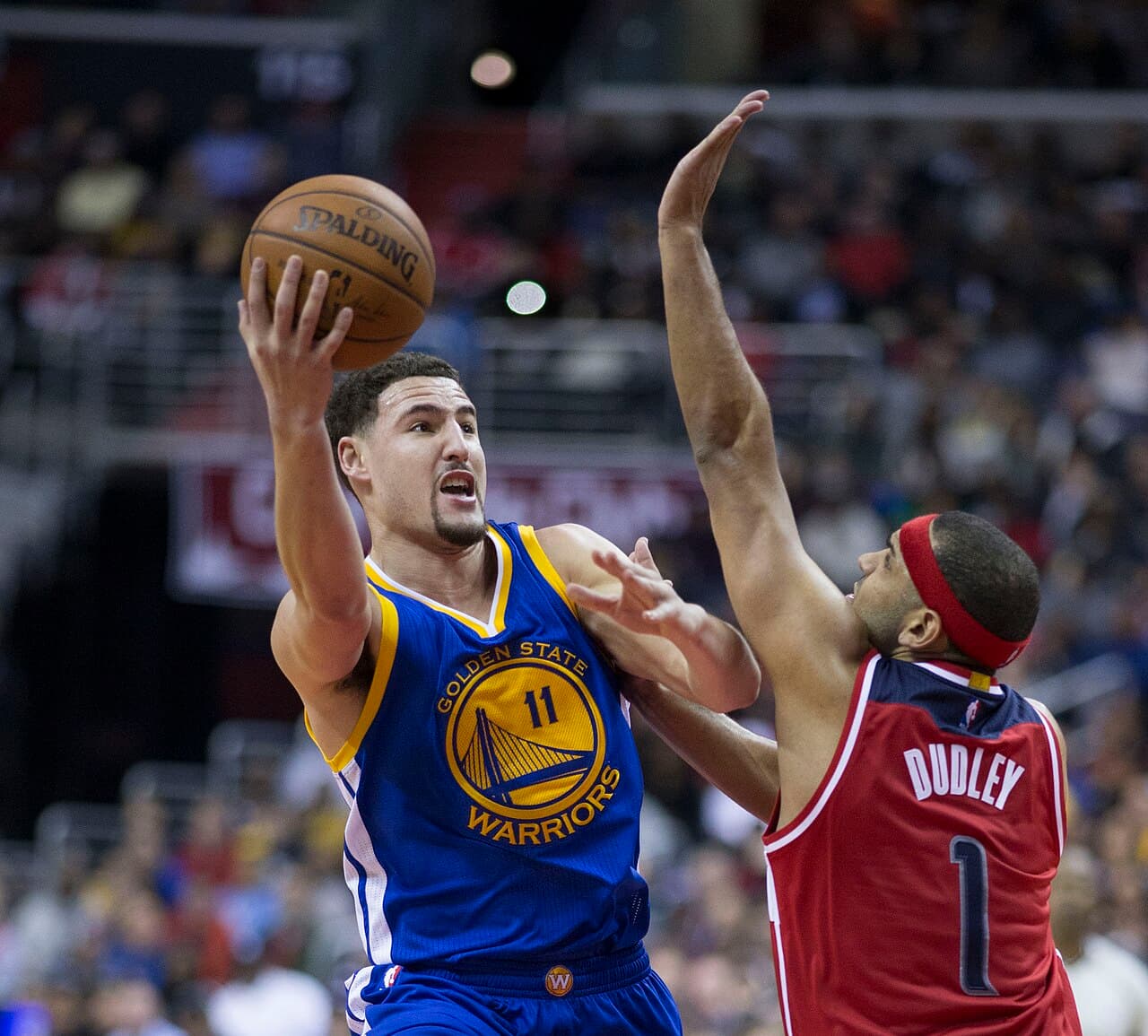
Klay Thompson cleared waivers on Sunday and agreed to a two-year deal with the Miami Heat, completing a move that began when Dallas announced Friday it was buying out the final season of his contract. Thompson, 36, had been due roughly $17.5 million in the final year of the deal he signed with the Mavericks. The new contract with Miami has been reported in the $11.5 million to $13 million range across two seasons, with a player option on the second year.
The buyout was initiated by Thompson, who told Dallas he wanted to play for a contender after the Mavericks went 26-56 last season. He got one. Miami acquired Giannis Antetokounmpo and Bobby Portis from Milwaukee this offseason in a deal that sent Tyler Herro, Jaime Jaquez Jr., Kel'el Ware and Kasparas Jakucionis to the Bucks.
The timing is tight. Most of the league holds media day on September 28 with training camps opening September 29, which gives Thompson roughly a week to integrate into a roster that has been almost completely rebuilt around a new franchise player.
Why Miami makes sense on both sides
The Heat traded away Herro, their highest-volume perimeter shot creator, in the Antetokounmpo deal. Adding a giant at the rim who commands help defense and simultaneously subtracting the guard who punished that help left an obvious structural hole: Miami needed shooting, and specifically needed shooting that does not require the ball.
Thompson is the most specific answer to that problem available on a minimum-adjacent contract. His game at this stage is catch-and-shoot volume off movement, which is exactly the skill that scales alongside a dominant interior player. He does not need touches to be useful. He needs screens and kickouts, and Antetokounmpo generates both at a rate almost nobody in the league matches.
From Thompson's side, the calculation is equally clean. He gave back real money for a roster that projects meaningfully better than the one he left, and he did it with a player option that lets him revisit the market in a year.
The fantasy read
Thompson is a category specialist in fantasy terms and should be drafted as one. He provides three-pointers and percentages from the field, contributes modestly in points, and offers close to nothing in rebounds, assists, steals and blocks. In a nine-category league, that is a useful piece in the middle rounds for a roster that is already strong in the counting stats and needs volume from deep.
The risk is usage and minutes. Miami now has Antetokounmpo consuming the largest share of possessions, Portis needing frontcourt minutes, and a coaching staff with a long history of distributing minutes based on defensive reliability rather than reputation. Thompson at 36 on a team with championship intentions is a candidate for load management on the second night of back-to-backs, and that is the kind of variance that costs you weeks in head-to-head formats.
Draft him for what he is: a specialist with a defined role on a good team, not a player whose name should pull him up the board.
The bigger fantasy story is in Milwaukee
The more interesting downstream effect of the Antetokounmpo trade is not in Miami. It is in Milwaukee, where Tyler Herro lands in an offense that no longer has a franchise player absorbing possessions.
Herro is one of the clearest ADP risers of the offseason for exactly that reason. A high-usage guard who spent years operating as the secondary creator now becomes the primary one on a team without an obvious alternative. Usage is the single most predictive input for fantasy scoring, and Herro's is going up.
The same logic applies in smaller doses to Jaime Jaquez Jr. and Kel'el Ware, both of whom go from a crowded Miami rotation to a Milwaukee roster with minutes to distribute.
The Verdexed model take
Roster moves in the week before camp are the most reliably mispriced events on the NBA calendar, and the reason is timing. Season win totals and championship futures are set in July and August. A buyout signing on September 20 arrives after most of the market's money is already down, and books adjust slowly because the volume on NBA futures in late September is thin.
Thompson to Miami is not a number-moving addition on its own. He is a rotation shooter, not a starter who changes a team's ceiling. But the cumulative effect of Miami's offseason, acquiring a top-five player and then filling the resulting shooting gap with a proven specialist on a discount, is a roster that looks materially different from the one the market priced in July.
Our read is that the Heat's win total is the one worth examining before camp opens, and that the direction is up. The specific inefficiency is that futures markets price star acquisitions immediately and aggressively, then treat the subsequent supporting moves as noise. They are not noise. A max-level player surrounded by non-shooters is a substantially worse team than the same player surrounded by shooters, and the difference shows up in win totals rather than in highlight packages.
On the other side, Dallas eating $17.5 million to move a rotation player is a signal about where that franchise believes it is, and it is not a signal that supports their number.
What's next
Media day is September 28 for most of the league, with camps opening the following day. Dallas is among the exceptions, holding media day on September 25 because the Mavericks and Rockets meet in Macao during the preseason.
For fantasy drafters, the week between media day and the first preseason game is when rotation information becomes real. Coach comments about starting lineups, minutes distribution and load management plans are worth more than any projection published in August, because they come from the people who actually make the decisions.
Thompson's specific number to watch is whether Miami frames him as a starter or as the first guard off the bench. That single designation is worth several spots on a fantasy board, and it should become clear within days.