 MLB2026-08-24
The NL Wild Card Race Has Three Leaders and Five Teams Still Chasing
By Verdexed MLB Desk
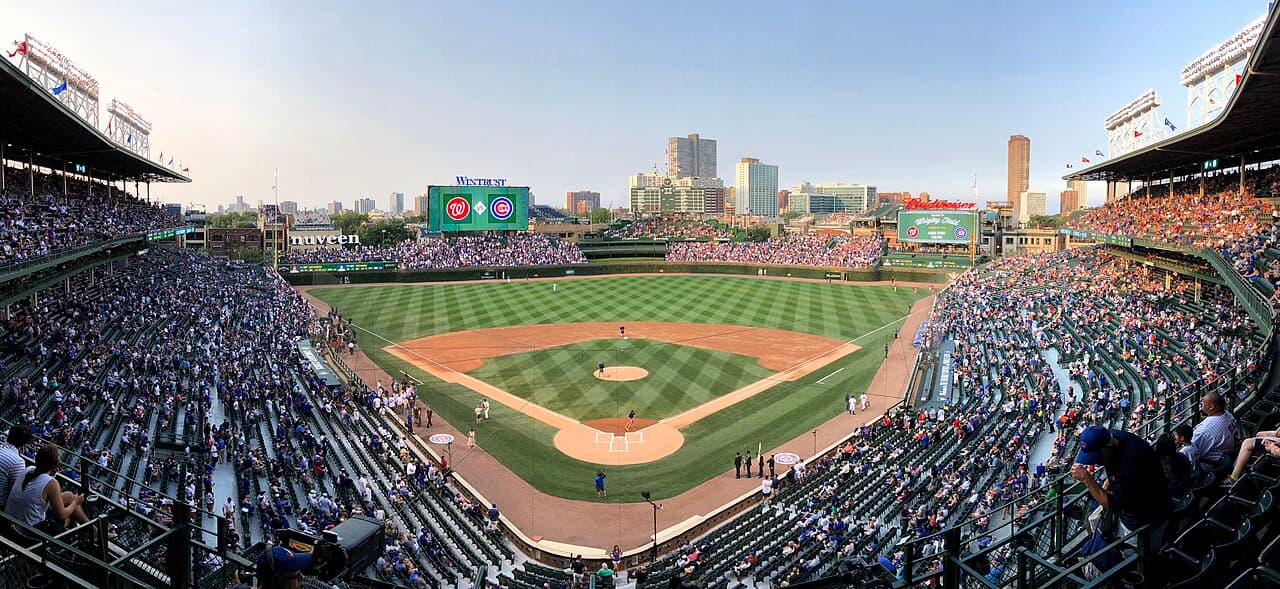
The National League wild card standings entering this week have the Cubs, the Phillies and the Padres holding the three spots, with Chicago at 74-56, Philadelphia at 72-58 and San Diego at 70-60 as of Sunday. Behind them sits a group that includes the Diamondbacks, the Cardinals, the Reds, the Marlins and the Pirates, most of them close enough that a single good week reorders the board.
This is what a modern wild card race looks like. Twenty-three teams entered August within four games of a playoff spot, and the National League half of that mess has not sorted itself out.
The gap that matters
The most important number in the standings is not the distance between the Cubs and the Phillies. It is the distance between the Padres in the third spot and whoever is closest behind them.
San Diego at 70-60 is holding the final spot with a cushion that is measured in a game or two rather than a week. Reporting through the weekend has Arizona within about a game of that position. That is close enough that the Padres' schedule matters more than their roster over the next month.
The teams in the second tier all have a version of the same problem: they need to gain ground on a team that is playing roughly .540 baseball. Gaining two games on a .540 team over five weeks requires playing meaningfully better than that, not marginally better. Most of them will not.
The division leaders are not in play
The wild card race is also being shaped by what is happening above it. Milwaukee projects around 101 wins with playoff odds in the high 90s, and Los Angeles projects near 98 wins with essentially locked odds. Neither of those teams is falling into the wild card, which means the three spots are genuinely being contested by the eight or nine clubs listed above and nobody else.
That matters for a specific reason. In seasons where a division leader is vulnerable, a chasing team can leapfrog into a division title and free up a wild card spot behind it. That path does not exist here in either the NL Central or the NL West. The wild card spots are the only spots available, and they are the only prize.
The Verdexed model take
Our postseason simulation weights three inputs that public standings do not display: remaining strength of schedule, run differential relative to record, and rotation availability for the final month.
On the first, the Padres carry the least favorable remaining schedule of the three current spot-holders, which is the single largest reason our model gives them a lower playoff probability than their standing implies. A team clinging to a two-game lead with a hard closing schedule is the definition of a vulnerable seed.
On the second, run differential is the input that separates the chasers from each other. A team five games back with a positive run differential is a real threat, because its record understates it. A team three games back with a negative differential is a mirage that the schedule will expose. This is where our model diverges most sharply from the raw standings, and it is why we are more bullish on some of the second-tier clubs than their games-back column suggests.
On the third, September rotations decide close races. A contender that has to bullpen two games a week in September will not hold a two-game lead, no matter how good the lineup is. Injuries to starting pitchers over the past two weeks have hit several of these clubs, and each one is a real subtraction from a projection built in July.
Blending those, our model has the Cubs as the safest of the three current spot-holders, the Phillies close behind, and the Padres as the seat most likely to change hands before the end of September.
Betting angle
There are two ways to play a race like this, and only one of them is efficient.
The inefficient way is betting individual teams to make the playoffs. Those markets are heavily juiced, they move on every series result, and the books price them well because they are popular.
The efficient way is the division and wild card win totals combined with team season win totals that were set in March. A team that is 70-60 in late August with a season win total set at 80 in the spring is offering a live over, and those numbers get stale because the market focuses on playoff props rather than the original total. Check whether the season win total for each of the chasing clubs still reflects the March number. Several will.
The other angle is the daily board. Teams in a desperate chase manage differently in September: they use their best relievers more aggressively, they pull starters earlier, and they run out their best lineup every day. Teams that have fallen out of it do the opposite. That divergence in managerial behavior shows up in run totals before it shows up in the market, particularly in the last two weeks of the season.
Fantasy fallout
For fantasy managers in head-to-head playoffs, the wild card race is the most important thing on your board and most managers ignore it.
Players on eliminated teams get rested in the final two weeks. Players on teams with locked positioning get rested even earlier. Players on teams fighting for the third wild card spot play every single day through the final weekend. If your fantasy championship is scheduled for the last week of the regular season, roster the contested-team players and avoid the ones on clubs that will have clinched or collapsed.
Bullpen usage follows the same logic. A closer on a team in a dogfight will get more save opportunities in September than his season rate suggests, because his manager will not use him in a low-leverage spot and will use him in every high-leverage one.
What's next
The next two weeks of head-to-head matchups between the teams in this group are the leverage points, because those games move two teams at once. Watch the Padres' schedule specifically, and watch the injured lists in Arizona and St. Louis. A race this tight will be decided by which chasing club gets its rotation back first, not by which one has the best lineup on paper.