 NFL2026-08-26
The Chargers Are 11.5-Point Favorites in Week 1 and That Number Has No Recent Precedent
By Verdexed Analytics
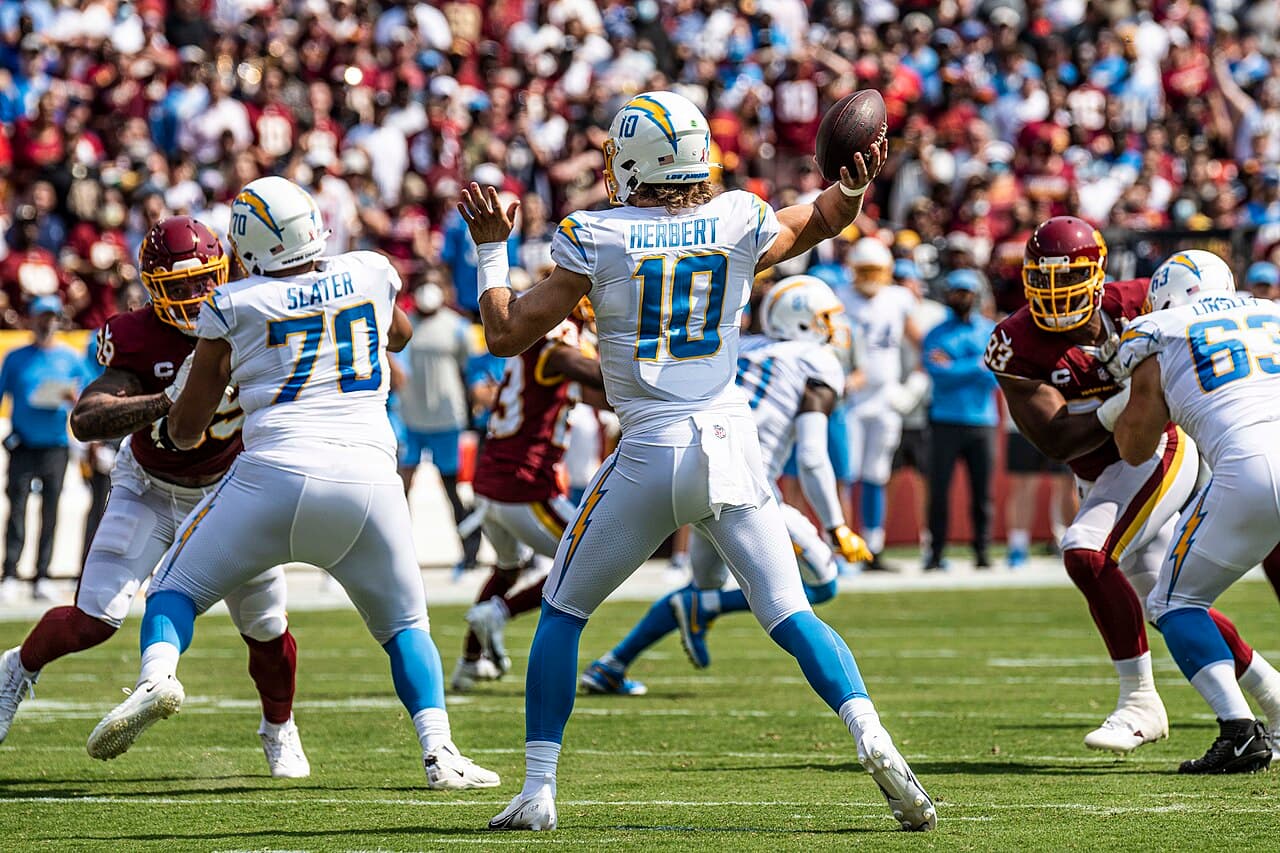
The Los Angeles Chargers open the 2026 season as 11.5-point favorites over the Arizona Cardinals, the largest Week 1 point spread since 2012 according to ESPN Research. They are the only double-digit favorite on the entire opening-week board, and the moneyline reflects it, with Los Angeles posted around minus 625 and Arizona in the plus 455 range.
That number is an outlier in a week that is otherwise the tightest opening slate in years. Nine Week 1 games sit at a field goal or less. One game sits at nearly four times that. When a board is that compressed and one number is that extreme, the extreme number is where the market is making its strongest statement, and where it is most likely to be wrong.
How the board got this shaped
Week 1 spreads are set months in advance off season win totals, roster projections, and offseason movement, then adjusted through the summer as camp news arrives. A double-digit opening-week spread requires the market to be confident about two things at once: that the favorite is very good, and that the underdog is very bad.
The Chargers side of that is straightforward. Los Angeles has a settled quarterback situation, an offseason that added rather than subtracted, and a schedule that opens at home. The market has priced them as a legitimate contender in the AFC West all summer.
The Arizona side is where the number is coming from. The Cardinals have spent August dealing with a high ankle sprain to their projected lead back, a quarterback room that has generated more headlines than clarity, and roster churn that included waiving a recent third-round pick at running back this week. Books have watched the same August everyone else has.
Why the number is probably too big
Historically, double-digit Week 1 spreads are a bad bet on the favorite. The reason is structural rather than sentimental. Week 1 has the least information of any week on the calendar, and the largest spreads embed the most assumptions. Every one of those assumptions is untested, because no team has played a snap that counts.
Blowouts also require sustained execution from teams that have not played together in a live-fire environment since January. Sloppiness in Week 1 is nearly universal, and sloppiness compresses margins. A team favored by 11.5 needs to win by 12, which usually means two scores plus a possession, which usually means a fourth quarter where the favorite is still trying.
Large favorites in September also tend to pull starters or shorten the playbook once a game is decided, and that behavior is worth points against the spread even when it costs nothing on the moneyline.
The Verdexed model take
Verdexed's game model prices Week 1 with wider uncertainty bands than any other week of the season, because the inputs it trusts most, in-season efficiency and personnel usage, do not yet exist. In that environment the model systematically pulls extreme spreads toward the middle, and it does so most aggressively where the underdog's projection is being driven by August injury news rather than by roster quality.
Arizona is exactly that profile. The Cardinals' projection has degraded through August on availability news, not on talent evaluation. Availability news is the input most likely to reverse, and a high ankle sprain reported in mid-August is often a healthy player by mid-September.
The model's read is that the fair number here is meaningfully smaller than 11.5, and that the value is on the Cardinals plus the points rather than on the Chargers laying them. That is a spread position, not a moneyline position. Nothing in the model suggests Arizona is likely to win the game outright.
The rest of the board is the contrast
Nine games inside a field goal is the market saying it cannot separate most of the league. That is a genuine feature of this season's projections, not a quirk. When most of the board is a coin flip, the games where the market claims certainty deserve extra scrutiny, because certainty is the thing in shortest supply in Week 1.
The highest total of the week sits on Tampa Bay and Cincinnati at 50.5, and the season opener has Seattle hosting New England as a 4.5-point favorite in a rematch of Super Bowl LX. The Rams and 49ers play in Melbourne. Those are the games with the most attention. The Chargers and Cardinals is the game with the most edge.
The fantasy angle
Big spreads change usage, and they change it in a predictable direction. Favorites run more late, underdogs throw more late, and both effects intensify as the margin grows.
For Chargers backs, an 11.5-point spread is a projection boost on rushing volume in the second half, which is the single most reliable game-script effect in football. For Arizona pass catchers, the same spread implies more passing volume than their season-long baseline, which makes them better one-week plays than their season projections suggest.
That is the DFS read as well. On a Week 1 slate this compressed, the biggest spread produces the most predictable usage, and predictable usage is what you want from the players you build a lineup around.
What to do
Take Arizona plus the points if the number holds near 11.5 or moves higher. Do not take Arizona on the moneyline. Treat Chargers rushing props as a lean to the over and Cardinals passing volume props as a lean to the over, for the same game-script reason.
And read the rest of the Week 1 board differently. When nine games are within a field goal, the correct posture is patience, not volume. The market is telling you it does not know much this year. The one place it claims to know a lot is the place to push back.
What's next
Watch Arizona's injury reports through the first week of September, specifically the ankle. If the Cardinals' lead back is a full participant by the start of game week, expect the number to come down, and expect the value to come with it. The time to take the underdog here is before that news arrives, not after.