 NBA2026-08-30
The Cavaliers Waived and Stretched Cam Whitmore Eight Days After Trading for Him
By Verdexed NBA Desk
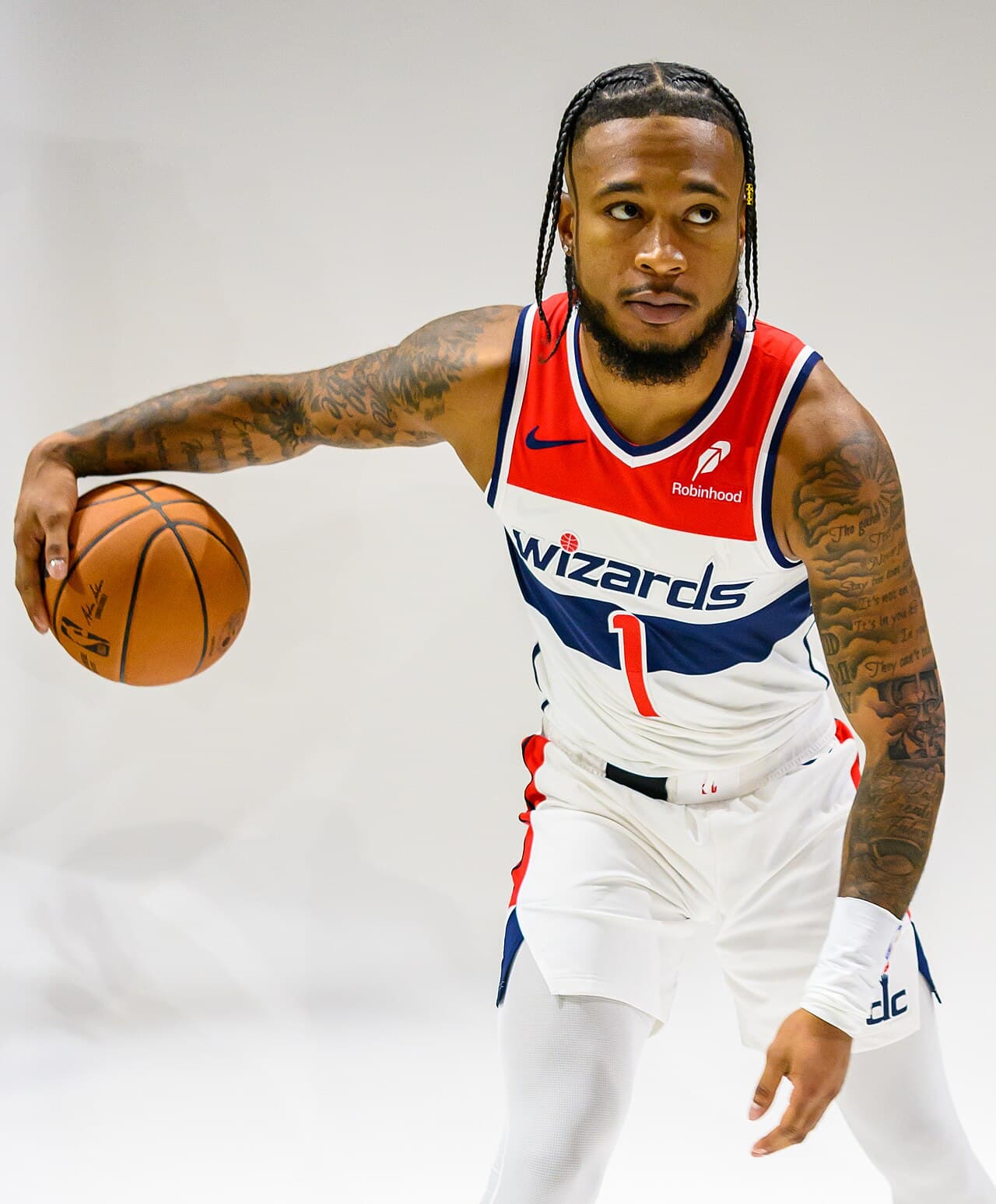
The Cavaliers waived Cam Whitmore and used the stretch provision on his contract, spreading roughly $5.46 million across three seasons and reducing his 2026-27 cap hit to about $1.82 million. The move came one day before the deadline for teams to stretch guaranteed 2026-27 salaries, and eight days after Cleveland acquired Whitmore from Washington as part of the five-team sign-and-trade that brought Peyton Watson to the Cavaliers.
That sequence tells you what Whitmore was in the deal: salary ballast. Cleveland took him in to make the trade math work and moved him out the moment the calendar forced a decision. The evaluation of him as a player was never really the point.
The mechanics, briefly
The stretch provision lets a team spread a waived player's remaining guaranteed money across a longer period, lowering the annual cap charge in exchange for carrying dead money further into the future. Teams operating near the aprons use it to buy breathing room, and Cleveland is a team with real apron constraints after a summer of expensive roster work.
The tradeoff is that Cleveland now carries a small dead-money charge for three years. For a contender trying to stay under a hard ceiling, that is usually worth it, and the number here is small enough that it will not meaningfully constrain future moves.
What Whitmore is
Whitmore is a former first-round pick who has now been moved twice in a matter of days and waived by his third organization's front office in barely more than a week. That is a rough stretch of transaction history for a player still early in his career, and it says more about roster economics in the apron era than it does about his ability.
The player himself is an athletic scoring wing with a demonstrated ability to get to the rim and a track record of putting up numbers in short stretches when given minutes. What he has not had is a stable role on a team that needed him. He is now an unrestricted free agent, which is the first time in his career he gets to choose the situation.
Fantasy fallout
This is a wait-and-see for fantasy managers, and the waiting is the entire strategy. Whitmore's fantasy value in 2026-27 is a pure function of where he signs, and the range of outcomes is unusually wide.
If he signs with a rebuilding team that has minutes available on the wing, he becomes a legitimate late-round target in 12-team leagues. Athletic scorers on bad teams get shots, and shots are the raw material of fantasy production. There are several rosters around the league that fit that description.
If he signs a minimum deal with a contender looking for depth, he is undraftable and probably unrosterable outside of very deep formats. Contenders do not give unproven wings the run they need to be fantasy relevant.
The timing works in his favor. Signing in late August or early September gives him a full training camp with his new team, which is a materially better path to minutes than arriving in October would be.
The Verdexed model take
Verdexed's system prices players like Whitmore with an explicit landing-spot variable rather than a single projection, and the spread between his best and worst realistic outcomes is among the widest for any available free agent. The model's per-minute production estimate for him is solidly above replacement level. The minutes estimate is close to unknowable until he signs.
That combination, good per-minute numbers and unknown volume, is the definition of a player to monitor rather than to draft. The model's recommendation is to hold the roster spot and let the market resolve.
The Cleveland side is straightforward. Removing Whitmore does not change the Cavaliers' rotation projection at all, because he was never in it. The stretch improves their flexibility marginally and their competitive outlook not at all.
Betting angle
Nothing here moves a Cleveland number. The Cavaliers' win total and title price reflect the Peyton Watson trade and the rest of their summer, not the disposal of an attached contract.
The more interesting market question is which team signs Whitmore, and whether that team's own depth projection changes. A rebuilding club that adds a scoring wing does not improve its win total, but it does change the distribution of production within its roster, which matters more for player props and season-long fantasy than for team markets.
What to do in your league
Do not draft him yet. There is no version of this where committing a pick to an unsigned free agent in August is the right call.
Keep him on your watch list for the first week of September, which is when free agents in his situation typically sign. If he lands somewhere with a clear opening, move him into your late-round pool immediately.
In dynasty leagues, this is a buy-low window. A player who has been treated as a salary-matching piece twice in ten days has a depressed market price relative to his age and draft pedigree, and that gap closes the moment he signs somewhere with minutes.
What's next
Whitmore clears waivers and becomes free to sign anywhere. Watch the teams with thin wing rotations and open roster spots, since those are the situations that turn him into a fantasy asset. Cleveland, meanwhile, moves on with a slightly cleaner cap sheet and a rotation that never included him in the first place.