Bennedict Mathurin Took a Two-Year Deal in New Orleans and Bet on Himself in 2027
By Verdexed NBA Desk
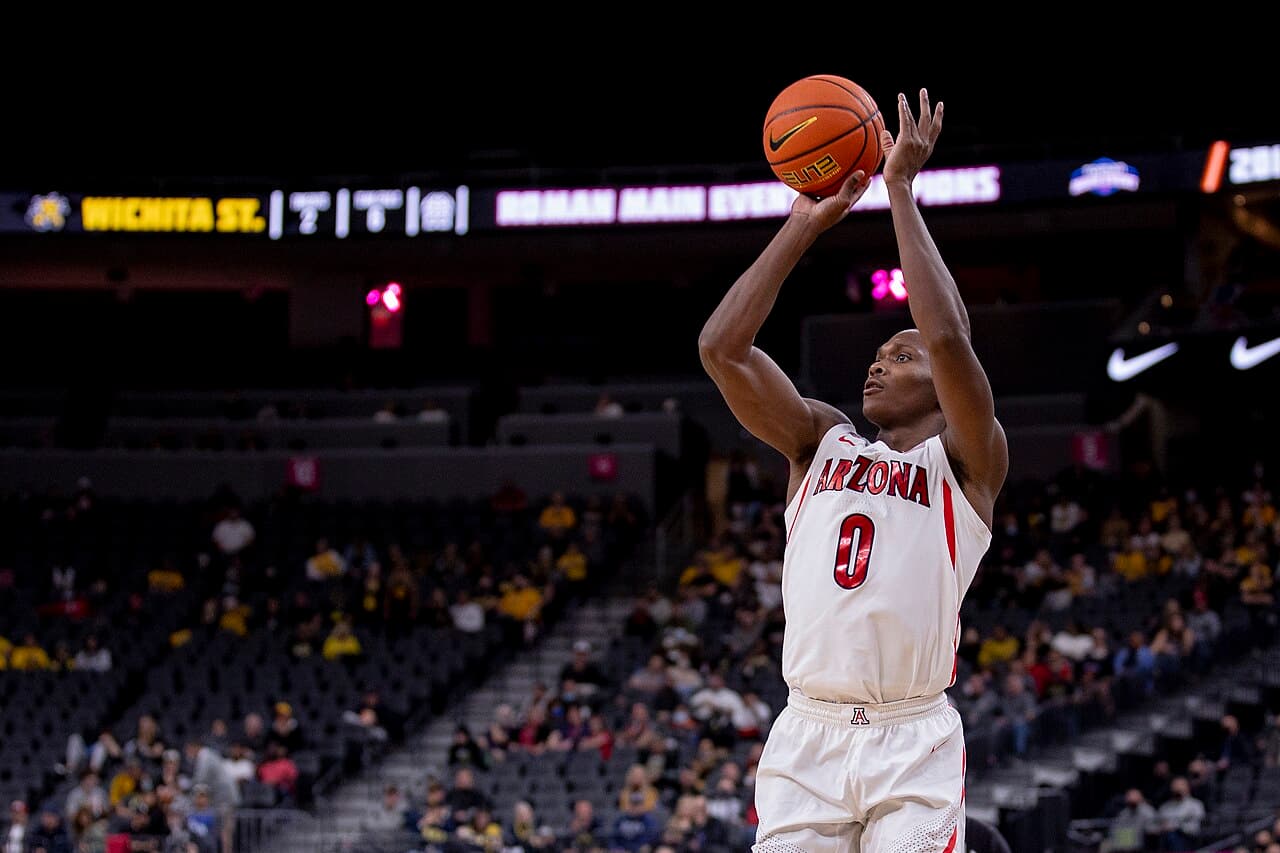
Bennedict Mathurin has finalized a two-year, $16 million contract with the New Orleans Pelicans that includes a player option, closing out one of the more unusual free agency paths of the 2026 offseason. Mathurin's representatives approached the Clippers about withdrawing his $8.8 million qualifying offer, which converted him from a restricted free agent into an unrestricted one and allowed him to sign directly with New Orleans.
The structure is the story. Mathurin, 24, prioritized the earliest possible path back to unrestricted free agency over longer deals carrying larger total guarantees and more team control. With a player option attached, he can be back on the market in the summer of 2027 if the New Orleans season goes the way he expects.
Why the deal looks the way it does
Restricted free agency is a leverage trap for good-but-not-star players. A qualifying offer gives the incumbent team the right to match any offer sheet, which suppresses the number of offers a player actually receives, because rival teams are reluctant to tie up cap space in an offer that may simply be matched.
Getting the qualifying offer pulled solves that problem at the cost of the guaranteed money the offer represented. Mathurin traded the certainty of $8.8 million and the right to test the market in 2027 as a restricted free agent for a two-year deal at a similar annual value with an option that puts him on the unrestricted market a year sooner.
That is a bet on production. A player who averages what Mathurin has averaged and does it in a larger role would be in position to command considerably more in 2027 than any long-term offer he turned down this summer.
What he brings to New Orleans
Mathurin averaged 17.6 points, 5.4 rebounds and 2.4 assists last season, and he immediately becomes the most proven bench scorer on the Pelicans roster. That is a genuine need. New Orleans has star-level talent in its starting group and has struggled for years to generate offense when those players sit.
The rotation question is where it gets complicated. Zion Williamson and Trey Murphy III are locked into significant roles, and the Pelicans have a crowded group behind them competing for the remaining starting spots and the minutes that follow, including Herb Jones, Jeremiah Fears, Derik Queen, Saddiq Bey and Yves Missi.
Fears is the most interesting complication. He averaged 14.3 points, 3.7 rebounds, 3.4 assists and 1.2 steals across all 82 games as a rookie while starting 49 of them, which is a substantial foundation for a second-year leap. A team with both Fears and Mathurin has two players who need the ball and one sixth-man role that suits both.
Fantasy fallout
Mathurin's fantasy profile has always been a scoring-first one, which makes him format-dependent. In points leagues he is a reliable contributor whose value tracks his minutes almost linearly. In category leagues he is a narrower asset, because he does not accumulate the assists, steals and blocks that drive value in that format.
The New Orleans situation cuts both ways. A bench role caps his minutes relative to a starting job, but a bench role on a team that needs scoring when the starters rest is precisely where a volume scorer generates efficient fantasy production per minute.
The draft-day approach: treat Mathurin as a mid-to-late-round target in points leagues and a matchup-dependent streamer in category leagues. His average draft position should reflect the uncertainty of the rotation, which means he is likely to be available later than his raw scoring average suggests.
Jeremiah Fears is the player whose value is most directly compressed. A second-year guard who started 49 games as a rookie would normally be a consensus breakout candidate, and adding a proven scorer at an overlapping position is the kind of move that turns a breakout into a plateau. Adjust his projection down modestly rather than dramatically, because his all-around profile gives him value even in fewer minutes.
The Verdexed model take
The model treats the contract structure as the most informative element of this signing, because it reveals how both sides price Mathurin's future.
A player who accepts a two-year deal with a player option is a player whose representatives believe the market will be better for him in 12 months than it is today. A team that offers that structure is a team that believes it can extract surplus value in the short term without committing to a long-term number. Both sides are making a defensible bet, which is usually the sign of a fairly priced deal.
For New Orleans, the team-level impact is modest but real. Bench scoring is among the most measurable weaknesses a roster can carry, and it shows up directly in net rating during non-star minutes. A team that improves that specific number by a few points per 100 possessions over the course of a season converts a handful of losses into wins.
That is worth roughly one to two wins on a season-long win total, which is not enough to build a betting position around on its own but is enough to matter when combined with the rest of the Pelicans offseason.
What is next
Training camp will resolve the rotation question faster than any amount of offseason speculation. Watch the first preseason lineups: a Mathurin who opens games is a different fantasy asset than one who enters at the six-minute mark of the first quarter.
The second thing to watch is health at the top of the roster. Mathurin's ceiling in New Orleans is defined almost entirely by how many games the Pelicans' higher-priced players are available for, and the recent history there has not been encouraging. A Mathurin forced into a starting role for 30 games is a fantasy asset worth considerably more than the one currently being drafted.