 NBA2026-09-06
Stephen Curry's Knee Is a Managed Condition Now and the Warriors Have Not Started Extension Talks
By Verdexed NBA Desk
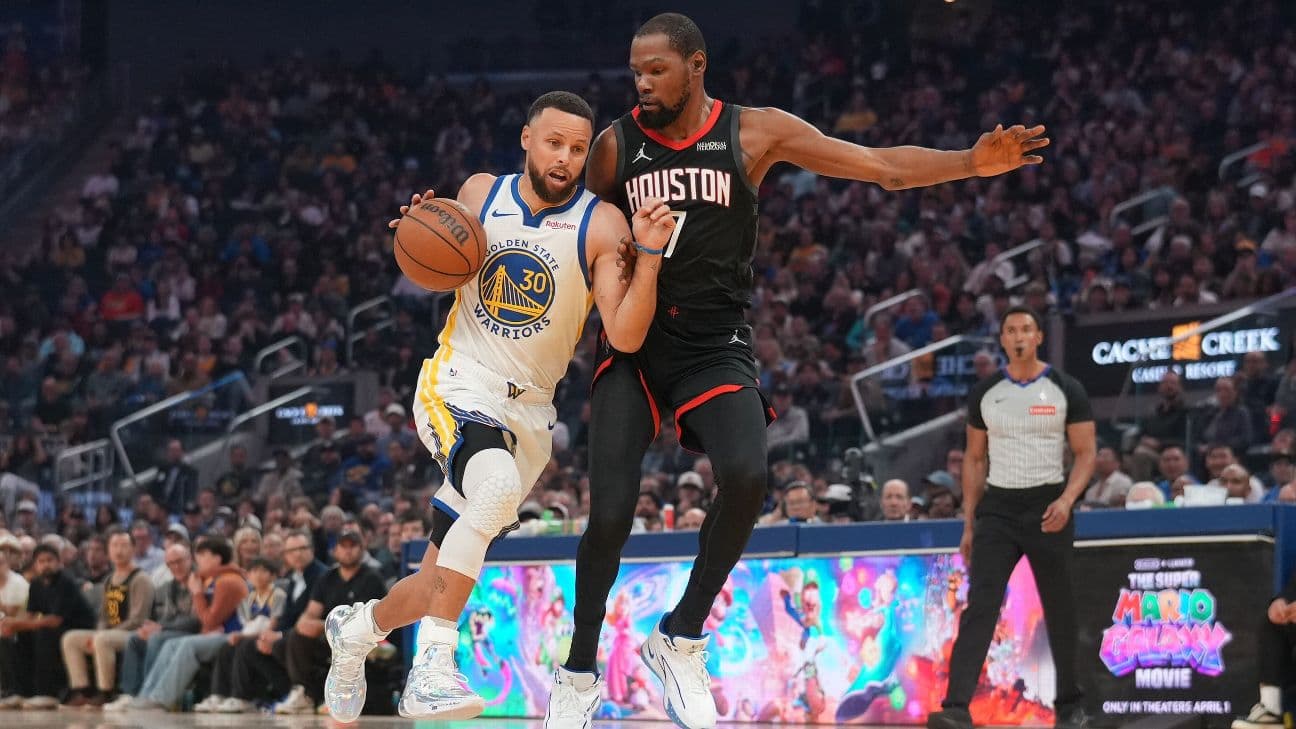
Golden State enters training camp with two unresolved questions about Stephen Curry, and they are connected. The first is his right knee, which cost him more than two months last season and which, according to reporting from NBC Sports Bay Area, is still a source of at least some concern inside the organization. The second is his contract, which enters its final year in 2026-27 with no active negotiation underway.
The knee issue surfaced in late January during a workout in Minneapolis. Curry played through it briefly, left the lineup at the end of the month, and missed a substantial portion of the season with what was described as runner's knee. The reporting since has been consistent on the key point: the condition has not fully resolved, it is considered manageable, and managing it is a new requirement for a player whose conditioning has been the foundation of his availability for his entire career.
What "manageable" actually means for a 2026-27 season
The distinction between an injury and a condition matters. An injury has a return date. A condition has a maintenance plan, and maintenance plans for guards in their late thirties mean scheduled rest, reduced practice participation, and back-to-back management.
That is the operative fantasy and betting fact, and it is more useful than any single injury report will be in November. A player who must manage a knee will miss games he could theoretically play, and those absences will be distributed across the season rather than clustered in a single stretch. Golden State head coach Steve Kerr has spoken optimistically about the coming season and about the team's process, which is what coaches say in September, and none of it contradicts the underlying reporting.
Nothing here suggests Curry is diminished when he plays. The concern is about the number of games and the shape of the workload, not about the quality of the player inside them.
The contract situation
Golden State has reportedly presented Curry with a menu of extension structures rather than negotiating toward any single one, and no talks are active on a specific option. Public reporting indicates the Warriors are prepared to give Curry essentially whatever he asks for, including the full available extension amount that would run through the 2028-29 season.
Curry has publicly downplayed the urgency, saying the extension will get sorted at the appropriate time. That is a comfortable position for a player who holds all the leverage, and it is a comfortable position for a franchise that has no intention of letting him play anywhere else.
The reason it is worth tracking anyway is that the knee and the contract inform each other. A player managing a chronic condition has a rational interest in securing guaranteed years now. A team with a chronic-condition risk on a player entering his late thirties has a rational interest in structure and protection. Those interests do not conflict, but they take time to reconcile, which is a reasonable explanation for why nothing has been signed.
Fantasy fallout
Curry's fantasy profile for 2026-27 is a high per-game floor attached to a games-played discount, and drafters need to price both halves rather than one.
In roto and points leagues that reward season-long accumulation, that discount is real and should push him below where his per-game production alone would rank him. In head-to-head leagues where a manager can stream around scheduled absences, the discount is smaller, because the value of a top-tier per-game producer survives missed games better in weekly formats.
The practical draft advice is to take Curry where the market's games-played fear has already pushed him rather than where his name says he belongs, and to make sure the roster around him has the depth to absorb rest nights. Managers who draft him should also plan to be aggressive about second-night-of-a-back-to-back streamers, because that is the specific category of game a managed knee costs you.
The betting angle
Golden State's win total and title price both carry an implicit Curry availability assumption, and the market historically prices star availability optimistically in September, before any games have tested it.
The cleaner instrument is the player prop and award market. A player who will miss scheduled games is a bad bet in any market that requires a games-played minimum, which includes most Most Valuable Player and All-NBA markets in practice even where the rule is not explicit. That is an argument against Curry tickets in season-long awards regardless of how well he plays.
Game-level markets go the other way. A team that rests a star on specific nights creates a pattern that the market prices slowly, and Warriors games without Curry are consistently among the most mispriced sides early in a season before the pattern is established.
The Verdexed model take
Verdexed's model applies a games-played projection separately from a per-game production projection, and the gap between those two numbers is where most fantasy and betting errors on aging stars originate. Curry's per-game projection remains elite. His games-played projection should be marked down meaningfully from his career norm, and the reporting this week is the reason.
The model does not read the absence of extension talks as a signal about the knee. Franchises and franchise players routinely leave these things until the last practical moment, and a team that has publicly signaled a willingness to pay whatever is asked is not a team hedging on health.
What to watch
Two things, and neither is a press conference. The first is Curry's practice participation once camp opens, because a player on a maintenance plan will show it in October before he shows it in a box score. The second is whether Golden State moves from a menu of options to a single negotiation, which would indicate both sides have settled on a structure.