Peyton Watson Gets $88 Million in Cleveland and Max Strus Goes to the Clippers
By Verdexed NBA Desk
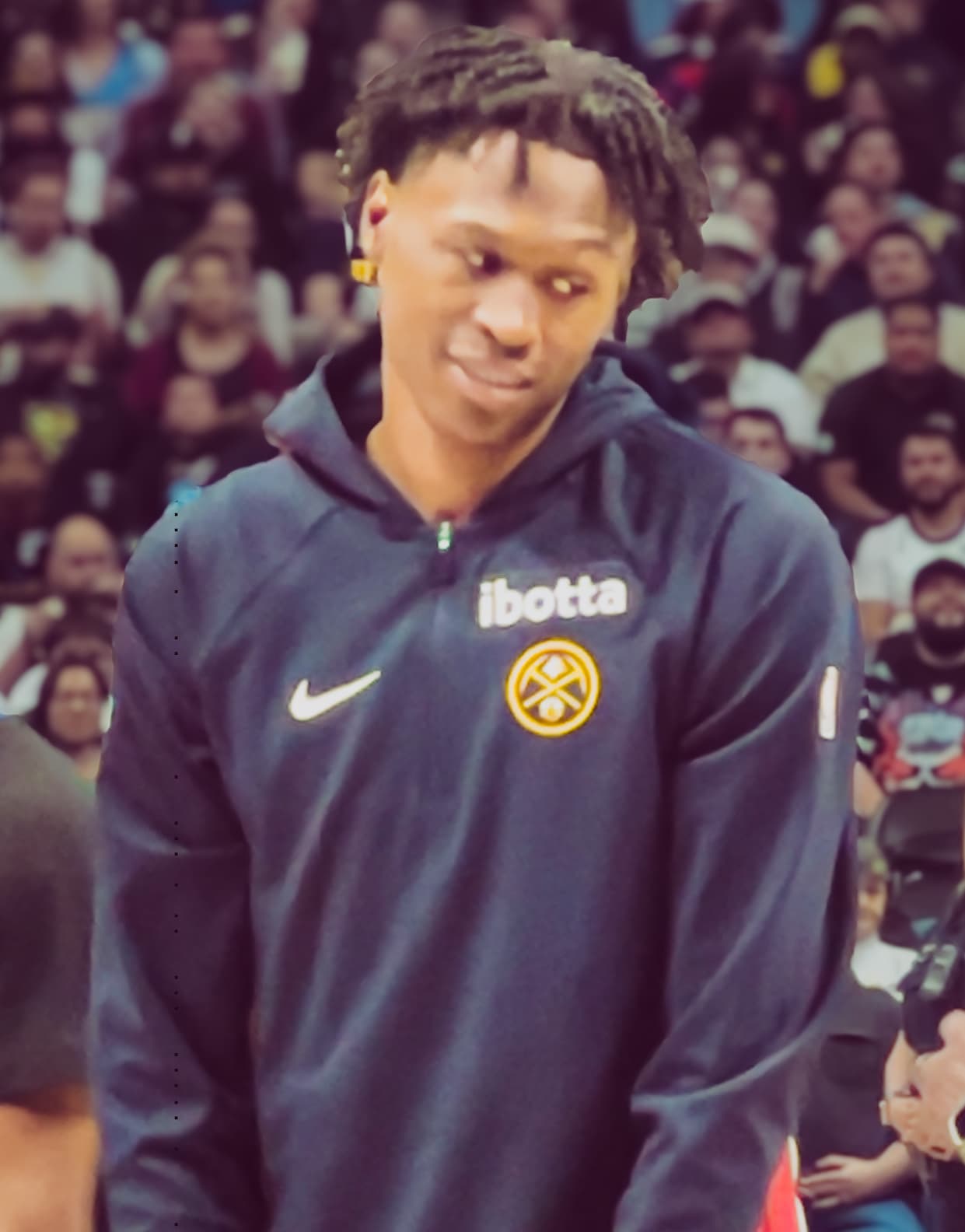
Cleveland has acquired Peyton Watson in a multi-team trade and signed him to a new four-year contract reported at $88 million. Max Strus lands with the Clippers in the same deal, Denver collects draft capital including an unprotected 2031 Cleveland first-round pick and a 2032 Sacramento second-rounder, and Cleveland separately sends Tre Mann to Washington for Cam Whitmore and a 2027 second-round pick.
That is a lot of movement for a week when most of the league is preparing for media day, and it tells you something about where Cleveland believes it is in its window.
Cleveland is buying athleticism and length
Watson is a long, switchable forward whose value has always been projected forward rather than measured in current production. Cleveland paying him $22 million a year on average is a bet on what he becomes rather than on what he has been.
The roster logic is clear enough. Cleveland has built around a core that is strong offensively and has spent the last several years looking for defensive versatility on the wing. Watson is the archetype the Cavaliers have been short of, and the price reflects how scarce that archetype is on the trade market.
The counterargument is the contract itself. Four years and $88 million for a player whose scoring has not stabilized is an aggressive commitment, and it is the kind of deal that constrains a roster if the development curve flattens.
Max Strus to the Clippers is the underrated piece
Strus is a known quantity: a high-volume three-point shooter who defends adequately and understands how to play off stars. That is a useful thing for a Clippers roster that is in the middle of significant reshaping.
For fantasy purposes, Strus is a category specialist. His value is three-pointers and a decent free-throw percentage, and his scoring is almost entirely a function of how many shots the offense generates for him. A move to a roster with a different shot distribution can swing that number meaningfully in either direction.
The honest projection is that Strus's fantasy value is roughly neutral in the move, with a wider range of outcomes than he had before. That is not a reason to draft him or to fade him. It is a reason to treat his ranking as less reliable than it looks.
Denver's return is the real story
The Nuggets collecting an unprotected first-round pick in 2031 and a second in 2032 for a player on a rookie-scale contract is a specific kind of transaction: a team converting a young asset it was not going to pay into future flexibility.
Unprotected picks that far out are the most valuable currency in the league because nobody can project what a roster will look like in 2031. Denver taking an unprotected Cleveland first is a bet that the Cavaliers' current core will have aged out by then, which is a reasonable bet and one that Cleveland presumably made with its eyes open.
For fantasy managers, Denver's side of this trade matters because it opens minutes. A team that trades a rotation forward without acquiring one has to fill those minutes internally, and internal solutions on a team with a championship-caliber core are exactly where undrafted fantasy value comes from.
Cam Whitmore is the name worth watching
The secondary deal sending Tre Mann to Washington for Cam Whitmore and a second-round pick is the one that most directly affects fantasy drafts.
Whitmore has been one of the more frequently discussed young wings in the league, a high-scoring talent whose NBA minutes have never matched his production rate. Players in that profile are perennial fantasy sleepers precisely because the gap between per-minute output and actual minutes is so large.
Landing in Cleveland does not automatically solve that. The Cavaliers are a deep team with an established hierarchy, and a young wing joining that roster has to earn his way into a rotation that is already crowded. But the acquisition cost was low, which usually indicates a team that intends to give a player an opportunity rather than to bury him.
Draft Whitmore late in deep leagues and leave him on the wire in shallow ones. He is a bet on opportunity, and opportunity in Cleveland is contested.
The Verdexed model take
Our system evaluates trades by modeling the minutes redistribution on both sides and then re-running player projections against the new depth chart. Contracts do not enter the projection at all, which is why the $88 million figure is a story for the cap sheet rather than for fantasy value.
The model's largest movements from this transaction are not the headline names. They are the players in Denver who inherit the minutes Watson leaves behind, and the second-unit wings in Cleveland whose rotation spots just got harder to hold.
On the team level, the model reads Cleveland's defensive projection as improved and its depth as slightly worse, which is the usual trade-off when a team consolidates talent. Denver's near-term projection is marginally lower and its long-term flexibility considerably higher.
The Clippers are the hardest team to model here, because their roster has changed enough this offseason that minutes projections carry unusually wide error bars. That is a reason for fantasy managers to be cautious with every Clippers player, not just Strus.
What is next
Media days for most of the league are September 28, and rotations will start to take shape in the practices that follow. Watson's role in Cleveland is the single most important thing to watch, because an $88 million commitment usually comes with a starting job and the Cavaliers' lineup is not obviously short of starters.
The other thing to track is whether Denver makes a follow-up move. Teams that trade for draft capital in September frequently are not finished, and a roster with an opening on the wing and a stack of future picks has both the motive and the means to do something else before opening night.