 NBA2026-10-20
Only Seven Rookie Extensions Got Done, and Scoot Henderson, Anthony Black and Bilal Coulibaly Now Play for 2027 Paydays
By Verdexed NBA Desk
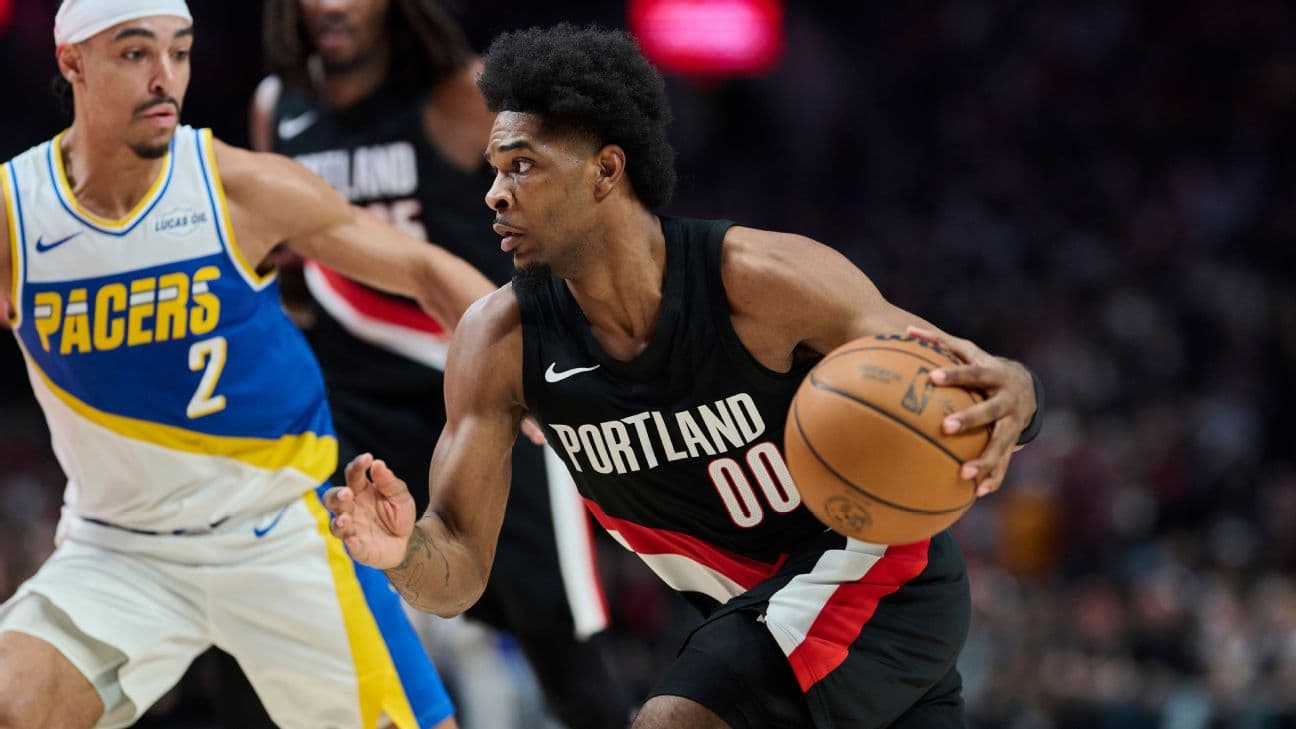
The rookie-scale extension window for the 2023 draft class closed at 6 p.m. ET on Monday, Oct. 19, and only seven players got deals done. That is the fewest since 2018; every offseason from 2019 through 2025 produced at least nine. Cason Wallace and Brandon Miller were the last two to sign, while Scoot Henderson, Anthony Black, Bilal Coulibaly, Jarace Walker, Dereck Lively II and a long list of others will play 2026-27 on the final year of their rookie contracts and head toward restricted free agency next summer.
For fantasy managers and anyone pricing team futures, the deadline sorted the class into two groups: players whose teams have committed to them long term, and players who now carry a contract-year storyline and, in several cases, a trade-candidate label.
The Seven Who Signed
Oklahoma City and Wallace agreed to a five-year, $139 million extension on Sunday, Oct. 18, a day ahead of the deadline, as first reported by ESPN's Shams Charania. The deal averages roughly $27.8 million per season and starts in 2027-28. Wallace was the No. 10 pick in 2023, made the All-Defensive Second Team last season and led the league with 150 total steals. Reporting from Bleacher Report, citing Spotrac, indicates the deal pushes Oklahoma City's 2027-28 payroll past the second apron, which is a real cost for a team already paying a deep core.
Charlotte finished its deal with Miller on Monday, close to the buzzer: five years and $209 million, an average of about $41.8 million per year that also begins in 2027-28. Miller averaged 20.2 points and 4.9 rebounds while shooting 38.3% from three in 65 games last season. Charlotte went 41-24 with him available and 3-14 without him. The risk is health: he has missed 80 games since entering the league and had surgery in May to address left shoulder instability.
The full list of 2023 first-rounders who signed rookie-scale extensions is below.
| Player | Team | Reported terms |
|---|---|---|
| Victor Wembanyama | Spurs | Signed this offseason |
| Amen Thompson | Rockets | 5 years, $208 million |
| Ausar Thompson | Pistons | Signed this offseason |
| Keyonte George | Jazz | Signed this offseason |
| Brandin Podziemski | Warriors | 5 years, $110 million |
| Cason Wallace | Thunder | 5 years, $139 million |
| Brandon Miller | Hornets | 5 years, $209 million |
The Restricted Free Agent Class of 2027
Fourteen eligible players passed the deadline without a deal. They can still be traded, and their teams can extend qualifying offers next summer to keep the right to match outside offers. The headliners carry the most fantasy relevance.
| Player | Team | 2026-27 situation |
|---|---|---|
| Scoot Henderson | Trail Blazers | Final rookie year, about $13.6 million |
| Anthony Black | Magic | Club option of about $10.1 million exercised |
| Bilal Coulibaly | Wizards | Team option exercised, RFA in 2027 |
| Jarace Walker | Pacers | Option of about $8.5 million exercised |
| Dereck Lively II | Mavericks | No extension, no return date |
| Marcus Sasser | Mavericks | No extension |
| Gradey Dick | Clippers | No extension |
| Julian Strawther | Nuggets | No extension |
The rest of the group includes Noah Clowney (Nets), Taylor Hendricks and Kris Murray (Grizzlies), Brice Sensabaugh (Jazz), Ben Sheppard (Pacers) and Jaime Jaquez Jr. (Bucks), according to the pre-deadline eligibility lists tracked by Hoops Rumors.
Portland's decision on Henderson was the loudest non-move. He missed more than half of last season after tearing his left hamstring in a preseason workout and was limited to 30 regular-season games, then scored 70 points across his first three playoff games against San Antonio. The Blazers bet that they would rather pay for a full healthy season than for that three-game sample. Orlando, already carrying large commitments to Paolo Banchero, Franz Wagner, Desmond Bane and Jalen Suggs, had reportedly been unwilling to match the Podziemski benchmark for Black, who shares an agent with the Warriors guard. Indiana's front office had been openly noncommittal about Walker and Sheppard.
Fantasy Fallout: Opportunity Beats Motivation
The contract-year bump is one of the most overrated ideas in fantasy basketball. Players do not suddenly find another gear; what changes is usage, and usage comes from roster context. Apply that filter to the 2027 class and the picture sharpens.
Henderson is the clearest beneficiary of circumstance. A full, healthy season with real ball-handling responsibility is the only way he gets paid next summer, and Portland has every reason to give him that runway to establish either his value or his trade value. He is a points-and-assists play with efficiency risk, best treated as a bench guard in 12-team leagues who can climb quickly if the shooting holds.
Coulibaly is the defensive specialist of the group, and Washington's season revolves around No. 1 pick AJ Dybantsa. Coulibaly's fantasy value lives in steals and blocks rather than scoring, which makes him more useful in category leagues than in points formats. Walker's case is similar: last season he played 76 games with 41 starts, averaging 11.6 points, 5.1 rebounds and 2.5 assists in 25.7 minutes, and the return of Tyrese Haliburton should stabilize the Indiana offense around him rather than squeeze him out.
Black remains the most complicated name. His ankle was the more urgent question entering the week, and he now enters the year as a player that opposing teams reportedly view as a trade candidate. A trade to a team with a cleaner path to minutes would raise his value; staying in Orlando behind Suggs and Bane caps it.
On the signed side, Miller's extension arrives as Charlotte opens without Kon Knueppel and Coby White, both of whom are still without a timetable. With LaMelo Ball and Miles Bridges gone this offseason, Miller is the focal point of the offense from the opening tip, and his early-season usage should be elite for his draft range. Wallace's value is steadier: a steals specialist on the best regular-season team in the league, with a little more ball-handling available while Chet Holmgren works back from a bruised quad.
The Verdexed Angle
The deadline does not move win projections much on its own, because none of these deals change who is on the floor this season. What it does change is roster flexibility. Teams with unsigned 2023 picks, notably Orlando, Portland, Washington, Indiana and Dallas, now hold mid-sized expiring salaries that can be matched in trades before the deadline. That makes them likelier to make in-season moves, which adds variance to their futures prices.
Oklahoma City's choice to keep Wallace despite the apron cost signals that the front office is prioritizing continuity over flexibility, which supports the case for the Thunder as a high-floor regular-season team. Charlotte paying Miller near the top of the market tells bettors the Hornets view him as the post-LaMelo centerpiece, not a trade chip. For how those roster decisions feed into team-level outlooks, Verdexed's predictions page at /nba/predictions carries the model view game by game.
What's Next
Restricted free agency opens in July 2027, and the qualifying offers that preserve matching rights come before that. In the meantime, watch three things: Henderson's minutes and efficiency through the first month, any movement in the Black trade chatter as Orlando tests its rotation, and Lively's recovery timeline in Dallas, where the lack of both a return date and an extension leaves his future more open than at any point since the Mavericks drafted him.
For fantasy managers, the actionable move is simple: do not draft or trade for anyone on the expectation of a motivational spike. Target the unsigned players whose teams have reasons to feature them, with Henderson and Coulibaly at the top of that list, and treat Miller as a usage-driven start every night he is healthy.