Peyton Watson and Jonathan Kuminga Are Still Unsigned, and Fantasy Drafts Cannot Price Them
By Verdexed NBA Desk
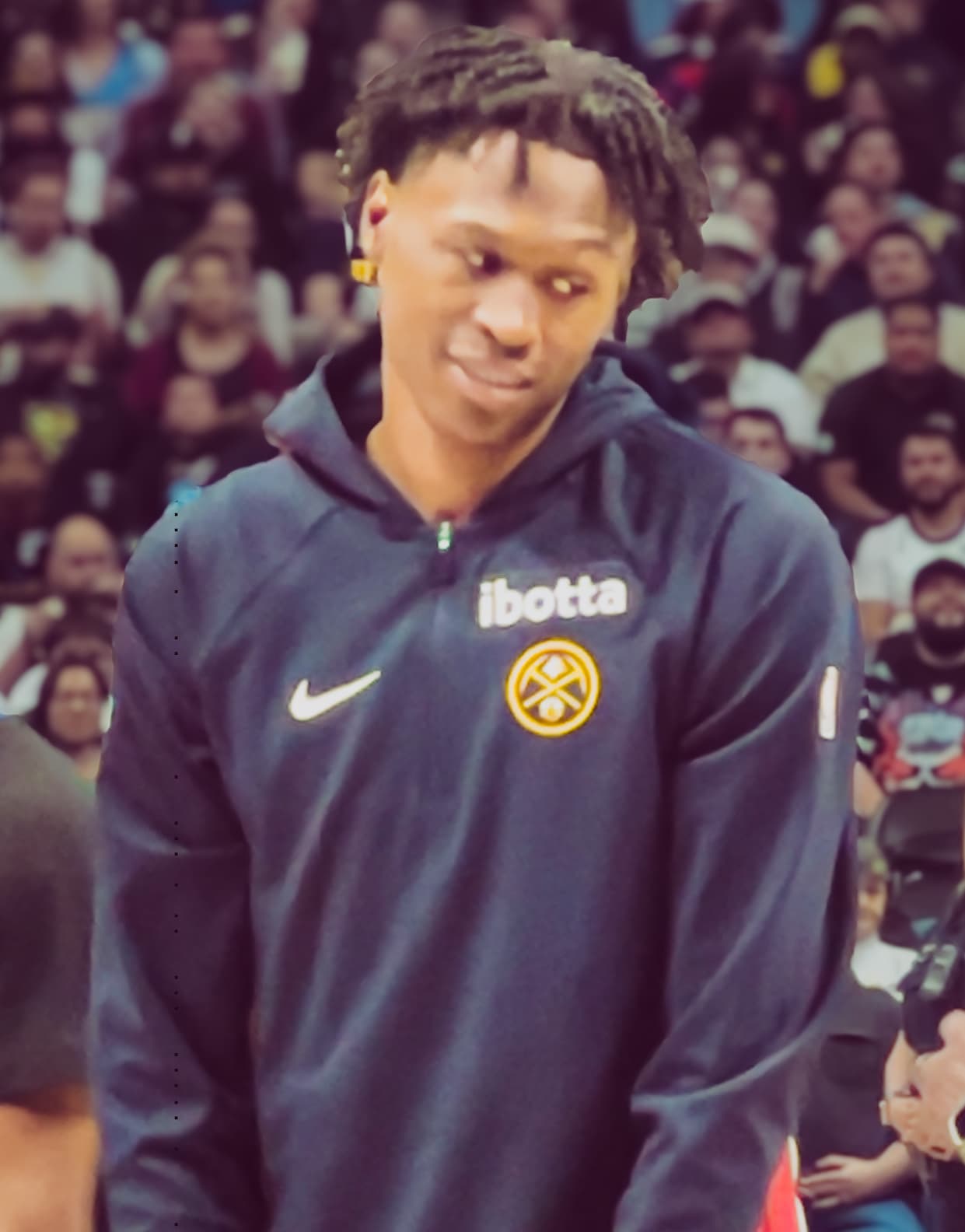
Two of the more consequential unsigned players in the NBA are both stuck in the same trap, and the standoffs have now dragged deep enough into August that fantasy drafters and futures bettors have to make decisions without knowing where either man will play.
Peyton Watson remains a restricted free agent. Denver has reportedly offered him a four-year deal in the neighborhood of $70 million, an average annual value around $17.5 million before accounting for a team option in the final season. Watson is reportedly seeking at least $20 million per year. Jonathan Kuminga's free agency has likewise stretched through the summer, with reporting indicating he is seeking north of $20 million annually and that multiple teams have explored sign-and-trade constructions.
The restricted free agency squeeze
Watson's situation is the cleaner illustration of why restricted free agency has become an unfavorable structure for players.
A restricted free agent's incumbent team holds the right of first refusal, which functionally eliminates the offer-sheet market. Rival teams do not want to tie up cap space for the days it takes an incumbent to match, and the incumbent knows this. The result is that the player negotiates against one bidder while the market watches, and the leverage sits almost entirely on the team side.
Watson's alternative is the qualifying offer, reportedly around $6.5 million, which would make him an unrestricted free agent in the summer of 2027. That path trades roughly $11 million in guaranteed money this season for the right to negotiate freely a year from now, plus the injury risk that comes with playing an uninsured season. Players rarely take it, and the reason they rarely take it is that the math almost never works.
The reported exit ramp is a sign-and-trade. Cleveland, Milwaukee, and the Clippers have been connected to Watson, and a sign-and-trade would let him get closer to his number while Denver recovers value rather than losing him for nothing. That is the most likely resolution, and it is also the one that changes his fantasy outlook the most.
Why the destination matters more than the money
For fantasy purposes, the contract figure is irrelevant. What matters is role.
Watson in Denver is a defensive-minded wing on a team with an established offensive hierarchy, where his usage is capped by the players ahead of him. Watson as the acquired piece in a sign-and-trade to a team that gave up assets for him is a starter with a defined role and a meaningfully higher usage rate. The same player, two very different fantasy profiles.
The gap is large enough that he is genuinely undraftable right now in any format where you have to lock a roster before the situation resolves. That is not a knock on the player. It is a statement about information.
Kuminga's case is similar in structure and larger in magnitude. He has been connected to Cleveland and Los Angeles among others, and reporting through the summer has described a market shaped by teams weighing him against alternatives rather than competing for him directly. Cleveland's interest reportedly cooled in favor of pursuing Watson, which is the tell that these two markets are linked: several of the same teams have the same need and the budget for one solution, not two.
Fantasy fallout
The practical guidance for anyone drafting a fantasy basketball team in the next several weeks is to treat both players as late-round dart throws with an explicit plan to reassess.
If your league drafts before either signs, take neither in the first half of your draft regardless of talent. A player whose team is unknown is a player whose minutes, role, and statistical profile are all unknown, and no amount of talent compensates for that in a format where you are locking in a roster.
If your league drafts after resolution, the values will be obvious quickly. A wing who moves from a crowded contender to a team that traded for him and needs him to start is a substantial value at whatever cost his August ADP established, because ADP is anchored to the uncertain version.
Dynasty managers should be doing the opposite of what redraft managers do. Buy the uncertainty now. Both players are 23 or thereabouts, both are being valued at a discount specifically because their situations are unresolved, and the resolution is more likely to improve their role than to worsen it, since the teams pursuing them are the teams with openings.
Betting angle
Unsigned free agents in mid-August are a direct problem for season win totals, which have already been posted for 2026-27.
Every posted number assumes some resolution to these situations, and the assumption is baked in without being stated. Denver's win total is priced with an implicit assumption about whether Watson is on the roster. Cleveland's is priced with an implicit assumption about whether they add a starting-caliber wing. Those assumptions will be wrong for at least one team.
The play is not to guess the outcome. It is to identify the totals most sensitive to it and wait. A team whose number would move by two wins depending on a single signing is a team whose current price contains information you can acquire for free by being patient. There is no cost to waiting on a futures market that will remain open until the season starts.
The exception is a team where the market has clearly assumed the pessimistic outcome. If Denver's number has been set as though Watson is gone, and the likeliest resolution is that he signs or is sign-and-traded for real value, that number is soft.
The Verdexed model take
Verdexed's model handles unresolved rosters by projecting a probability-weighted distribution across plausible outcomes rather than committing to a single roster construction. For Watson, that means a blend of a Denver return at a reduced usage rate and a sign-and-trade to a team where he starts.
The blended projection lands well below what he would produce in the sign-and-trade scenario and above what he would produce in Denver, which is precisely why a blended number is useless for a fantasy draft. The distribution is bimodal, and the mean of a bimodal distribution describes an outcome that will not happen.
That is the actual insight here and it applies to both players: do not draft the average. Either wait for resolution, or make a directional bet on which branch you think is likelier and price the player accordingly. Managers who split the difference end up with a roster spot committed to a player who is either a bench piece or a starter, and they will have paid too much in one world and too little in the other.
What's next
The forcing function is training camp. Restricted free agents who have not signed by the time camps open lose leverage rapidly, because the qualifying-offer path becomes practically unattractive once a player has missed camp.
Expect resolution on both in the weeks before camp rather than during it. Until then, keep both on your draft-day watch list, keep your final roster spots flexible, and check the futures board the day either one signs, because that is when the stale numbers become obvious.