Moritz Wagner Signs With the Nets for Two Years and Walks Into Real Minutes
By Verdexed NBA Desk
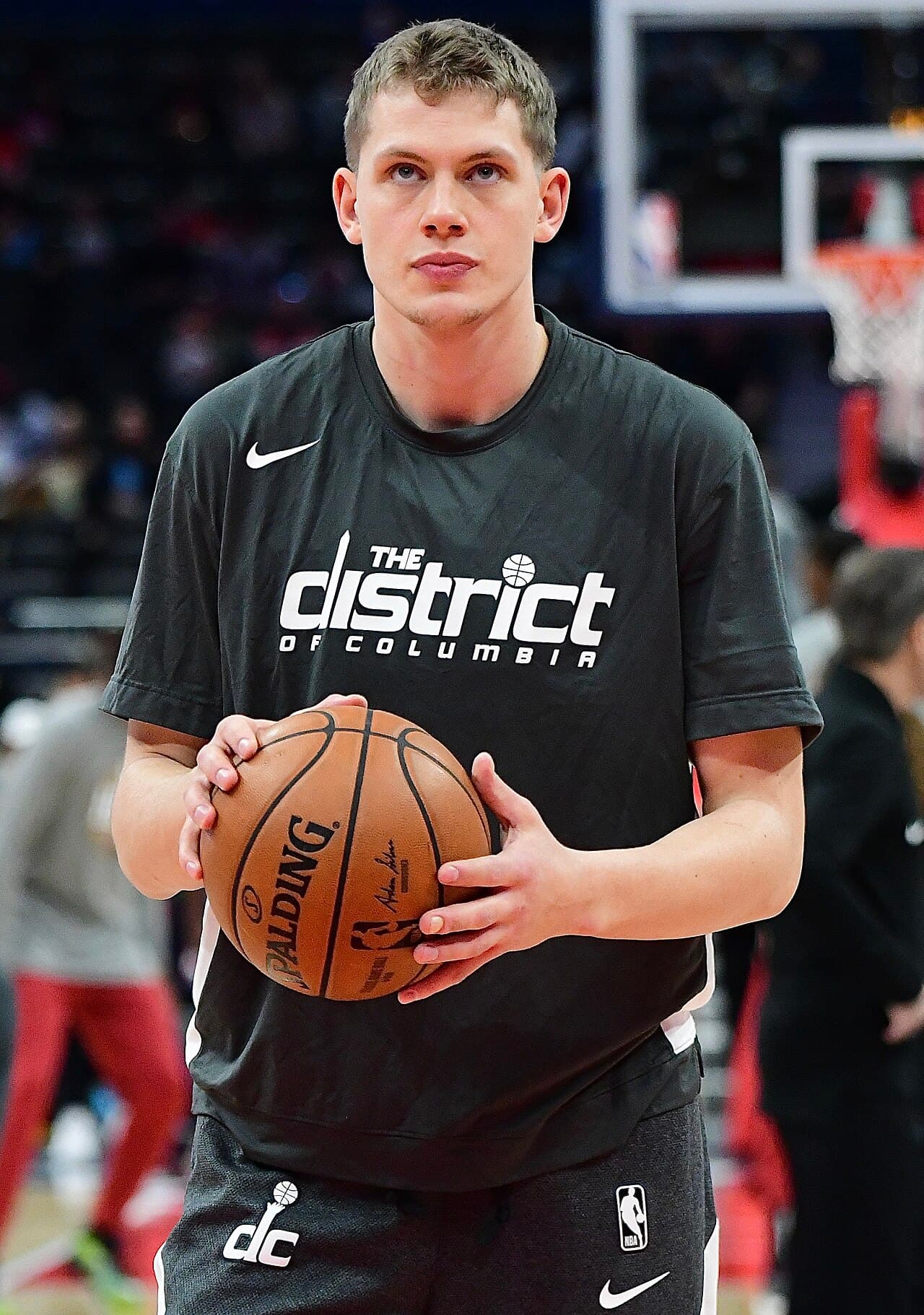
Brooklyn signed center Moritz Wagner to a two-year contract worth $19 million on Friday, with a mutual option attached to the second season. It ends a five-plus-season stretch in Orlando for the 29-year-old big man and drops him into the one situation in the league where a backup center's minutes are least likely to be capped by the man in front of him.
The dollar figure, roughly $9.5 million per season, is priced as backup money. The opportunity is not necessarily backup opportunity, and that gap is why this signing matters to fantasy managers who play in leagues deeper than ten teams.
What Wagner is
Wagner has built a career as a high-energy offensive center who scores efficiently in short bursts and generates fouls at a rate most big men do not. He is a genuine floor-spacer at the position, he plays with pace, and he has consistently produced per-minute numbers well ahead of the minutes he has actually received. In Orlando he was a bench piece on a team with an established frontcourt hierarchy, which meant his role was structurally capped regardless of how he played.
The defensive limitations are real. He is not a rim protector and he can be targeted in space. Teams that play him heavy minutes accept a defensive tradeoff for offensive efficiency, which is a bargain a rebuilding club is far more willing to make than a contender is.
The Brooklyn fit
Brooklyn is precisely the kind of roster where a per-minute producer gets the minutes. A club in the middle of a rebuild has no incentive to protect a veteran hierarchy at the expense of production, and it has every incentive to give a newly signed veteran enough runway to establish trade value. Wagner on a two-year deal with a mutual option is a movable contract, and movable contracts on rebuilding teams get played.
The mutual option is the tell about how both sides see it. A mutual option means either party can walk after year one, which is a structure that only makes sense when both sides expect the situation to be reassessed. Brooklyn wants flexibility. Wagner wants the chance to prove he deserves a larger role and a larger deal.
Fantasy fallout
Center is the position where fantasy managers most consistently overpay for name recognition and underpay for minutes. Wagner is now a late-round center with a plausible path to 24 to 28 minutes a night on a team that will not be conserving anyone.
The categories where he helps are field goal percentage, points and free throw attempts. He is not a source of blocks and he is not an elite rebounder for his position. That makes him a specific kind of piece rather than a general one: he is the center you draft when you have already secured your rebounding and blocks from elsewhere and you need efficient scoring at the position without spending a mid-round pick.
In points leagues, he is more valuable than in category leagues, because points formats reward efficient volume scoring and do not punish the categories he ignores.
The secondary fantasy consequence is in Orlando. A frontcourt losing a rotation big redistributes those minutes, and the beneficiary is whoever the Magic slot in behind their starters. That is a preseason watch item rather than a draft-day decision.
The Verdexed model take
Verdexed's basketball projections build from a minutes model first and a production model second, because minutes uncertainty dominates production uncertainty for every player outside the top tier. Wagner's per-minute production has been consistently strong and consistently ignored by draft rooms for exactly one reason: nobody believed he would get the minutes.
The model's projection for Wagner in Brooklyn carries a wider minutes band than it did in Orlando, and the midpoint of that band is materially higher. Applied to his historical per-minute rates, that produces a full-season projection inside the range where he is a rosterable center in 12-team leagues rather than a waiver-wire name.
The model's caution concerns the trade deadline. A veteran on a movable contract on a rebuilding team is a candidate to be moved in February, and a midseason trade to a contender would collapse his minutes projection. That risk is worth accepting at his likely draft cost, but it should temper how much you pay in leagues with keeper implications.
Betting angle
Brooklyn's win total is not moving on this signing and should not. A backup center on a two-year deal is not a needle-mover for a rebuilding club's record.
The angle is in the player prop market, and specifically in season-long and early-season points props. Prop markets for role players are set primarily from the previous season's per-game production, which for Wagner reflects capped Orlando minutes rather than his likely Brooklyn workload. When a player's role expands and his prior season's counting stats do not reflect it, the opening numbers tend to lag. That lag is largest in October and closes fast.
If Brooklyn's preseason rotation confirms Wagner in the mid-20s in minutes, his early-season points and rebounds overs are the cleanest expression available.
What to do in your league
Put him on your late-round center list and let the preseason resolve the minutes question before you commit. If Brooklyn's rotation reports have him starting or playing starter-adjacent minutes, move him up several rounds. If the Nets have another big ahead of him getting first-unit reps, he stays a stream.
In dynasty formats he is not a target. He is 29, on a short deal, and the mutual option means his 2027 situation is genuinely unknown.
What's next
The NBA is expected to release its 2026-27 schedule in mid-August, historically in the second full week of the month, which will set the calendar for preseason and training camp reporting. Wagner's rotation status will not be clear until camp opens in the fall. Until then, this is a signing to file rather than act on.