 NFL2026-09-11
Mike Evans Looked Like Brock Purdy's Number One Receiver in His First Game as a 49er
By Verdexed Fantasy Desk
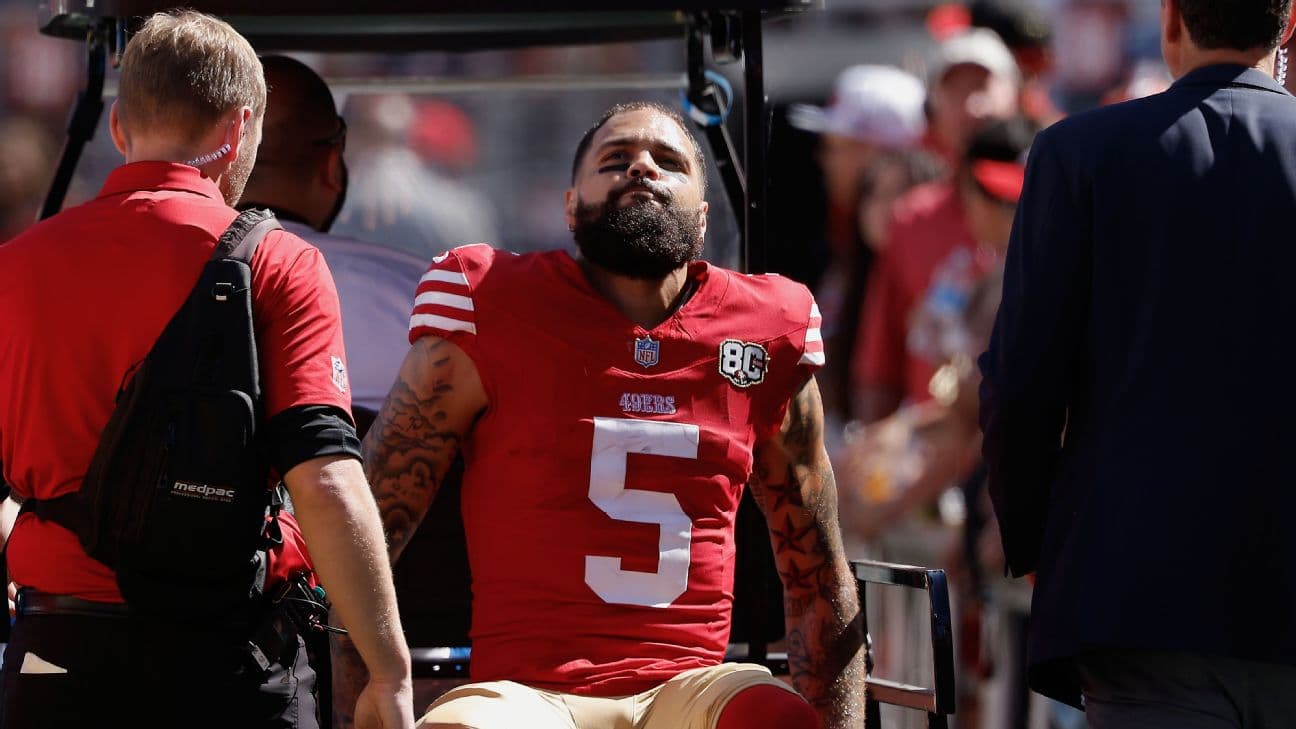
Mike Evans caught six of his seven targets for 49 yards and a touchdown in San Francisco's 27-7 win over the Rams in Melbourne, and the way he was used mattered more than the yardage. Evans was the target on third downs, he was the target in the red zone, and Brock Purdy threw him a touchdown on a one-on-one matchup without hesitation in a game the 49ers were already controlling.
Kyle Shanahan praised the performance afterward. Purdy had spent the summer talking about what Evans brings to a receiver room that has been rebuilt on the fly, and the opener was the first evidence that the chemistry the 49ers were counting on actually exists.
Why the yardage is the least interesting number
Forty-nine yards on six catches is an eight-yard average, which reads like a possession receiver's line. It is not, and the reason is the game script. San Francisco led comfortably, ran the ball 14 times with a rookie back, and Purdy was not asked to push the ball down the field in the second half. He was not sacked on 34 attempts, which means the offense was operating exactly as designed and simply did not need explosive plays.
What that produces is a low-variance receiving line for the primary target and very little for anyone else. Evans' seven targets in a blowout is a healthy share of a passing game that was deliberately conservative. In a competitive game with a normal pass rate, that share translates to a considerably larger workload.
The touchdown is the part that should hold. Evans has built an entire career on contested-catch red zone work, and a quarterback who will throw him the ball in a one-on-one inside the twenty is worth more to his fantasy value than any yardage total. Red zone target share is among the stickiest week-to-week receiving statistics, and it is the one Evans owns.
The room just got thinner
De'Zhaun Stribling led San Francisco's wide receivers in snaps before leaving the game with an injury, which is a significant development for a group that spent the entire preseason short-handed. The 49ers have been working through injuries across the position since camp opened, and Evans himself was managing a quad strain through August.
A thinner receiver room concentrates targets, and concentration is the mechanism that turns a good fantasy receiver into a great one. If San Francisco is down a starter for any length of time, Evans becomes the clear primary option in an offense that generates efficient volume and plays with a lead often enough to keep the passing game clean.
Deebo Samuel and Demarcus Robinson give Shanahan alternatives, and the tight end position remains a large part of this offense's identity. But none of those are the player a quarterback looks for on third and seven.
Fantasy fallout
Evans is a start in all formats and a buy in any league where his manager is discouraged by a 49-yard opener. The profile that matters is target share plus red zone role, and he showed both in a game that offered almost no opportunity for volume.
The realistic weekly range is a high-end WR2 with WR1 weeks whenever San Francisco plays a close game. That is a strong asset, and it is considerably better than where his August draft price sat after a summer of quad-strain reports.
Purdy's own fantasy value rises alongside it. A quarterback with a trusted red zone target throws more touchdowns, and Purdy's issue in past seasons has never been efficiency. It has been touchdown volume relative to his yardage.
Christian McCaffrey managers should note the interaction as well. If the receiver room thins further, running back targets rise, which partially offsets the carry split that emerged in Melbourne.
Betting angle
Evans' receiving yardage props are the interesting market. Books set his opening numbers off a summer in which he was described as a complementary piece in a crowded room, and one game will not fully repair that. A receiver who is the clear number one option on a team that wins by 20 has more receiving yardage equity than his Week 1 line suggests.
The anytime touchdown market is the cleaner play. Evans' career red zone usage and the way Purdy targeted him inside the twenty produce a touchdown rate that most books price off recent team context rather than off individual role, and role is what changed.
For game markets, San Francisco's profile is now clear: a clean offensive line, an efficient quarterback, a run game with two usable backs, and a defense that held a Super Bowl favorite to seven points. That is a team whose spreads will be respected quickly. The value window on the 49ers, if there was one, is closing.
The Verdexed model take
Receiver projections that weight red zone target share separately from overall target share produce a meaningfully different ranking for players like Evans, whose value has always been concentrated near the goal line. The model reads his Melbourne usage as consistent with a team-leading target share in neutral game script and a top-five red zone share on his own roster.
That combination supports a weekly projection in the WR2 range with a wide upside tail, and it supports an upgrade from where public consensus had him ranked entering the season. The injury to Stribling widens the tail further.
What's next
Watch the 49ers' first competitive game. Melbourne told us who Purdy trusts. A close fourth quarter will tell us how often he goes back to him, and that number is the difference between a solid fantasy starter and a weekly must-start.